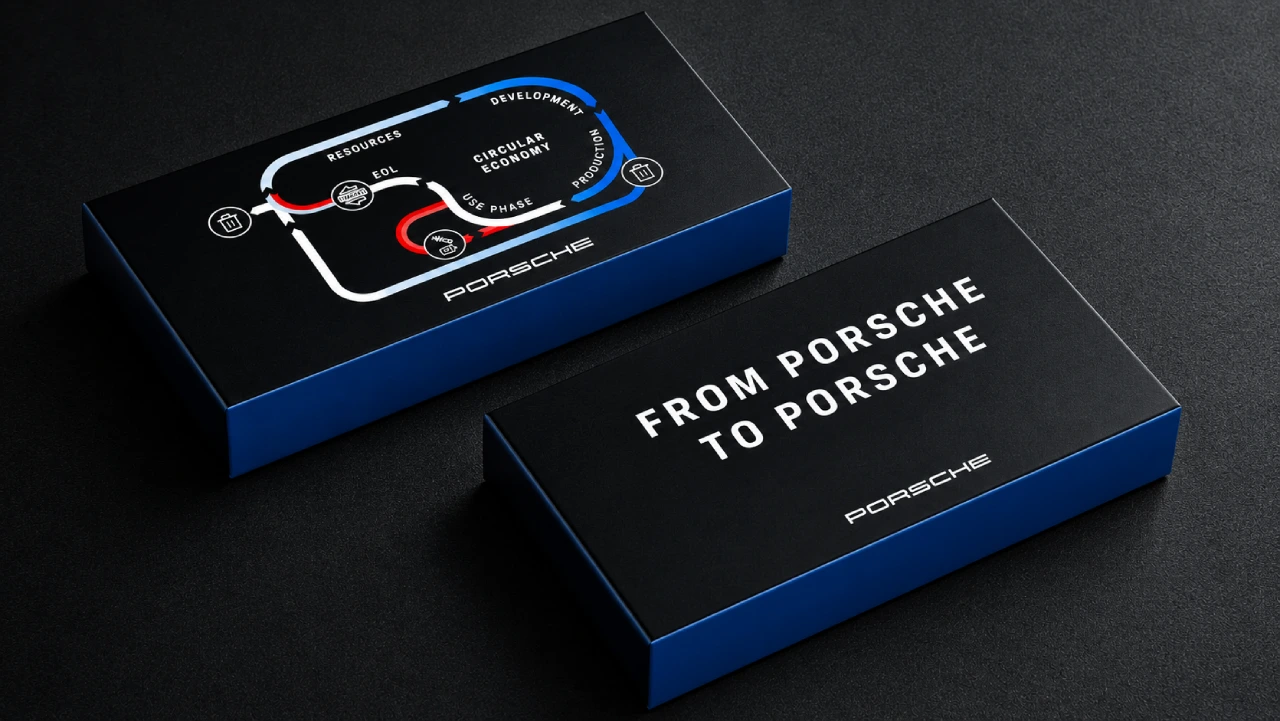
Porsche says it has hit a new step in battery recycling with Cylib, a German recycling firm. The pair built pilot battery cells. The cathode active material inside those cells came only from recycled raw materials. Those raw materials were taken from Porsche’s own retired high-voltage battery packs.
This effort goes past basic recovery of metals. In this case, the materials were treated so they could become cathode active material again. Then that material was used to build fresh battery cells. At the moment, these are still pilot cells. They are in active testing. Porsche has not claimed that production cars are already running on batteries made fully from recycled inputs.
FROM SECOND-HAND PORSCHE BATTERIES TO NEW CELLS
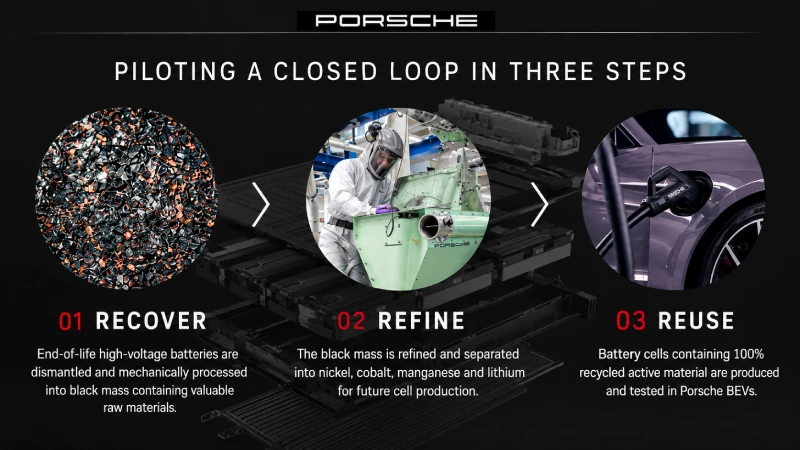
The project centers on four battery metals. Porsche lists them as lithium, nickel, cobalt, and manganese. It also says the metals were recovered from its end-of-life high-voltage batteries. After recovery, the raw materials were turned into cathode active material. From there, the team made the pilot cells. Porsche frames this as a more complete loop. The work does not stop at returning raw materials. It shows the path from recovered materials to new cell production. The pilot cells are now under wide testing. The goal is to check how they perform in use and how well they may fit future needs.
HOW THE WATER-BASED RECYCLING STEP IS SET UP
Porsche and Cylib started a recycling step for old high-voltage battery packs in Germany. It began in May 2026 at Porsche Centres. First, the packs are drained of stored energy. Then they are taken apart. After that, the parts go through a mechanical treatment.
When the process is done, the output has useful parts from the battery. Those parts can be split up and brought back for later use. Cylib works with a water-based method. This method targets key metals in the battery. It aims to sort materials like lithium, nickel, cobalt, and manganese. In the newest pilot, the recovered material goes beyond sorting. It is used to make cathode active material for new battery cells.
PUTTING BATTERY INPUTS BACK INTO NEW CELLS IS IMPORTANT
Battery recycling is not only about taking metals out of old batteries. A key piece of the material loop is getting those reclaimed inputs back into new battery making. Porsche’s pilot shows something specific. It suggests recycled raw inputs from its own high-voltage batteries can be processed into cathode active material.
Those materials then go into new cells. Still, this does not mean new mining is no longer needed. The work is at the pilot stage. The new cells are also still being tested. Porsche has not described the project as proof that future production packs will be built fully from recycled sources.
THE NEXT KEY TARGET IS 2028
Porsche says the reused materials should be ready for Porsche and some partner firms to use in battery-cell making starting in 2028. This is a timing checkpoint. It is not a solid launch date for high-volume Porsche EVs that rely on recycled battery materials. The pilot work now, plus more testing to come, will show how these recovered materials can be used in later battery-cell runs.
CYLIB IN THE BATTERY SUPPLY LOOP
Cylib offers recycling technology for this project. The team is also working on a wider industrial recycling network across Germany. Their method uses mechanical treatment. It also uses a water-based process to recover valuable battery materials. In Germany, the company is expanding its plant operations.
A recycling facility is planned in Dormagen. More plans are underway in Bavaria. The aim is to grow recycling capacity. It should be able to process batteries at a higher volume. The materials recovered are meant to go back into the battery supply chain.
FINAL THOUGHTS
Porsche says it has hit a new mark in battery recycling. The point is more than just pulling metals out of old EV packs. Metals like lithium, nickel, cobalt, and manganese, taken from Porsche’s own high-voltage batteries at the end of life, were made into cathode active material. After that, the team used the material to build trial battery cells. Even so, the work is not finished.
The method is still in testing, so it would be wrong to call it a ready production setup. Porsche also has not claimed a fully closed loop yet for its cars. A bigger step is expected in 2028. That is when Porsche plans to have the recovered materials available for its own use and for a set of outside partners who make battery cells. If the tests keep going well, the project could offer Porsche another path to keep battery materials inside the EV supply chain. That would mean end-of-life packs are not only treated as waste.
(Source)