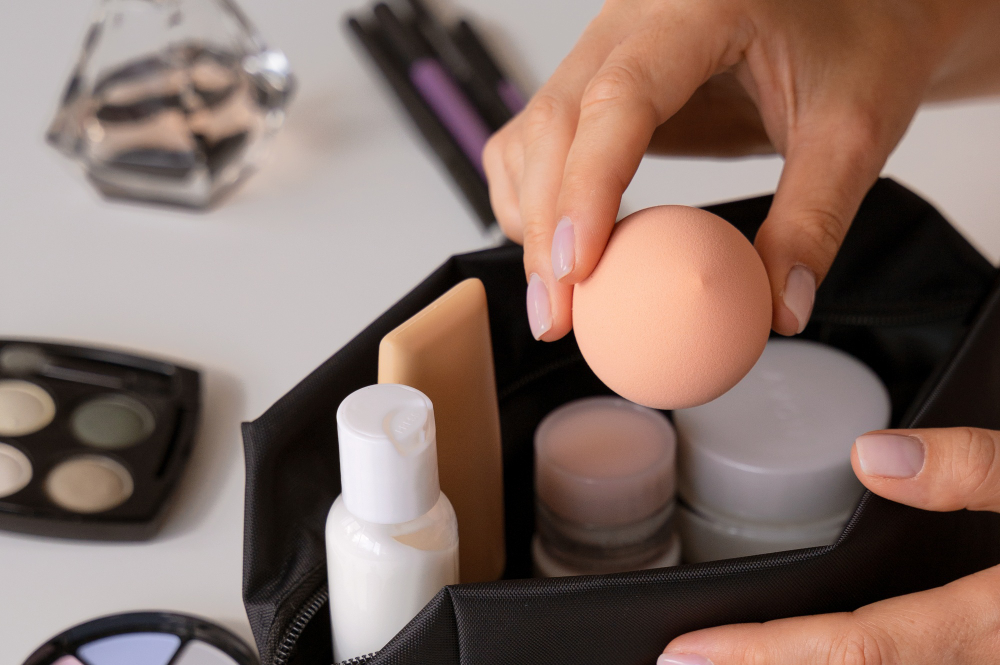
Tezzbuzz Desk- Makeup sponge i.e. beauty blender has become an essential part of almost every makeup kit today. With its help, foundation, concealer and other cream or liquid makeup products can be easily blended on the face. But after continuous use, facial oil, sweat and dead skin cells along with makeup can accumulate in the sponge.
If a used sponge is left wet or not cleaned for a long time, it may increase the chances of microorganisms growing on it. Reusing such a sponge on the face may cause skin problems like irritation, redness, itching or acne to some people. Therefore, it is important to clean the makeup sponge regularly.
What problem can a dirty makeup sponge cause?
The makeup sponge comes in direct contact with the facial skin. If oil and dirt gets accumulated along with the layer of makeup in it, it can cause problems for the skin. Using a dirty sponge, especially on sensitive or acne-prone skin, can cause irritation or breakouts. Storing damp sponges in closed containers or makeup bags should also be avoided. There is a possibility of bacteria and fungus growing in a moist environment. However, it is not necessary that every person will get infection if they use a dirty sponge.
The right way to clean makeup sponge
First of all, wet the makeup sponge thoroughly with clean water. After this, apply mild soap or makeup sponge cleanser on it. Clean the sponge by pressing it lightly between your hands, so that the foundation and other makeup products accumulated in it can come out.
Avoid scrubbing or pulling the sponge too hard, as this can ruin its shape and texture. After cleaning, rinse it under running water until the water runs clear and no trace of soap or makeup is visible. After this, remove excess water by gently pressing the sponge with a clean towel. Allow the sponge to dry completely in an open and clean area. Avoid placing wet sponges immediately in closed makeup pouches or boxes.
How often to clean makeup sponge?
If the sponge is used regularly then it is better to clean it after every use. Even if used less, it should be cleaned and dried thoroughly before applying it on the face again. Along with cleaning, it is also important to keep the sponge in a dry and clean place.
When should the sponge be changed?
Not every old sponge becomes reusable simply by washing. If the sponge starts tearing, loses its shape or texture, has stubborn makeup accumulated on it, or continues to smell even after cleaning, it should be replaced. Similarly, if an abnormal layer like fungus is visible on the sponge, it should not be used.
Keeping makeup sponges clean is a small but essential part of skin care. Regular cleansing, thorough drying, and changing the sponge periodically can help reduce dirt that comes in contact with the skin during makeup.