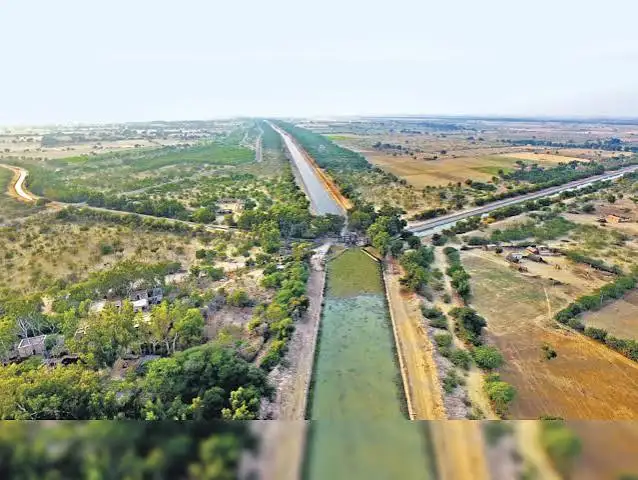
The Indira Gandhi Canal Project, considered the identity of Rajasthan and the lifeline of the western part, is once again in the news. From time to time, voices have been raised demanding to change the name of the canal. The argument behind this demand is to look at the canal and the old history of Rajasthan. Special mention is made of the irrigation-related efforts of Maharaja Ganga Singh of Bikaner state.
Indira Gandhi Canal Project today is an important basis of irrigation and drinking water system in a large part of western Rajasthan. According to the Rajasthan Government document it is known as the lifeline of Western Rajasthan. The objective of the project was to help in the development of drought affected areas by providing water to the desert area through irrigation.
The history of irrigation is linked to the efforts of Maharaja Ganga Singh.
The history of development of irrigation system in the northern part of Rajasthan is also linked to Maharaja Ganga Singh of Bikaner. According to a document of the Rajasthan government, the state of Bikaner got a share in the waters of the Sutlej river in September 1920. After this, important efforts were made towards expanding irrigation in the area.
The arrival of water in the desert gave impetus to the development of agriculture and population. This is the reason why the efforts of Bikaner state and Maharaja Ganga Singh are mentioned in the history of irrigation projects of western Rajasthan.
Construction of the canal project started in 1958
According to official records, construction of the Indira Gandhi Canal Project began on 31 March 1958. Initially it was known as Rajasthan Canal Project. Later on 2 November 1984, it was named after Indira Gandhi.
This project starts from Harike Barrage and delivers water to the western parts of Rajasthan. In the first phase of the project, a large canal system including feeder and main canals was developed. In the government document, the length of the feeder for the first phase is stated as 204 kilometers and the length of the main canal is 189 kilometers.
Changing picture of farming in the desert
After the arrival of water through Indira Gandhi Canal, agricultural activities expanded in many areas of western Rajasthan. While earlier farming was very limited due to lack of water, irrigation facilities increased after the canal project.
Even in the Government Economic Review, this project has been described as an ambitious project to provide water to the thirsty desert of Western Rajasthan. Apart from irrigation, the objective of the project has also been linked to goals like environmental improvement, employment and rehabilitation in drought affected areas.
What is the status on the demand for changing the name?
After the demand to change the name of Indira Gandhi Canal came forward, the discussion regarding its history has intensified. Those demanding a reconsideration of the naming mention the contribution of Bikaner princely state and Maharaja Ganga Singh in the history of the canal. However, the available official documents clearly mention the current name and the history of the project. The demand for changing the name and any official decision regarding it is a separate matter. Therefore, it should be seen only as a demand for now. Indira Gandhi Canal is still an important system of irrigation and drinking water for a large part of Rajasthan. Many important milestones are associated with its historical background, from the irrigation efforts of the old Bikaner state to the big canal project of independent India.