By: The Obnews Editorial Team
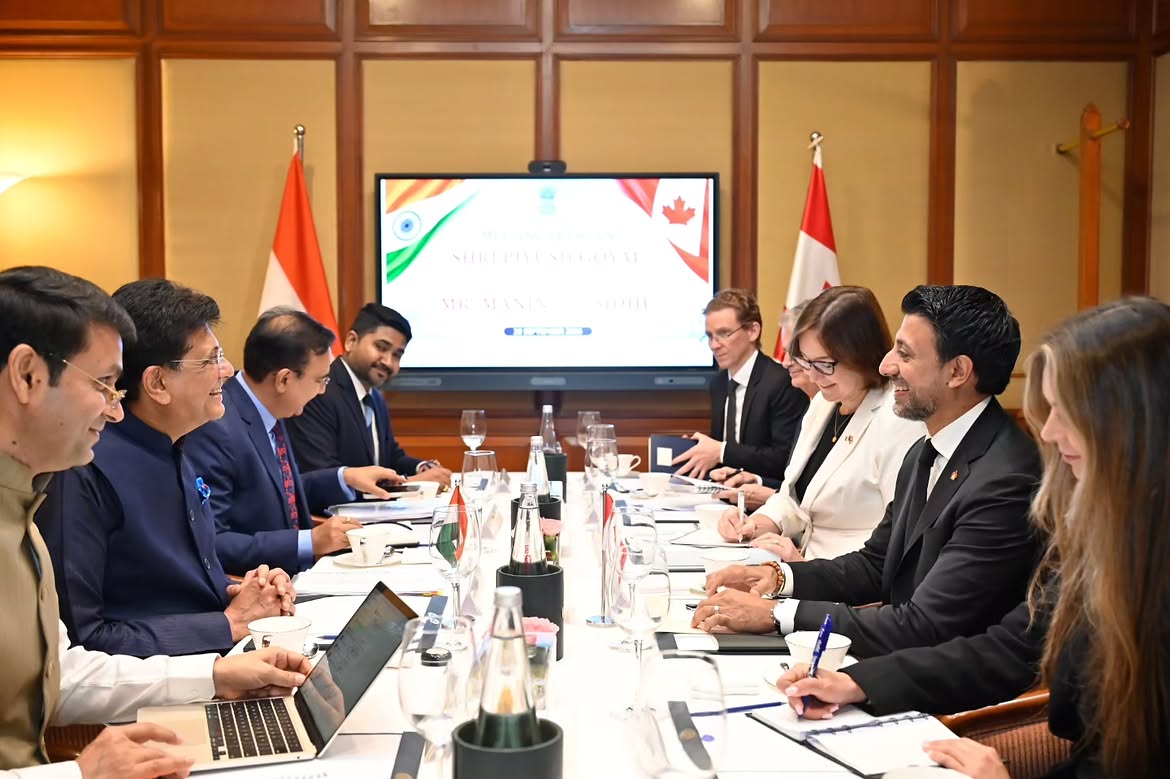
Canadian International Trade Minister and Brampton East MP Maninder Sidhu is in Mumbai as Canada and India accelerate negotiations toward a major new trade agreement, with both governments now working toward completing a Comprehensive Economic Partnership Agreement before the end of 2026.
Sidhu’s September 18 and 19 visit comes during an important week for the economic relationship between the two countries. Canadian and Indian officials have been holding the fourth round of CEPA negotiations in New Delhi, while Sidhu has taken the discussions directly to government and business leaders in Mumbai. Global Affairs Canada said the minister’s visit is intended to strengthen bilateral trade and investment ties while advancing the trade negotiations.


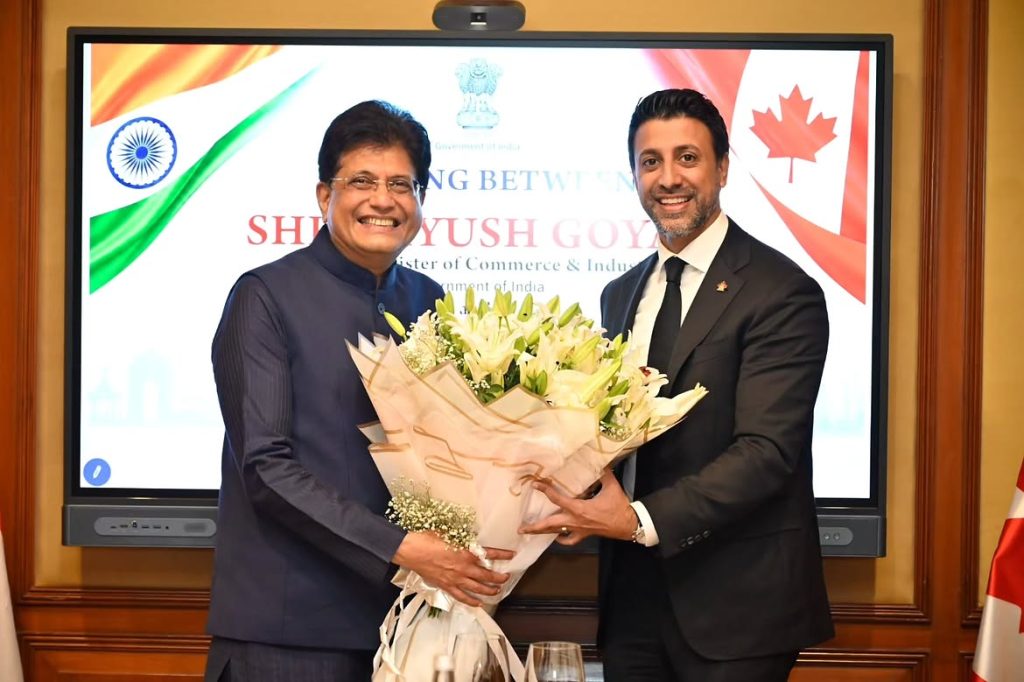
On Friday, Sidhu met Indian Commerce and Industry Minister Piyush Goyal in Mumbai to review the progress of the negotiations. Goyal said both governments had reaffirmed their leaders’ commitment to accelerating the talks and concluding CEPA as early as possible, with the agreement expected to expand opportunities in goods, services and investment.
The negotiations have moved relatively quickly since Canada and India established the framework for the renewed CEPA process earlier this year. A second negotiating round was held in New Delhi from May 4 to 8, followed by a third round in Ottawa in July. Discussions have covered trade in goods and services, intellectual property, rules of origin, sanitary and phytosanitary measures and technical barriers to trade, among other areas. Indian Commerce Secretary Rajesh Agrawal said this week that two chapters had already been concluded while negotiations continued across the remaining sections.
The Canadian negotiating delegation is substantial. Indian officials said approximately 48 Canadian officials travelled to India for the latest negotiating round, while Sidhu described the broader group involved in the mission as more than 50 negotiators. The size of the delegation reflects the number of sectors and regulatory issues that must be resolved before a comprehensive agreement can be completed.
Speaking to Reuters in Mumbai on Saturday, September 19, Sidhu expressed strong confidence that an agreement could be completed within months. Indian trade negotiators are expected to travel to Canada in October for further discussions, while Sidhu said the Canadian and Indian leaders could also meet on the sidelines of the G20 gathering in December.

A $70 Billion Trade Ambition
The economic stakes are significant. Canada says two-way trade in goods and services with India reached $30.4 billion in 2025including approximately $13.6 billion in merchandise trade. Ottawa’s stated objective is to more than double total bilateral trade to $70 billion annually by 2030. Indian government and media statements have also cited a roughly US$50-billion bilateral trade objective, with the apparent difference largely reflecting currency and the way goods and services are counted.
The potential agreement would reach considerably beyond lowering tariffs. Canada and India have been discussing services, investment, technical standards, intellectual property and the rules determining which products qualify for preferential treatment. Canada’s existing commercial relationship with India already covers sectors ranging from agriculture and natural resources to pharmaceuticals, technology and business services.
Energy has emerged as one of the most important areas in the latest discussions. Sidhu told Reuters that Canadian officials are speaking with Indian companies about gaining access to Canadian liquefied natural gas projects, investing directly in them and securing long-term supplies. Canada currently has a Shell-led LNG export facility in operation and several additional projects at different stages of development.
Nuclear energy is another potential area of expanded cooperation. India is planning a major expansion of its nuclear generating capacity, while Canada has an established nuclear industry and supply chain. Sidhu said he sees opportunities for Canadian businesses to participate as India expands that sector.
Indian Companies Looking at Canadian Critical Minerals
The Mumbai trip is also about investment flowing in the opposite direction.
Sidhu told Reuters that some of India’s largest business groups, including Reliance Industries, Mahindra & Mahindra and JSW Groupare exploring investments in Canadian critical-mineral projects as companies look for more secure supplies of strategic resources. Critical minerals such as lithium, nickel, cobalt and graphite have become increasingly important to batteries, electric vehicles, advanced manufacturing, energy technologies and other industrial supply chains.
Sidhu has also used the visit to promote Canada’s automotive and technology capabilities. In an account of his meeting with senior Tata leadership, he highlighted Canada’s deposits of nickel, cobalt, lithium and graphite, along with advanced manufacturing and automotive software capabilities, as areas that could complement Tata’s investment in electrification and electric vehicles.
The broader commercial strategy is to connect Indian companies seeking energy, minerals and advanced technology with Canadian resources and companies, while helping Canadian businesses gain greater access to India’s rapidly expanding consumer and industrial economy.
A New Phase in Canada-India Economic Relations
The negotiations are taking place after a period of serious diplomatic strain between Ottawa and New Delhi. Over the past year, however, the two governments have restored a series of high-level contacts and economic mechanisms. At foreign-office consultations in New Delhi on September 2, officials from both countries specifically reaffirmed their commitment to completing CEPA negotiations before the end of the year and to increasing bilateral trade to $70 billion by 2030.
The commercial relationship is expected to remain active even after Sidhu leaves Mumbai. He is scheduled to lead a Team Canada Trade Mission to India from October 12 to 17focused primarily on Mumbai and Bengaluru. The mission will connect Canadian companies with Indian decision makers and prospective business partners in sectors including aerospace, clean technology and energy transition, information and communications technology, life sciences, forestry and agri-food.
For Brampton, the negotiations also have a local connection. Sidhu represents Brampton East in the House of Commons while serving as Canada’s Minister of International Trade. Brampton and the wider Greater Toronto Area have extensive family, business and commercial connections with India, meaning changes to investment rules, services trade, business access and bilateral commerce could have implications well beyond Canada’s largest corporations.
India Is One Part of a Much Larger Trade Push
Sidhu’s trip does not end in India. After Mumbai, he is scheduled to travel to Manila on September 21 and 22 for the 15th ASEAN Economic Ministers-Canada Consultation. Canada plans to use those meetings to advance negotiations for an ASEAN-Canada free trade agreement as well as a separate Canada-Philippines FTA.
Ottawa says Canada already has preferential access to markets representing roughly 1.5 billion consumers. According to Global Affairs Canada, completing agreements with India, ASEAN and the Philippines would expand that reach to approximately three billion consumersforming part of Canada’s wider effort to diversify international trade and reduce its dependence on any single export market.
For Canada and India, the next several months will determine whether the political momentum can be translated into a finished trade agreement. Two chapters have already been completed, negotiations are continuing across the remaining areas, Indian officials are expected in Canada next month, and another high-level opportunity could come at the G20 in December.
For now, both governments are publicly working toward the same deadline: completing the Canada-India CEPA before the end of 2026. If they succeed, it would establish a new framework for trade and investment between two economies that are already exchanging more than $30 billion in goods and services each year, while opening the next phase of a Canada-India economic relationship that both governments are attempting to rebuild and expand.