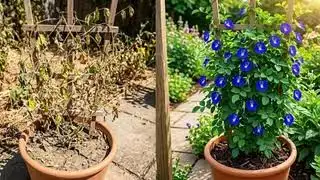
The blue and white flowers of Aparajita enhance the beauty of the balcony, terrace or garden of the house. When flowers appear continuously on its vine, the entire plant looks very attractive. But during the summer season, due to strong sunlight, lack of water or poor drainage in the pot, its leaves may turn yellow and the growth of the vine may also slow down.
If the Aparajita plant in your house has started withering or it is producing fewer flowers than before, then it is important to pay attention to some easy methods of its care. Correct lighting, balanced watering, good soil, nutrition and periodic pruning can help in maintaining good plant growth.
Protect the plant from hot afternoon sun
Aparajita needs light, but very strong afternoon sunlight in summer can stress its leaves. If the plant is kept in a place where there is strong sunlight throughout the day and the leaves are withering, then try changing its location.
Morning sunlight can be beneficial for the plant, while it would be better to provide light shade in the afternoon. In very hot places, green net or any light shade can also be used.
If the soil in the pot dries too quickly, a light mulching of dry leaves can be done on top. This can help in maintaining moisture in the soil for some time. However, do not keep the mulch completely close to the stem of the plant.
Keep these things in mind while giving water
The plant's need for water may increase in summer, but this does not mean that the soil should be kept wet all the time. Before watering Aparajita, touch the top layer of soil. Water only if the top soil feels a little dry.
Watering in the morning can be a good option. If needed, water can be given in the evening also, but water should not accumulate in the pot.
There must be sufficient drainage holes at the bottom of the pot. If excess water does not drain away, persistent moisture around the roots can damage the plant.
Do not make this mistake while giving fertilizer
Flowering plants need balanced nutrition for good growth. If you use homemade fertilizer, then prepare it properly and apply it to the plant.
Banana peel compost may contain potassium, but it should not be considered a complete fertilizer for the plant. Similarly, if you want to use tea leaves, then wash and dry them thoroughly and mix them in the soil.
Instead of adding too much fertilizer, it is better to give balanced fertilizer according to the needs of the plant and the condition of the soil. If the plant is already weak or stressed, avoid applying large amounts of fertilizer suddenly.
Light pruning for more flowers
If Aparajita vine has many dry, weak or damaged branches then remove them from time to time. This can help the plant use its energy for the growth of healthy parts.
Light pruning can also be done to promote new branches. As new branches develop, their chances of producing flowers may increase in the future.
However, avoid harvesting too much at once. It is better to prune gradually after seeing the condition of the plant.
Keep removing dead flowers too
If you do not want to prepare seeds from the plant, you can remove withered flowers from time to time. This can help direct the plant's energy toward new growth and flowers.
When removing flowers, cut only the withered areas with clean scissors. If you want to prepare seeds from Aparajita, you can leave a few healthy flowers on the plant to allow them to form seeds.
If the leaves are turning yellow then understand the reason also.
Heat alone is not responsible for the yellowing of Aparajita leaves. Excessive watering, poor drainage, too little light, lack of nutrition or problems related to roots can also be the reason for this.
So instead of just increasing water or fertilizer, first check the plant's soil, light, and pot's drainage. If insects, stickiness or unusual spots are visible on the leaves, also check for pest problems.
Easy way to keep plants green
No single solution is sufficient for the good growth of Aparajita. Right amount of light, water as needed, good drainage, balanced nutrition and periodic pruning—a balance of all these is necessary.
If the plant has become weak in summer, pay attention to its location, method of watering and soil condition. Regular care can help make the plant healthy and dense again and, under favorable conditions, the number of flowers can also increase.