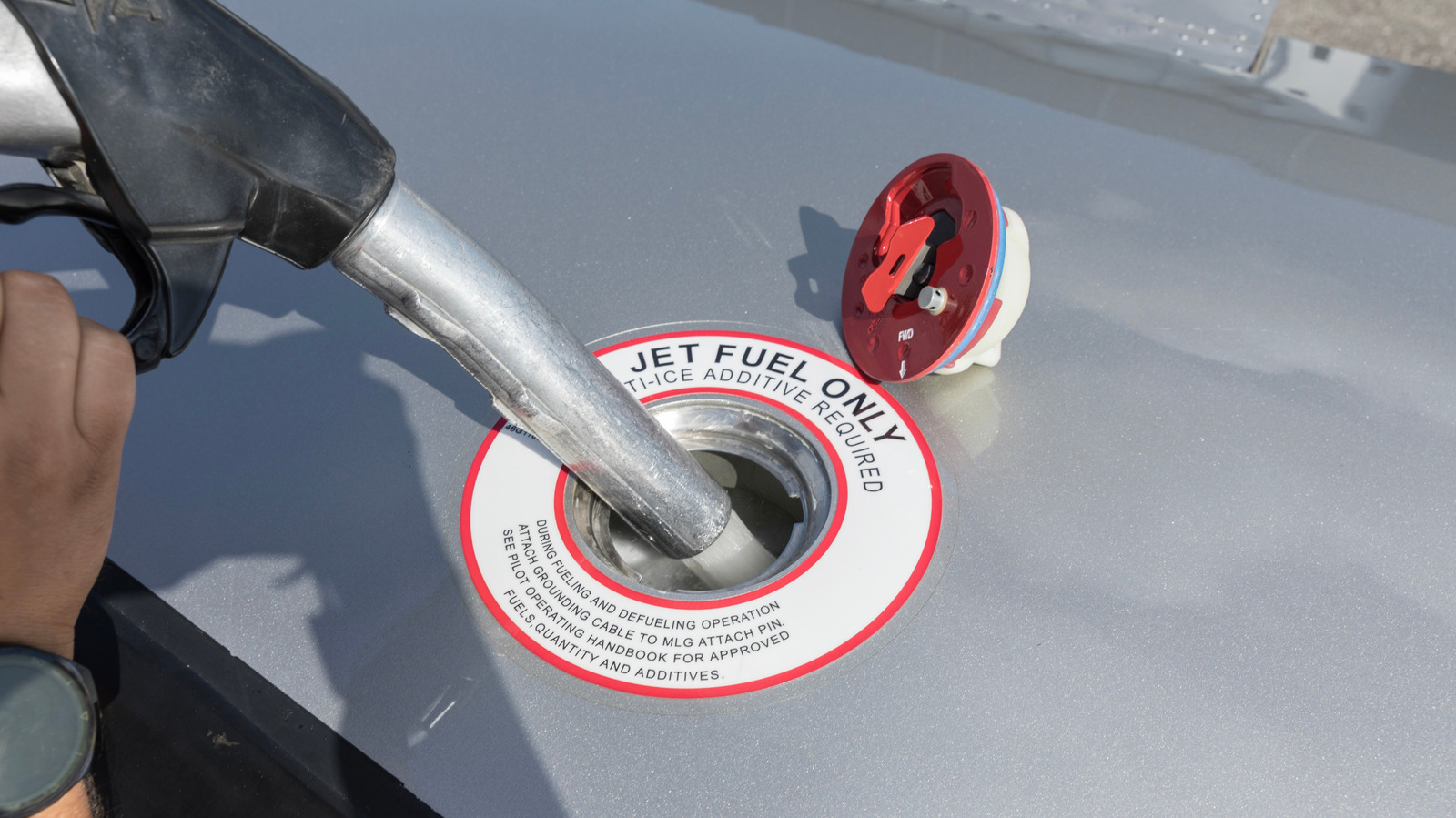
Most private aircraft with piston engines operate with aviation fuel, known by its colloquial name “avgas.” But much like how your car might require different octanes or fuel types at the gas pump, so too do aircraft. All that’s due to the various requirements governing each engine type — for example, you know how diesel engines operate through compression rather than spark, which is why diesels don’t have spark plugs? The same thing applies here as well — some aircraft engines run on compression, and those take a different fuel type than ones with spark plugs.
Of course, that’s not the only way that plane engines differ from each other, let alone from car engines, an important factor to consider when selecting fuel types. For one, we phased out leaded fuel in automobiles decades ago, but most avgas is still leaded. 100LL is most common, meaning 100 octane, low lead content. Lead acts as an anti-knock agent, preventing the engine from pre-igniting the fuel before it’s ready. And you know it’s 100LL because it’s dyed blue.
Ultimately then, it really is that simple: Different fuels for different engines, and they’re different colors so you don’t mix them up. It’s much more important to get it right because planes can have different fuel tanks, so imagine you switch fuel tanks mid-flight and you’re now pumping the wrong fuel into the engine while at altitude. You can’t just pull over and call for a tow truck.
As for how and why different fuel types get their different colors, let’s explore.
Why is avgas different in the first place?
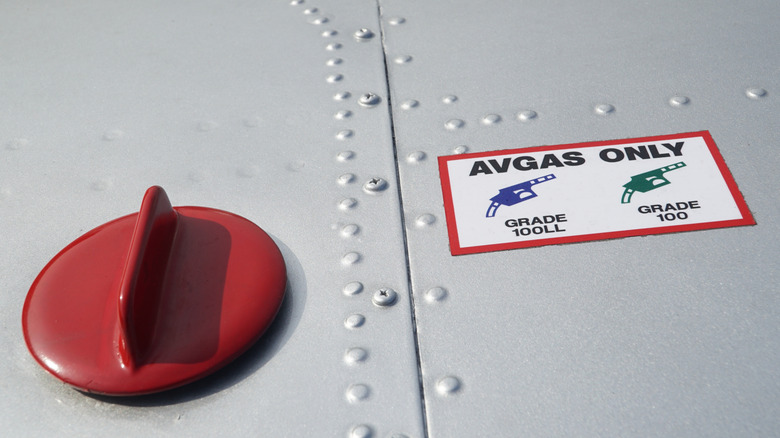
The first question we must establish is: why can’t you just run pump gas (maybe with added lead content) in an aircraft and call it a day? Why bother with different types at all?
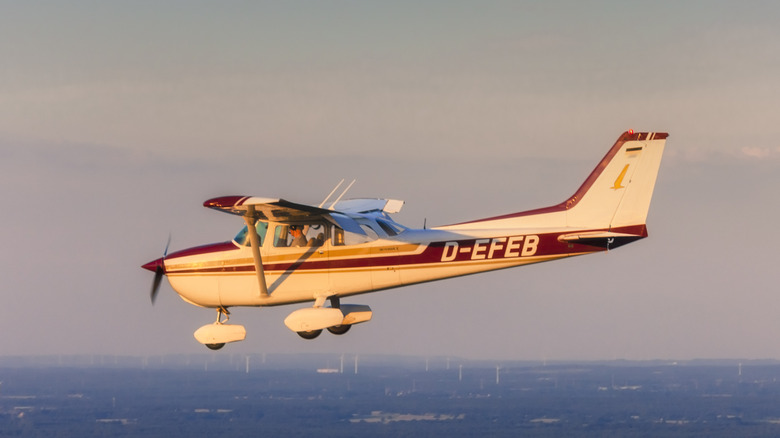
Like the leaded fuel itself, it’s mostly a safety thing. Avgas contains various additives designed to keep an aircraft engine running under specific conditions you don’t typically see in a car. Let’s use a basic Cessna piston aircraft like a 172, for example — you’re running an air-cooled engine at around 75 percent of wide-open throttle for potentially hours without any breaks. In a car, you’re constantly changing these RPMs to give it a break — traffic lights, gear changes, letting off the gas during downhill coasts on the highway. Not so with these piston aircraft.
Moreover, hese engines must absolutely keep running; heaven forbid you’re flying over a lake or uninhabited desert. That’s why pilots check their fuel type and levels during preflights, to make sure they didn’t fill up with Jet A by mistake, which lacks that characteristic blue dye.
Fuel types only get more different the further you stray from 100LL and G100UL — blue and green, respectively. Take Jet A, for example, which isn’t gasoline at all. It’s actually a kerosene-based fuel designed to run in a jet turbine, which is what you’ll see inside something running a turboprop or diesel piston engine, for example. Historical avgas is 80LL, which has been largely phased out today — that one is red. None of these are designed to mix, so you can’t swap fuel types, like putting premium gas in a regular gas car.
Why use all these different types?
A more obvious question is: What’s the point of having all these different octanes if you could potentially end up falling out of the sky should you get it wrong? Why don’t all planes use the same fuel type?
Granted, a lot of them do. Most general aviation planes today use 100LL; again, it’s mostly out of necessity. These engines use a lot of older, proven technology, leaded fuel included — though the Federal Aviation Administration is aiming to change that. But ultimately it comes down to the FAA only approving highly-specific unleaded fuels as recently as 2022, as part of an ongoing effort to remove leaded fuels from circulation.
Leaded fuels aren’t liable to go anywhere that quickly, though. The simple fact is that. among the most popular aircraft — from those used in trainers and private flying to certain niche commercial applications — many still use 100LL-rated piston engines. You’re talking about swapping the fuel systems of entire fleets of aircraft, which will undoubtedly be a ton of money and effort.
Rather, it’s far more likely that these two avgas types — leaded and unleaded — will coexist at the same airport. That’s why having the dyes is so important, especially when it’s not necessarily a given which aircraft runs which fuel based on the model. Instead, a pilot relies on the decal listing what fuel it accepts and uses that fuel exclusively, plus a double-check with a sample cup. After all, there’s no do-over if your gas station mixes up the fuel.