Speaking at the Arabian Travel Market in Dubai this month, Carlos Ruiz González, director of the Spanish Tourist Office for the Gulf region at Turespaña, said Spain’s Tourism 2030 plan would put people and sustainability at the heart of the country’s next phase of tourism development, EuroNews reported.
The strategy places residents and lesser-visited destinations among its key priorities as Spain seeks to manage the impact of tourism while maintaining its economic benefits, he said.
|
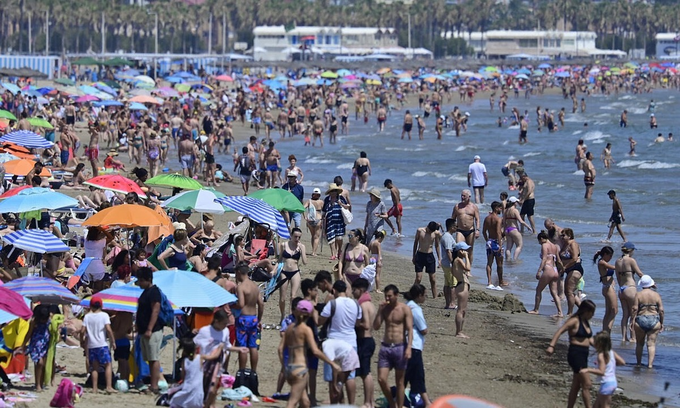
People crowd the beach in Valencia, Spain, on July 5, 2024. Photo by AFP |
Developed in consultation with more than 200 tourism experts, businesses, government bodies and other organizations, the plan takes into account the different challenges facing destinations across the country.
These include mature coastal resorts and heavily visited cities such as Barcelona, as well as rural and inland areas seeking to attract more tourists.
Spain received 96.8 million international tourists in 2025, making it the world’s second most visited country after France (102 million). Tourism accounts for 12.6% of the country’s GDP and supports around three million jobs, Reuters reported.
Visitor numbers are continuing to rise in 2026.
Spain set another tourism record by receiving 58.1 million international visitors in the first seven months of 2026, up 4.6% from the same period last year.
Tourist spending climbed 7.8% to a record €82.05 billion (US$95 billion) during the January-July period, according to data published by Spain’s National Statistics Institute (INE).
The government is looking beyond visitor numbers as it seeks to manage growth and reduce pressure on destinations affected by overcrowding.
“For the last few years, our government has been thinking about what we should do to manage this success,” Ruiz González told EuroNews.
Residents in major destinations have raised concerns about overcrowding, rising house prices, limited housing supply, and the strain on resources such as water, particularly where tourism infrastructure has expanded, AP reported.
Last year, thousands of people protested against mass tourism in popular destinations such as Canary Islands, Barcelona, and Palma de Mallorca.