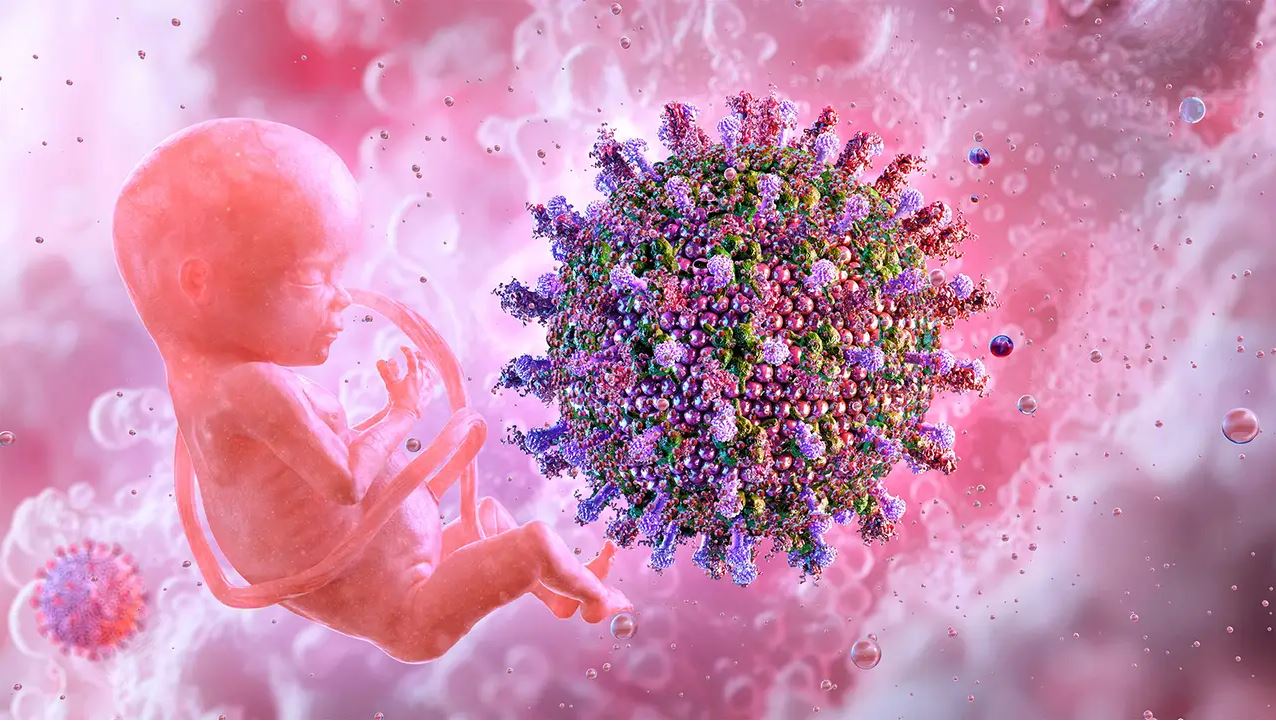
health desk : A very comprehensive study conducted on 3.7 million (37 lakh) people in Sweden has shockingly revealed that a rare 'TORCH' infection in the fetus significantly increases the risk of autism and intellectual disability in children in later life. According to this research by Karolinska Institute published in 'ScienceDaily' and the prestigious medical journal 'JAMA Pediatrics', children who have congenital TORCH infection are almost three times more likely to develop autism, seven times more likely to develop intellectual disability, and 30 times more likely to develop severe intellectual disability than normal children.
This group of TORCH infections includes pathogens such as cytomegalovirus, rubella, toxoplasmosis, and herpesviruses, which sometimes cross the placenta to the unborn baby. Although such infections are not common and account for a small number of cases of autism in the overall population, the risk to affected children at an individual level is significant. Researchers estimate that about 1.2 percent of cases of severe intellectual disability and about 0.034 percent of cases of autism in Sweden may be caused by these infections, and about one in five children born with TORCH may later develop autism.
According to researcher Renee Gardner and lead author Hugo Sjöqvist, from the Global Public Health Department of Karolinska Institutet, this is the largest study in this field to date based on national register data. Although no direct link was found between these infections and disorders such as ADHD or OCD, a decline in school performance was observed. Scientists say that vaccination programs for diseases like rubella prove that with proper prevention, such serious risks can be avoided to a great extent, hence proper precautions and vaccination are extremely important during pregnancy.
The post Swedish study's big revelation, due to TORCH infection in the womb, the risk of autism and mental weakness in children is many times higher appeared first on Buzz | ….