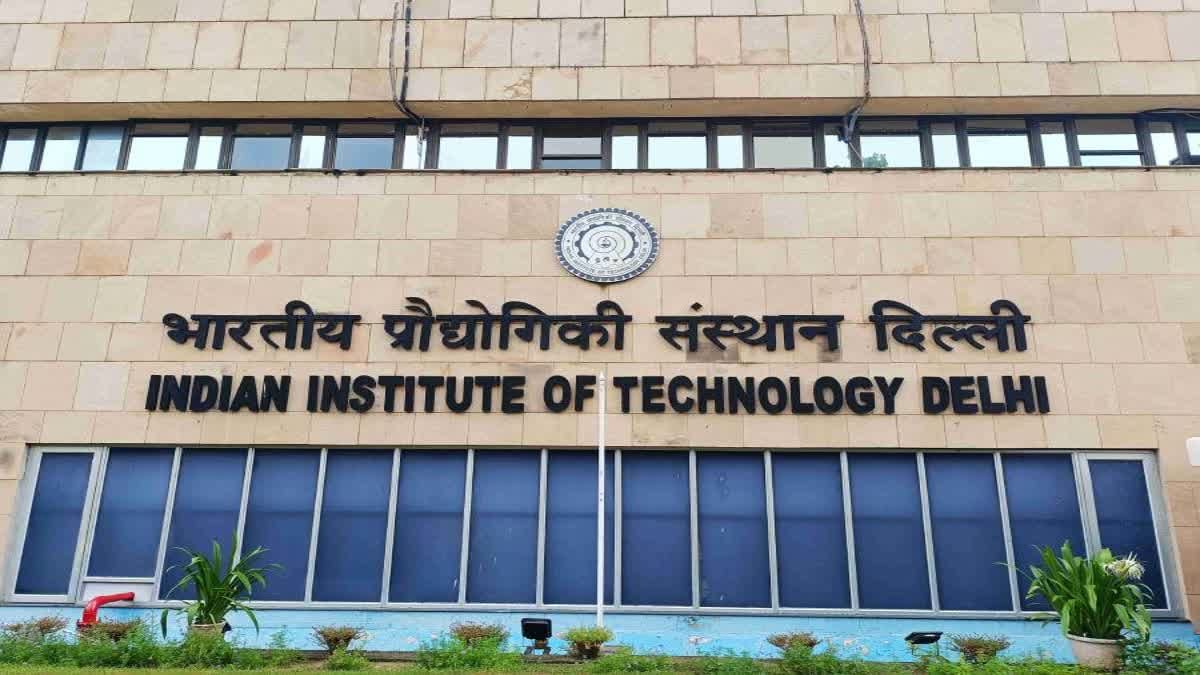
India has taken a significant step towards indigenous technology in the field of Graphics Processing Unit (GPU). Researchers from the Department of Electrical Engineering, IIT Delhi have developed the country's first functional and performant indigenous Micro-GPU design. This achievement is considered important towards strengthening India's semiconductor and high-performance computing capabilities.
What is GPU and why is it important?
GPU is a special type of processor that rapidly processes complex calculations related to graphics, images and videos. In modern times, it is used extensively in technologies like Artificial Intelligence (AI), Machine Learning, Computer Vision and Graphics Processing.
According to IIT Delhi, GPUs currently used in India are mainly imported. In such a situation, development of indigenous Micro-GPU can be an important step towards reducing dependence on foreign technology in future.
How did the researchers of IIT Delhi develop?
This project was done by Prof. Jayadeva and Prof. Developed by M.Tech students Nammi Akash and M. Ravi Teja under the guidance of Kaushik Saha. The team created the Micro-GPU as a completely digital design and successfully tested it on programmable hardware.
Researchers have demonstrated the ability to generate graphics and display them on the screen. According to the institute, this is the first successful demonstration of such a Micro-GPU designed and developed by an Indian university.
Will be used from e-rickshaw to navigation system
This indigenous technology can be useful for low-cost electronic devices. Its potential uses include industrial displays, human-machine interfaces, e-rickshaw dashboards, navigation terminals for small fishing vessels and e-book readers. It can also be implemented on hardware platforms such as ASIC and FPGA.
Now preparing to make 16-core GPU
The research team is now preparing to further upgrade this technology. In the next phase, there are plans to develop a vector-based graphics processor with 8 to 16 cores. With this, the initial model of compiler, graphics software and chip will be prepared. The team will also work on taking this technology to commercial scale by garnering financial support in the future.
Follow the LALLURAM.COM MP channel on WhatsApp