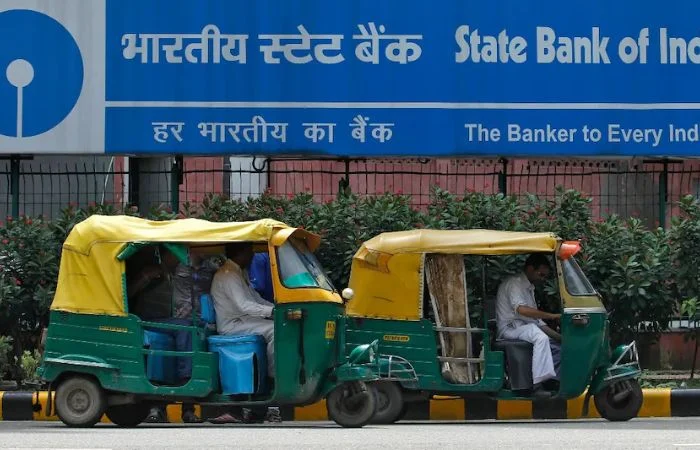
With the beginning of the month of October, many major rules related to the banking sector are going to change. These changes also include rules related to cash withdrawal for certain customers of the country's largest public sector bank, State Bank of India (SBI). However, this new rule will not be applicable to all SBI account holders, rather it will specifically affect customers holding Basic Savings Bank Deposit (BSBD) accounts. According to the new rules, now a charge will be levied from customers' pockets for withdrawing cash more than a fixed limit in a month. As per the instructions of SBI, this new change is coming into effect from 1 October 2026.
How many times in a month will it be absolutely free to withdraw cash?
For BSBD account holders of SBI, withdrawing cash only 4 times in a month has been kept absolutely free. This means that if a customer withdraws money only 4 times in a month, he will not have to pay any additional charges. But as soon as you withdraw cash for the fifth time or so, you will have to pay the charge. According to the bank's information, after the free limit is over, a charge of Rs 15 and applicable GST will be charged on every additional cash withdrawal.
To which special customers will this new rule apply?
This new change does not apply to every savings account of SBI. This rule is especially for those customers whose account falls in the 'Basic Savings Bank Deposit' i.e. BSBD Account category. Let us tell you that BSBD account is generally designed for those people who can get basic banking facilities at low cost or without any heavy banking charges. The biggest feature of this type of accounts is that customers do not need to maintain any minimum balance in their account.
Therefore, if you have a simple savings account in SBI, then you do not need to think that Rs 15 will be deducted for every withdrawal of money from your ATM or bank. First of all, it is important to check whether your account falls in BSBD category or not.
What will be the effect on withdrawing money from ATM and bank branch?
This new rule related to cash withdrawal should not be limited to the bank branch only. According to SBI's BSBD service charge document, this limit of four free cash withdrawals includes withdrawals made from both bank branches and ATMs. Once your limit of four free transactions is reached, whether you withdraw money from an ATM or by visiting a bank, Rs 15 plus GST will be applicable on every additional cash withdrawal.
So if you withdraw cash frequently every month, it is important to keep track of your free limit to avoid unnecessary charges.
What is BSBD account?
The full name of BSBD is 'Basic Savings Bank Deposit Account'. This is a simple savings account whose main objective is to provide essential banking services to the common people without any hassle. As mentioned earlier, there is no pressure to maintain minimum balance in this account. As per SBI rules, if a customer has a BSBD account and also maintains another normal savings account in the same bank, its terms and conditions are still applicable.
What changed in FD returns and interest rates?
Not only cash withdrawal, but Reserve Bank of India (RBI) has also changed the rules related to bulk deposit. Bulk deposit means a large deposit amount which is Rs 3 crore or more. Under the new rules, banks will now get more flexibility than before in setting interest rates on such large deposits. Along with this, it has also been emphasized that customers can easily get accurate information about these interest rates offered by banks.