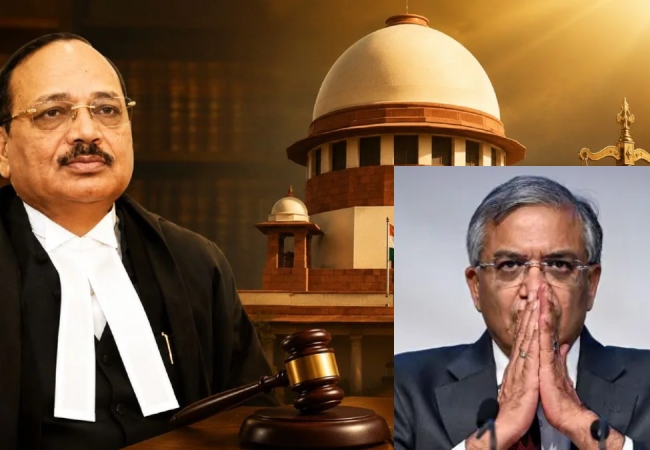
SC hearing on EC Rift: The Supreme Court has agreed to hear soon the petition challenging the functioning of the Election Commission of India. The petition alleges that the powers vested in the Election Commission as a multi-member constitutional body are being exercised without following the collective decision-making process required under law. CEC Gyanesh Kumar took unilateral decisions on behalf of the Election Commission (ECI), while the approval of the other two election commissioners – Sukhbir Singh Sandhu and Vivek Joshi – was not taken.
Read :- Sambhal Violence Case: Supreme Court cancels Mullah Afroz's NSA custody in Sambhal violence case, imposes fine of Rs 10 lakh on UP government
Senior lawyer Vikas Singh said that the matter should be listed soon before the bench headed by the Chief Justice of India (CJI). Referring to this petition, he said, “The very purpose of setting up a multi-member Commission was – and the law also says – that decisions should be taken by unanimity or majority. Now, the way the Election Commission has acted, it raises serious doubts as to whether there was any decision of the Election Commission for the entire process of 'special intensive revision' or not. Because if the Commission has not taken a decision unanimously, then it is… The decision taken by the Court also Yes, it is taken on the basis that this is the decision of the Commission, so it is a serious issue.
“List it next week,” the CJI directed. The petition seeks 'Quo Warranto' writ, asking the CEC to explain under what authority he has acted and continues to act as if he alone was entitled to exercise the collective decision-making power given to the Election Commission as an institution under Article 324 of the Constitution. The ECI consists of the Chief Election Commissioner (CEC) and two Election Commissioners. At present, Gyanesh Kumar is working as the CEC, while Sukhbir Singh Sandhu and Vivek Joshi are the two election commissioners. Whenever there is no consensus among the three, decisions are taken on the basis of majority.