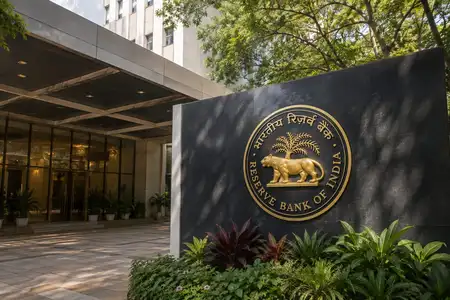
New Delhi, September 29 (IANS). Amid rising crude oil prices, inflationary pressures and rising global bond yields, it may be more challenging than before for the Reserve Bank of India (RBI) to maintain interest rates at current levels. A report by BNP Paribas India released on Tuesday said that India's macroeconomic outlook has weakened somewhat in recent weeks, which may increase pressure on monetary policy.
According to the report, Brent crude oil prices have reached above $100 per barrel, while the US 10-year Treasury yield has reached near 5 percent. Along with this, there is inflationary pressure around the world and many central banks are adopting the path of increasing interest rates.
The report said India has strengthened its external sector through foreign currency non-resident (FCNR) deposits, but the risk of capital outflows has also increased due to rising interest rates in developed countries. In such an environment, it may be difficult for the RBI to keep policy rates stable for a long time.
The report said that the rise in crude oil and other commodity prices remains a major challenge for India in the near term. Due to this, pressure on the rupee has increased and the scope for RBI to keep interest rates unchanged is becoming limited.
Kunal Vora, head of India equity research at BNP Paribas India, said India's macroeconomic outlook is extremely sensitive to oil prices and the latest tensions in West Asia bring negative signals for the country.
According to the report, the rupee has weakened by about 1 percent in the last two weeks. At the same time, India's 10-year bond yield has reached above 7 percent and selling by foreign institutional investors (FIIs) has also started again.
However, the report also said that India's foreign exchange reserves were supported by FCNR deposits. Estimated foreign exchange reserves have reached about $800 billion with the help of FCNR inflows of about $127 billion. This has provided some relief in the near term, but these flows may go back in the next three to five years.
According to the report, the impact of high inflation may be visible on high-frequency economic indicators in the coming months. Indicators such as slowing wage growth in urban areas, rising inflation and declining business confidence may impact consumption demand.
The rural economy is also facing challenges. There is a possibility of increased pressure on rural demand due to lack of monsoon, increase in food inflation and reduction in crop sowing.
Despite this, the report has also pointed towards some positive aspects. These include strong credit growth, strength in auto sales, improvement in employment data and adequate food grain reserves, which may help in insulating the Indian economy from external shocks.
–IANS
DBP