– Advertisement –
Director: Apoorv Singh Karki
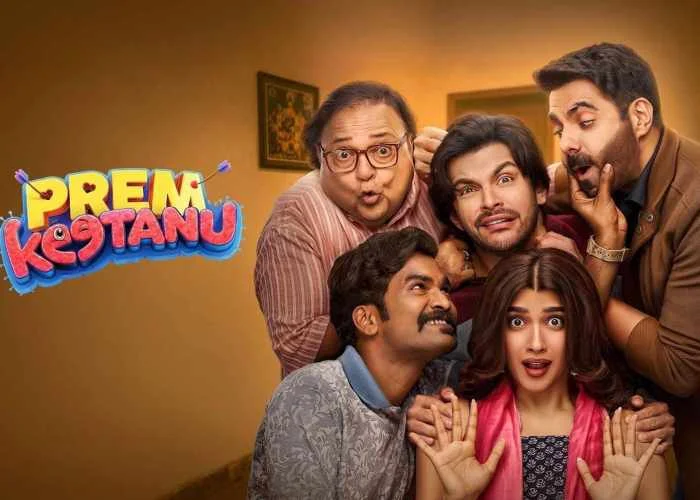
Cast: Veer Pahariya, Aafiya Sayed, Aparshakti Khurana, Rakesh Bedi, Nikhil Vijay
Duration: 2h 18m
Rating: 4/5
There is more to Prem Keetanu than a boy falling for a girl and another boy trying to win her over. While Apoorv Singh Karki's film has all the familiar ingredients of a youthful romantic comedy — crushes, awkward conversations, friendship, jealousy, songs and banter — it also develops into a thoughtful story about growing up and finding one's place in the world.
Veer Pahariya plays Vishal, a carefree backbencher content with taking life one day at a time. His world revolves around studies, dreams, his close friend and roommate, and eventually Suhani, played by debutant Aafiya Sayed. Suhani is sensible and clear about what she wants, while Vishal is still trying to understand himself. When Ranjeet, played by Aparshakti Khurana, enters the picture, the story takes the familiar route of a love triangle, but the film wisely avoids reducing it to a competition between two men.
Pahariya makes a confident impression as Vishal. His comic timing feels natural, while his portrayal of the character's emotional uncertainty gives the performance depth. Vishal is not merely trying to figure out whether Suhani loves him; he is also beginning to question what he wants from life.
Aafiya Sayed is a pleasant discovery. She brings warmth and charm to Suhani, and her chemistry with Pahariya feels easy rather than manufactured. Their romance captures the nervousness and uncertainty associated with first love.
Aparshakti Khurana brings his familiar comic energy to Ranjeet, but the character is given enough personality to remain more than just the romantic rival. His efforts to win over Suhani's father, played by Rakesh Bedi, provide several amusing moments and add another dimension to the central relationship.
The film's biggest strength, however, is the way it connects romance with the complicated process of becoming an adult. Vishal's relationship with his parents becomes an unexpectedly moving thread. He begins questioning whether he is a bad son or whether his own shortcomings are partly shaped by the way he was raised.
One particularly effective moment comes when Vishal calls his father and is met with the almost brutally casual question, “What do you want?” There is no dramatic confrontation or elaborate emotional speech, but the few words capture the distance and longing that can exist between middle-class fathers and their sons. The film understands that affection does not always find an easy expression.
Vishal's dilemma becomes more complicated when his US visa is approved. What was once a distant possibility suddenly becomes a real choice. Should he leave India? Does Suhani genuinely love him? Is he willing to give up an opportunity for a relationship whose future remains uncertain? These questions add emotional weight to a film that begins as a breezy romantic comedy.
Humor remains one of the film's biggest strengths, especially through Vishal's relationship with his roommate. A particularly amusing conversation offers a cynical take on relationships: give someone time and they want money; give them money and they want time; give them both and they want space. The exaggerated logic is funny precisely because it taps into a familiar anxiety about relationships.
The friendship between Vishal and his roommate also feels lived-in. The roommate is not merely a source of comic relief but someone Vishal can turn to when he is confused. Their exchanges provide both humor and an emotional safety net for the protagonist.
The supporting cast, particularly Rakesh Bedi, adds warmth to the narrative. The makers also deserve credit for allowing the story to explore family, friendship and personal choices rather than keeping the focus solely on romance.
Produced by Gaurav Verma and Avanika Films in association with Bhavana Studios and Phars Film Company, Prem Keetanu balances youthful entertainment with emotional observation. Karki keeps the tone accessible, ensuring that the conversations around relationships, parents and the future do not overwhelm the film's lighter side.
The music fits naturally into the film's youthful setting. Tracks such as “Kaho Toh”, “Tu Mera Raiyyo” and “Ishq Ka Ghulaam” add energy to the romance, while the colorful visuals and lively choreography reinforce its young, vibrant personality.
The screenplay by Deepak Kingrani keeps the narrative engaging through its humor, family dynamics and relatable conflicts. Karki's direction allows the emotional threads to develop without losing the film's breezy character.
Finally, Prem Keetanu is about that confusing stage of life when you are old enough to make your own decisions but still young enough to question almost every one of them. It explores first love, friendship, parental relationships, heartbreak and the uncertainty that comes with choosing your own path.
That makes Prem Keetanu more than a conventional youthful romance. It is funny, warm, colorful and unexpectedly reflective, with its strongest moments coming from the relationships that exist beyond the central love story.
Verdict: A refreshing take on young love that finds its emotional heart in friendship and family. Veer Pahariya and Aafiya Sayed bring genuine charm, while the humour, music and relatable family dynamics make the film an engaging theatrical watch.