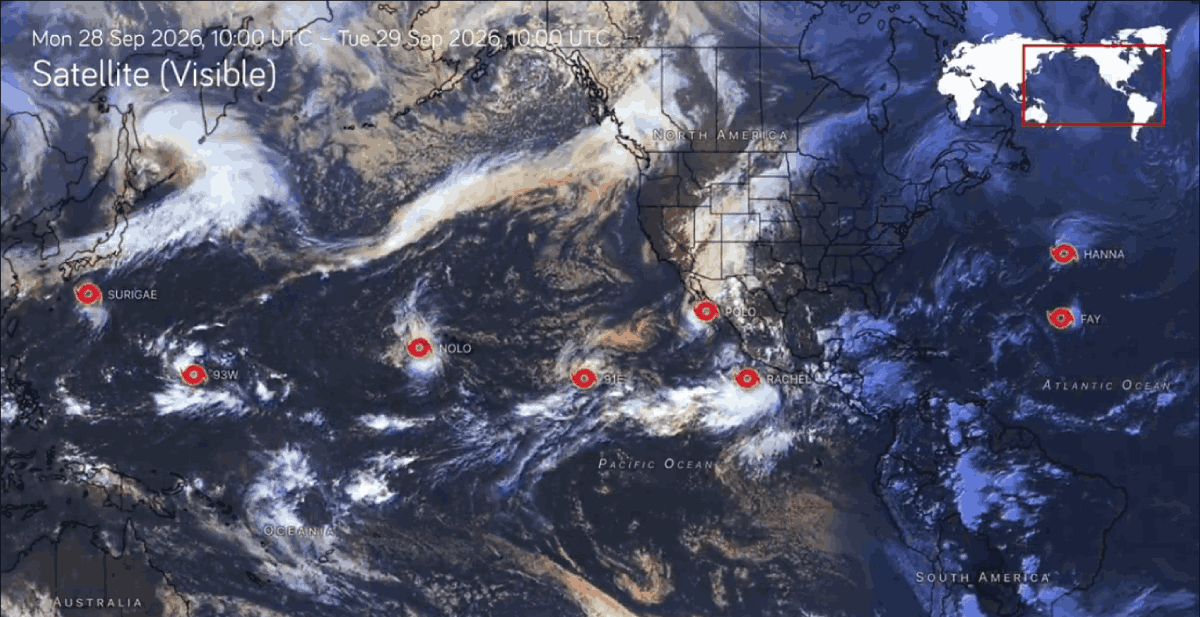
A strange weather pattern is currently being seen in the oceans around the world. Satellites have recorded eight cyclones being active at the same time. Cyclones Nolo, Polo and Typhoon Surij are wreaking havoc in the Pacific Ocean. On the other hand, this year the speed of cyclones in the Atlantic Ocean is 90 percent less than the average and only two storms are active there.
🌀 Eight tropical systems are currently active across the Atlantic and Pacific
Two tropical storms, Hanna and Fay, are active in the Atlantic. Both are weakening and are likely to dissipate over the next few days. The Atlantic hurricane season remains exceptionally inactive. No… pic.twitter.com/ST4R6awnCl
— Windy.com (@Windycom) September 29, 2026
In terms of global climate and oceanography, a very rare and surprising incident has come to light. Advanced weather satellites have captured such a picture of the oceans, in which 8 cyclones are seen roaring at very high speed in different oceans on Earth. According to meteorologists, this situation has arisen due to major changes in atmospheric circulation and ocean temperature. The biggest role in this is of the weather system 'El Nino', which is currently strengthening in the Pacific Ocean.
'Cold' conditions in the Atlantic Ocean
According to the rules of science, the months of August and September are considered the peak of hurricane season in the Atlantic Ocean. However, this time of year the Atlantic Ocean is very calm and cool. Only two tropical storms, Fay and Hanna, have formed so far this season, and neither storm has intensified into a severe hurricane.
In meteorology terms, 'accumulated cyclone energy' is used to measure the total energy of storms. Scientists have observed that this year the 'ACE' index in the Atlantic has fallen by 90 percent from the normal average. The physical reason behind this is that due to wind speed and low moisture content in the upper layer of the ocean, storms are not able to get the necessary energy.
Huge explosion of energy in the Pacific Ocean
When the Atlantic Ocean is calm, there is a huge burst of energy in the Pacific Ocean. Satellite data shows that at the same time, highly damaging weather systems are active in this area. These include Category 4 hurricanes 'Hurricane Nolo' and 'Hurricane Polo', Tropical Storm 'Rachel' and Typhoon Surigae, which are moving towards the Asian coast.
These storms have gained greater intensity due to evaporation as sea surface temperatures have risen above 28 degrees Celsius. This is happening due to winds blowing at a speed of 150 to 200 km per hour in the Pacific Ocean, formation of round clouds and heavy rains.
Also read-