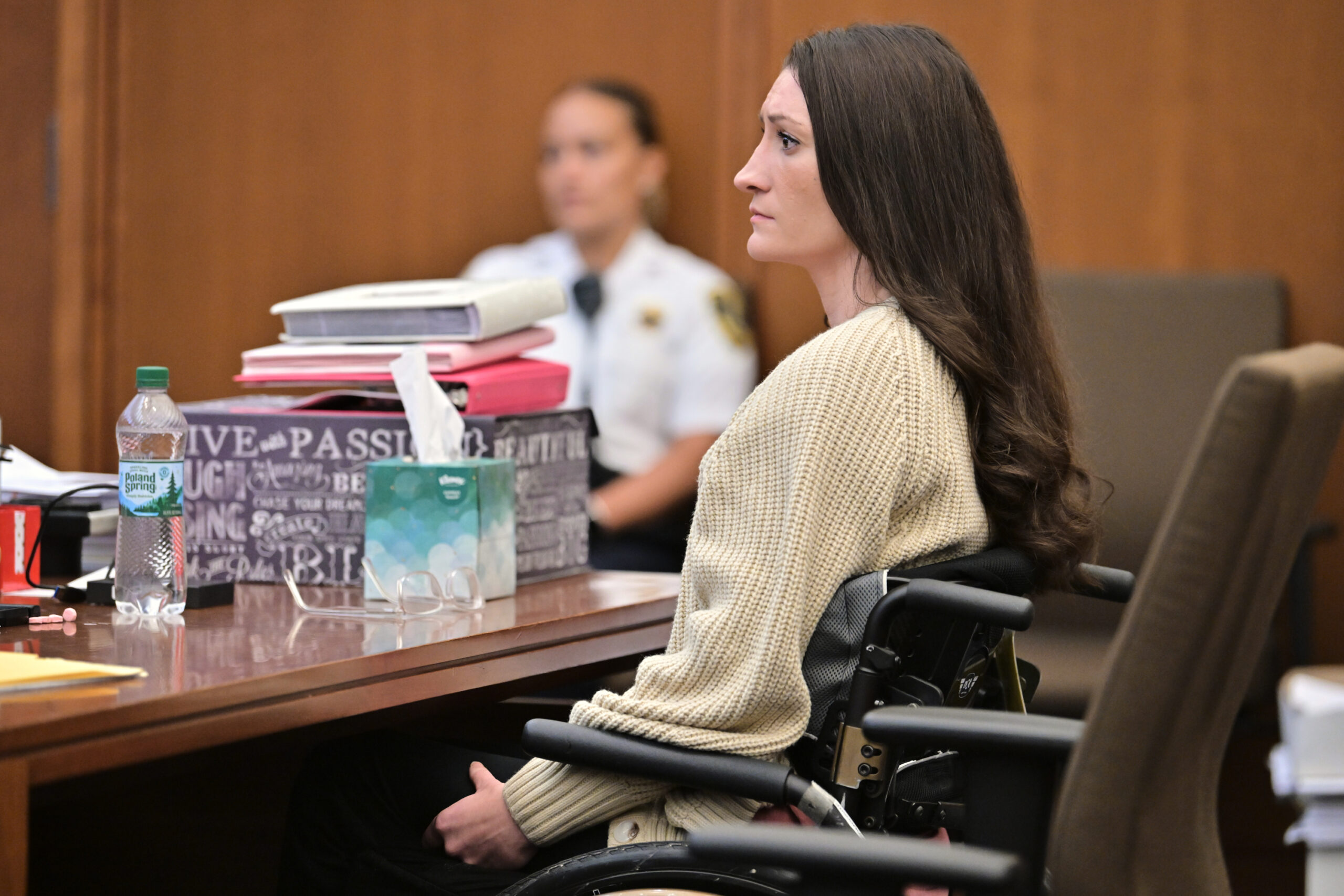
Judge Denies Lindsay Clancy’s Acquittal Request After Deadlocked Murder Trial/ TezzBuzz/ WASHINGTON/ J. Mansour/ A Massachusetts judge rejected Lindsay Clancy’s request for acquittal Thursday, finding sufficient evidence for the murder charges to remain. Her first trial ended with a jury deadlocked 11-1 in favor of acquittal after the defense argued she was not criminally responsible because of mental illness. Prosecutors have not decided whether to retry the case, pursue lesser charges or drop it, while Clancy remains hospitalized.

Quick Look
- Acquittal motion denied: Judge William Sullivan found that physical and circumstantial evidence could support a murder verdict.
- No finding of guilt: The ruling addressed whether the evidence was sufficient, not whether Clancy was guilty.
- First trial ended in mistrial: Jurors were split 11-1 in favor of acquitting her of murder charges.
- Earlier defense focused on mental illness: Attorneys argued that postpartum psychosis left her not criminally responsible.
- New motion challenged proof: Defense lawyer Kevin Reddington argued that prosecutors had not sufficiently established her involvement.
- Prosecutors disputed the claim: They pointed to testimony, DNA evidence and the broader trial record.
- Retrial decision pending: Prosecutors could retry the murder charges, pursue lesser offenses or dismiss the case.
- Hospitalization continues: Clancy is expected to remain at a psychiatric hospital until the case is resolved.

Deep Look
Judge Rejects Defense Request for Acquittal
BOSTON — A judge Thursday denied a defense motion seeking to have Lindsay Clancy found not guilty because of insufficient evidence in the deaths of her three children.
Judge William Sullivan ruled that the prosecution had presented enough evidence for the murder charges to remain pending after Clancy’s first trial ended in a mistrial.
The decision does not establish guilt. It rejects the defense’s argument that the evidence was legally insufficient to support the charges.
“There was evidence introduced, both physical and circumstantial, that would permit a rational trier of fact to find beyond a reasonable doubt the elements of the charge of murder,” Sullivan wrote.
Ruling Leaves Credibility Questions to a Jury
Sullivan said he was required to assess the evidence in the light most favorable to prosecutors when deciding the motion.
He also said a jury, rather than the judge, must determine whether to accept defense experts’ testimony that mental illness prevented Clancy from being criminally responsible.
During the first trial, the defense argued that Clancy experienced postpartum psychosis, a rare mental health condition.
That defense did not dispute that she carried out the killings. Instead, it challenged whether she could be held criminally responsible for her actions.
First Trial Ended With Jury Split 11-1
Clancy’s first trial ended Sept. 4 after jurors could not reach a unanimous verdict.
Sullivan declared a mistrial with the jury divided 11-1 in favor of acquitting her of murder charges.
The split did not produce an acquittal, and Clancy remains charged.
Prosecutors have yet to decide whether to seek another trial on first-degree murder, pursue lesser charges such as second-degree murder or manslaughter, or drop the case.
Defense Challenges Evidence in Post-Trial Hearing
At Tuesday’s hearing, defense attorney Kevin Reddington argued that prosecutors had failed to prove Clancy committed the killings.
He suggested the case “was based on speculation” and claimed that police conducted almost no investigation.
Reddington also raised questions about Clancy’s mental condition outside the night of the deaths and her reported lack of memory.
Prosecutors rejected that characterization, describing the argument as “laughable.”
“For the first time, the defendant is arguing that there is no evidence she did this,” Prosecutor Shanan Buckingham told the judge. “I’d suggest to you the entire record is voluminous as to information supporting the fact that she did this.”
Trial Record Included Testimony and DNA Evidence
Jurors heard testimony that Clancy said voices instructed her to kill her children: 5-year-old Cora, 3-year-old Dawson and 8-month-old Callan.
Her DNA was found on exercise bands used to strangle them.
Before trial, Reddington filed a motion stating that Clancy was willing to formally acknowledge, in writing, her involvement in the children’s deaths.
Those elements formed part of the record prosecutors cited in opposing the acquittal request.
Criminal Responsibility Remains Central Dispute
Prosecutors acknowledged at trial that Clancy had mental health problemsreceived months of treatment and spent time in a psychiatric hospital.
However, they argued that she understood what she was doing when she killed the children at the family’s Massachusetts home in 2023 and then attempted suicide.
Defense experts offered a different assessment, supporting the argument that mental illness prevented criminal responsibility.
Sullivan’s ruling leaves that dispute unresolved rather than deciding which account a jury should accept.
Clancy Remains Hospitalized While Case Continues
Clancy, a 36-year-old former labor and delivery nurseis expected to remain in a psychiatric hospital until the proceedings conclude.
A murder conviction could have resulted in life imprisonment. An acquittal could also have led to court-ordered confinement in a mental health facility.
Her former husband, Patrick Clancy, who discovered the children’s bodies, has said publicly that he forgives her.
The livestreamed trial attracted substantial public attention and brought renewed focus to maternal mental health after childbirth.
If you or someone you know needs support, call or text the U.S. Suicide & Crisis Lifeline at 988.
More on US News