Genting Singapore, which operates the Resorts World Sentosa (RWS), saw earnings before interest, taxes, depreciation and amortization (EBITDA) rose 12% year-on-year to SGD210.8 million (US$165 million) in the second quarter, according to a company filing.
DBS research analyst Chee Zheng Feng said Genting Singapore arguably delivered the stronger second-quarter result relative to expectations.
Following Genting Singapore’s weak first quarter, DBS had expected no improvement in the second, particularly because the World Cup could divert some patrons’ wagering budgets to sports betting.
Management has since said internal structural issues hurt first-quarter operations but have largely been resolved, Chee said, as quoted by The Business Times.
|
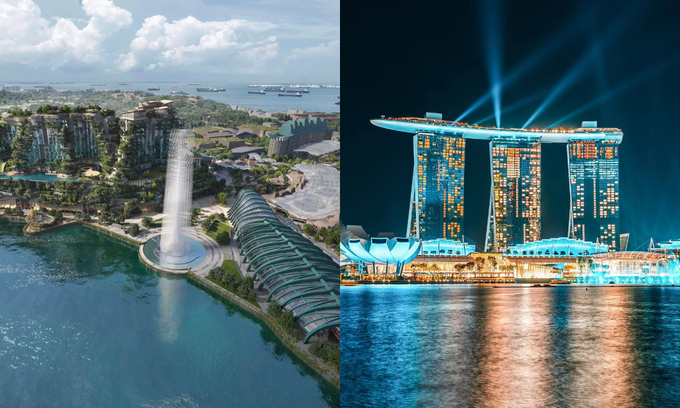
Resorts World Sentosa Waterfront Lifestyle Development. Photo via Facebook/ResortsWorldatSentosa |
But Genting is still struggling to increase its share, said Ben Lee, managing partner of Macau-based consulting firm IgamiX.
“I see them losing the battle, and even more market share,” said Lee said, as quoted by Bloomberg.
Lee said it simply had not been able to match the “luxuriate experience” of Marina Bay Sands, which has been a big draw for so-called VIPs, who are the biggest spenders and most highly coveted casino customers.
In terms of profits, Genting Singapore’s figures remained well below MBS’ adjusted EBITDA of $689 million in the second quarter.
“From an absolute performance perspective, Marina Bay Sands (MBS) continues to be the stronger operator,” Chee said. “Despite the softer quarter, MBS maintains a clear lead in market share, profitability and premium customer penetration, and continues to gain share from RWS over the longer term.”
Industry observers say MBS has extended its lead over Genting Singapore, helped by its city-center location and “high quality” positioning.
Lee pointed to the “dozens of mixed quality hotels around the Marina Bay area,” compared with the more limited selection near RWS.
Service and quality further distinguish the resorts, Lee said. MBS occupies a “much higher position”, while RWS is viewed more as a family vacation destination than a gaming destination. Tourists’ experiences have strengthened those reputations over time.
George Choi, head of global gaming research and regional conglomerates at Citi Research, said the market had previously settled into a “golden split”, with MBS taking about two-thirds and Genting Singapore one-third. The gap has since widened, and he does not expect that split to return soon.
MBS has also renovated its property, including converting rooms into suites, allowing it to charge average room rates of about $1,000 a night.
“With that property, you’re able to appeal to the whale players out there,” Choi said, using the industry term for customers who wager large amounts.
RWS has been slower in making upgrades. Renovations at RWS began more than two years after those at MBS, Choi said.
Its nongaming amenities have been gradually reintroduced only since the second half of 2025, and its new chief operating officer took over only in December last year. RWS will need more time to catch up, he said.
Chee, however, said Genting Singapore’s latest results suggest its market-share losses may be slowing. The stronger-than-expected quarter indicates that some operational problems earlier in the year were temporary.
He expects MBS to retain 60% to 65% of Singapore’s gaming market but sees little risk of RWS’ share falling below 30% again.
Lee is less optimistic, arguing that gaming’s volatility makes a longer-term view more useful than quarterly figures. By his measure, the market was split 51% to 48% in MBS’ favor when the resorts first opened around 2011. In 2025, that had shifted to 81% for MBS and 19% for RWS, he said.
“This long-term picture shows that there’s very clearly a divergence in terms of fate and fortune, with MBS clearly dominating the landscape against RWS.”
 |
|
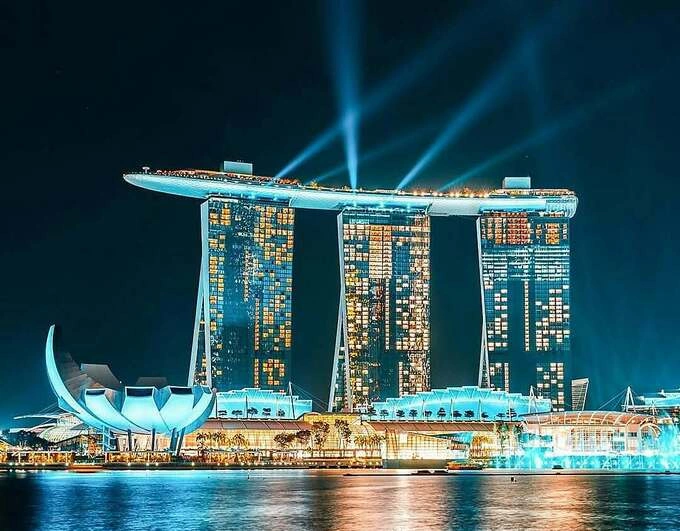
Marina Bay Sands. Photo via Facebook/marinabaysands |
Upgrades underway
Both resorts have committed substantial capital to expansion.
MBS’ new tower, IR2, is being built at a cost of $8 billion and is scheduled for completion in 2030. It will include an all-suite ultra-luxury hotel with a rooftop experience, food and beverage and retail offerings, meetings, incentives, conferences and exhibitions space, and a live entertainment arena.
Choi said the 15,000-seat arena could allow MBS to bring in major attractions during slower periods or further increase gross gaming revenue when business is stronger.
Genting Singapore’s SGD6.8 billion RWS 2.0 project includes a waterfront development also due for completion in 2030. Plans call for two new luxury hotels, a four-story retail and dining podium, a mountain trail and a waterfront promenade.
RWS is also expected to benefit from the Greater Sentosa Master Plan, which includes a transport hub designed to improve access to the island from the mainland, according to the Sentosa Development Corporation’s website.
“If that works out, then we might have a ball game between the two Irs,” Choi said.
Because casinos are largely similar, nongaming amenities will determine which resort stands out, Choi said. He added that it is too early to say whether the gap will narrow.