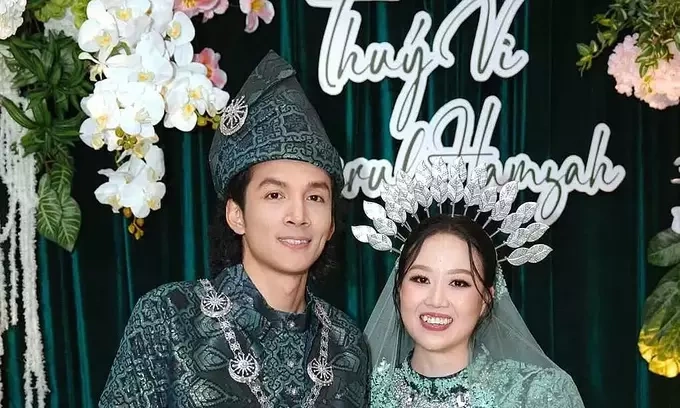
Even Vi’s parents had feared that the geographical distance as well as cultural and religious differences could cause conflicts in married life.
At one point, her mother suggested that Vi should return to Vietnam to rethink things. Vi’s father simply said: “I trust your decision.”
While Vi’s family was still filled with hesitation, Amirrashid’s mother took the initiative to help both sides understand each other. Having lived in Australia for many years, she had an open-minded view of cultural and religious differences.
She told her son and Vi that while religion is important, the couple’s life together after marriage is equally crucial.
|
Thuy Vi and Amirul Hamzad Amirrashid’s wedding held in July of 2026. Photo courtesy of Vi |
Knowing that Vi’s parents were worried, she video-called them to ask for their approval of the couple’s marriage.
She said Vi would not have to convert to Islam or change her lifestyle just to marry her son. “She said as long as the two of them live happily and joyfully, that’s all that matters,” Vi says.
After the conversation, her parents were gradually reassured. The openness of Amirrashid’s family also gave her greater confidence about marrying a foreigner from a different religious background.
The two had met in Australia. Amirrashid had emigrated to the country with his mother in 2017, while Vi went in 2022 on a working holiday visa. She worked at a fruit packing warehouse, where he was a supervisor.
The two lived close to each other, and so she would ask him to take her to work every day since there were no buses and a rideshare cost around VND200,000 (US$7.7) one way. He refused to take money from her though she shyly offered several times to pay him.
To thank him, she invited him out for a meal. After the meal, Amirrashid drove Vi around the city. They chatted about work, life, and future plans. From those rides to work and after-work meals, the two gradually realized they had much in common. Three months later, they officially started dating.
 |
|
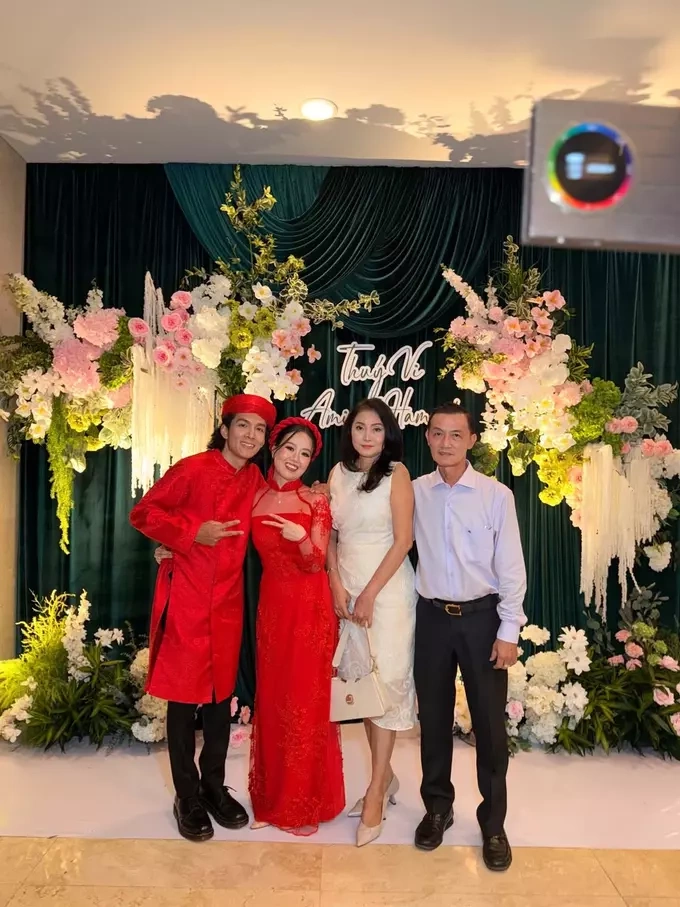
The couple’s wedding that combined Vietnamese and Malaysian cultures. Photo courtesy of Vi |
Her initial impression of Amirrashid was that he was cold and unapproachable, but the more time she spent with him, the more she realized that behind that exterior was an honest, warm-hearted man who respected others’ decisions and cherished his family.
Every time she made a video call to her family in Vietnam, he would learn a few simple Vietnamese phrases to greet her parents.
But when marriage loomed, they had to confront the question of how to coexist across two different cultures.
She researched potential cultural clashes in family life, and clearly told him that she still wanted to study, work, and pursue her passions after marriage.
He agreed. The couple also discussed family principles related to Amirul’s religion beforehand, rather than waiting until they lived together to start adapting.
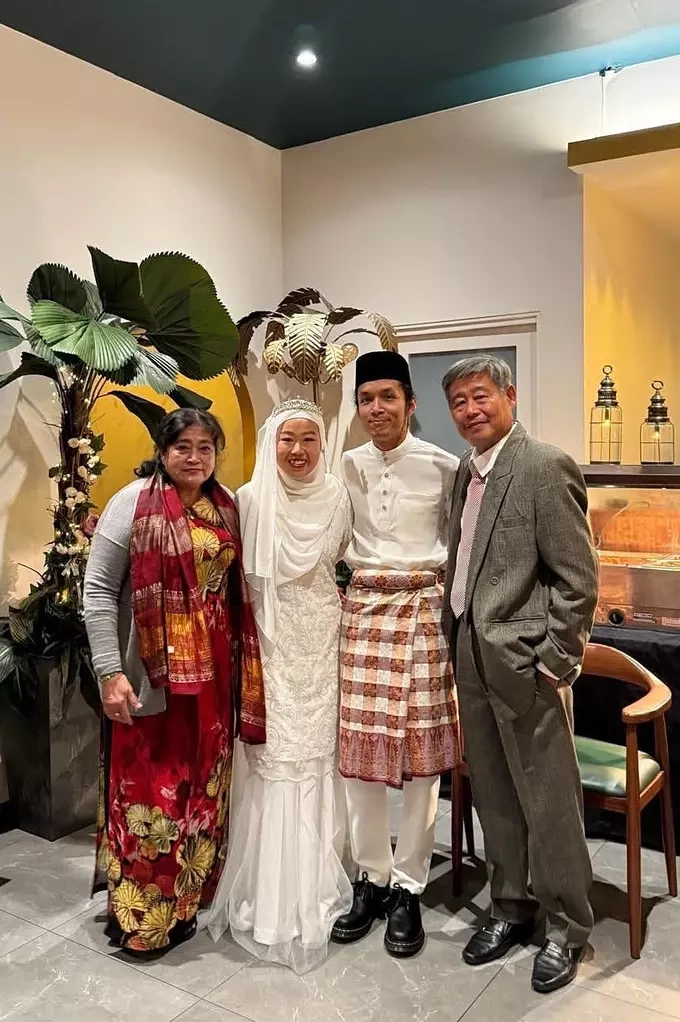
Following their engagement ceremony in Australia in 2025, which some 30 people attended, the couple decided to hold their wedding in Vietnam in July according to her family traditions.
Around 50 of his relatives and friends traveled from Malaysia to attend the wedding. Vi’s family invited around 300 guests and had six separate banquet tables for the groom’s family with chicken and seafood that complied with his family’s dietary restrictions.
On wedding day, the bride and groom wore traditional Malaysian attire to welcome guests, and then changed into a suit and wedding gown for the ceremony on stage. Finally, they wore the Vietnamese attire, ao dai, to greet every guest table.
Despite the language barrier, relatives from both sides found ways to chat and blend into the atmosphere.
They danced and sang together; even Amirrashid’s maternal grandmother was present to witness the couple’s special day.
“Our wedding was very lively. Both families danced and sang together; despite the language barrier, we were still in harmony. That is what made me feel the happiest,” Vy says.
 |
|
The couple’s engagement ceremony in Australia in 2025. Photo courtesy of Vi |
After the wedding, the couple have moved to Australia. Vi gradually realized that her mother-in-law’s promise manifested in the small details of everyday life: She does not have to change her way of dressing or wear a headscarf when going outside.
Amirrashid does not ask his wife to give up her studies or career. The couple shares household chores: one cooks while the other washes the dishes, one does the laundry while the other mops the floors.
Before getting married, they mostly ate out because neither knew how to cook. After moving in together, they learned how to make food that suits them both.
Amirul does not eat pork for religious reasons, and so family meals usually consist of chicken and fish. Vi never liked pork to begin with, and so does not find this inconvenient.
For her, the biggest change after marriage is not adapting to a new religion; it is learning how two people with differences can live together in harmony. “I am happy to have found my husband. I think cultural and language differences are not a big deal when both know how to love and look out for each other.”