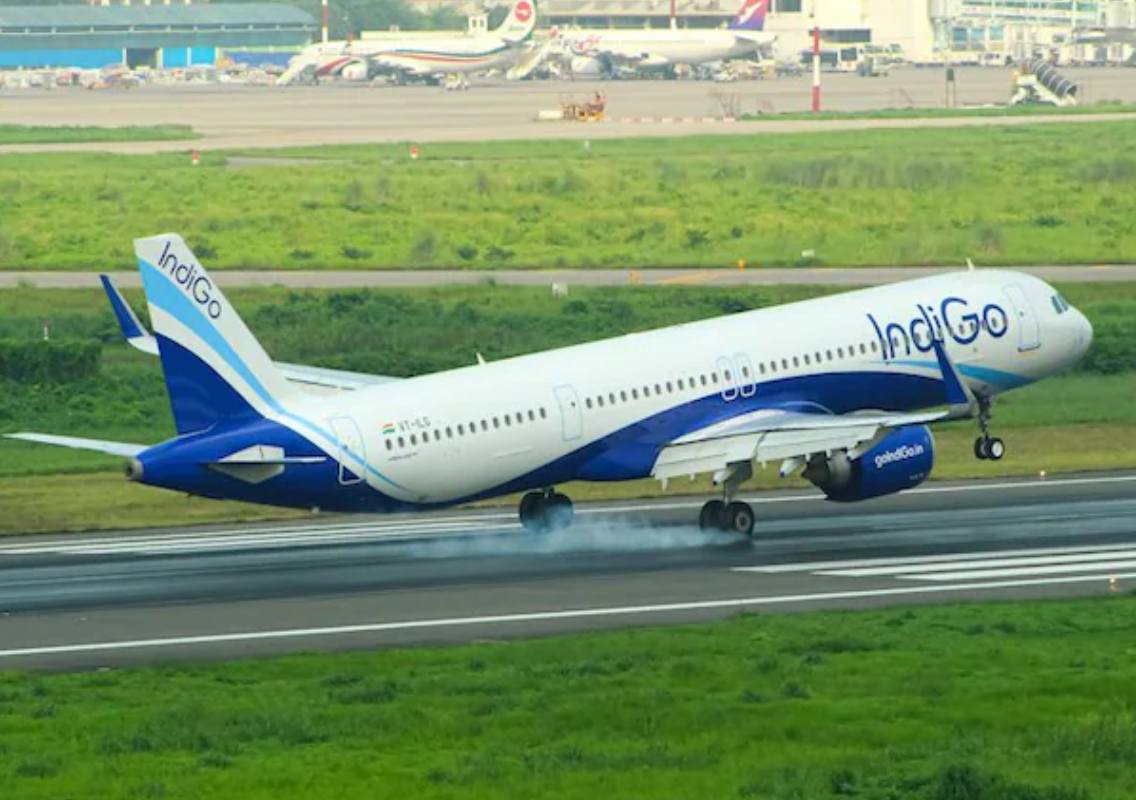
New Delhi: Airfares on IndiGo flights are set to rise from October 6 after the airline announced revised fuel charges across its domestic and international network, citing a sharp increase in Aviation Turbine Fuel (ATF) prices.
The revised charges will apply to all new bookings made from 12:01 am on October 6, 2026, IndiGo said. The airline attributed the move to sustained volatility in fuel prices and a more than 14 per cent month-on-month increase in ATF costs.
The revision means passengers booking flights after the effective time will pay an additional fuel charge depending on the distance and destination of their journey.
Why has IndiGo revised fuel charges?
IndiGo said ATF prices have remained volatile in recent months, with geopolitical developments in the Middle East contributing to fluctuations in fuel costs.
According to the airline, the latest month-on-month increase in ATF prices has exceeded 14 per cent, taking fuel costs to among their highest levels in the past decade.
Fuel is one of the largest operating expenses for airlines. A sustained increase in ATF prices can therefore put pressure on airline cost structures and affect the economics of operating different routes.
IndiGo said the increase in fuel costs was expected to affect its own cost structure and network economics.
The airline has consequently introduced revised fuel charges rather than absorbing the entire increase in operating costs.
New domestic fuel charges from October 6
For domestic flights, IndiGo’s revised fuel charge will vary according to the distance travelled.
Passengers booking domestic flights from October 6 will pay:
| Flight distance | Revised fuel charge |
|---|---|
| Up to 500 km | Rs 375 |
| 501–1,000 km | Rs 600 |
| 1,001–1,500 km | Rs 900 |
| 1,501–2,000 km | Rs 1,150 |
| More than 2,000 km | Rs 1,300 |
The distance-based structure means passengers on longer domestic routes will face a higher additional fuel charge.
The revised amount will be added to the applicable fare and other charges associated with the booking.
International flights also become costlier
IndiGo has also revised fuel charges for international flights.
For flights within the SAARC region, the charge will be Rs 1,000 for journeys of up to 500 km, while routes covering 501 km or more will attract a Rs 3,000 charge.
For other international destinations, the revised charges are:
| Region | Revised fuel charge |
|---|---|
| Southeast Asia | Rs 5,500 |
| GCC and Middle East | Rs 5,500 |
| North and East Asia | Rs 5,500 |
| Africa | Rs 6,000 |
| Europe | Rs 10,000 |
The revised international charges will similarly apply to new bookings made from 12:01 am on October 6.
IndiGo calls increase a measured adjustment
IndiGo said it could have introduced a substantially larger increase to fully offset the rise in fuel expenses but chose a more moderate approach.
“While offsetting the increase in fuel costs would have required a significantly larger increase in the fuel charges, IndiGo has implemented a measured and relatively modest adjustment to minimise the impact on customers,” the airline said.
The carrier acknowledged that the revised charges would increase the overall cost of air travel for passengers.
However, it said the adjustment reflected sustained increases in operating expenses and changing market conditions.
What does the higher ATF price mean for passengers?
The increase in ATF prices can have a direct impact on airline operating costs because aviation fuel accounts for a significant portion of an airline’s overall expenses.
When fuel prices rise sharply and remain elevated, airlines can respond through higher fares, fuel surcharges or other cost-management measures.
IndiGo’s latest decision specifically introduces or revises fuel charges rather than announcing a uniform percentage increase across all fares.
As a result, the impact on passengers will vary depending on the route and destination.
A traveller booking a short domestic flight will face a lower fuel charge than someone travelling on a longer domestic route. International passengers will see substantially higher additional charges, particularly on flights to Europe.
Middle East tensions add to fuel price volatility
IndiGo’s announcement comes against the backdrop of continued volatility in global energy markets.
The airline specifically cited geopolitical developments in the Middle East as one of the factors contributing to fluctuations in ATF prices.
For airlines, sudden movements in fuel prices can make route economics more difficult to predict. This is particularly relevant for carriers operating extensive domestic and international networks.
IndiGo said it will continue to monitor fuel prices and the broader market environment.
The airline also indicated that it could make further adjustments if market conditions warrant them.
IndiGo says affordable travel remains a focus
Despite the higher fuel costs, IndiGo said it remains focused on providing affordable and convenient air travel.
The airline said the latest fuel-charge revision was designed to balance the increase in operating costs with the need to minimise the impact on customers.
The move comes at a time when domestic and international air travel demand remains an important part of India’s growing aviation market.
For passengers, however, the revised charges mean that the final cost of new bookings made from October 6 will be higher than under the earlier fuel-charge structure.
IndiGo fuel charge revision: Key details
- Effective from: 12:01 am, October 6, 2026
- Reason: More than 14 per cent rise in ATF prices
- Domestic charge: Rs 375 to Rs 1,300 depending on distance
- SAARC: Rs 1,000 up to 500 km; Rs 3,000 for 501 km and above
- Southeast Asia: Rs 5,500
- GCC and Middle East: Rs 5,500
- North and East Asia: Rs 5,500
- Africa: Rs 6,000
- Europe: Rs 10,000
The revised charges will make IndiGo tickets costlier for new bookings from October 6, with the exact impact depending on the route and destination.
For now, the airline has described the revision as a measured response to higher fuel costs. However, with ATF prices remaining volatile, passengers and the aviation industry will be watching whether further changes become necessary if fuel prices remain elevated.