The new outlets will primarily be in these two “high-growth coffee markets,” said Wu Kaizhi, chief financial officer of the mainboard-listed company, as quoted by The Business Times.
DFI Retail earlier announced a reorganization of Maxim’s Caterers, its joint venture with Hongkong Caterers, that will see DFI taking full control of the licensed business operating over 1,100 Starbucks coffeehouses in Thailand, Hong Kong, Singapore, Vietnam, Cambodia, Macau and Laos.
“Post-completion, the Starbucks-licensed business will be immediately revenue and operating margin accretive to the Group’s core retail business, with further upside from operating synergies,” DFI said in a statement cited by Reuters.
Euromonitor data cited by DFI showed that Southeast Asia’s specialist coffee and tea market was worth US$3.8 billion last year and is expected to grow at a compound annual rate of 5% through 2030.
Thailand has the largest Starbucks footprint among the markets covered, with 574 outlets, while Vietnam has 156. Hong Kong and Macau together have 177 stores while Singapore has 138.
|
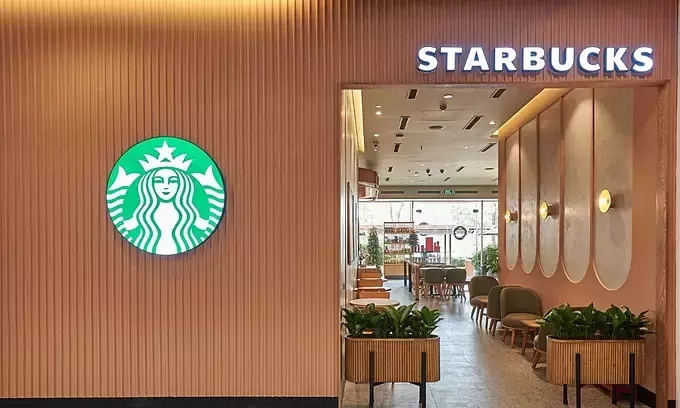
A Starbucks outlet in Vietnam. Photo courtesy of Starbucks Vietnam |
But coffeehouse penetration is lower in Thailand and Vietnam, at 28-33 coffeehouses per 100,000 residents, compared with 65 in Singapore and 45 in Hong Kong.
Andrew Wong, the DFI Ikea CEO who will also oversee DFI’s Starbucks business, said Thailand and Vietnam will be the initial focus, adding that there is room to drive greater coffee and tea consumption in Singapore and Hong Kong, according to The Straits Times.
DFI aims to preserve Starbucks’ premium positioning instead of competing through price and to attract more customers across the entire day, rather than only in the mornings.
It plans to expand its menus with matcha, chai and functional drinks like protein beverages, as well as broadening its Starbucks’ Teavana tea brand.
Stores will also tailor their menus to local tastes and introduce premium all-day snacking, savory foods and grab-and-go options.