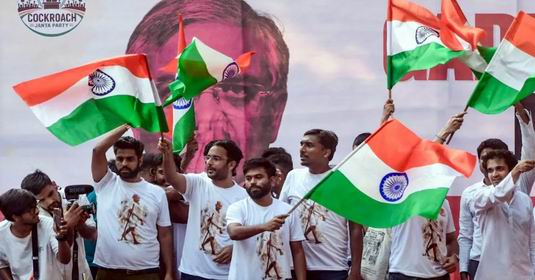
New Delhi. The scope of opposition is increasing in the country's politics demanding the resignation of Chief Election Commissioner Gyanesh Kumar. Opposition parties and various groups along with the Cockroach Janata Party (CJP) are raising questions from different forums regarding the Election Commission and the Special Intensive Review (SIR). In such a situation, the biggest question is whether this pressure can ever create the same political impact as was seen in the resignation of the then Union Education Minister Dharmendra Pradhan during the NEET-UG paper leak controversy this year.
CJP again intensified the movement
CJP founder Abhijeet Deepke has announced to intensify the movement demanding the resignation of Gyanesh Kumar. The organization has raised many questions regarding the process of SIR, changes in the voter list and decisions of the Election Commission. After the demonstration in Mumbai on 2 October, now preparations have been made for a big movement at Jantar Mantar in Delhi on 10 October.
Apart from the demonstrations in Delhi and Mumbai, opposition parties are also demanding the resignation of CEC through different programs. Although the movements of CJP and opposition parties are on similar issues, their strategy and political role are different.
Why was Dharmendra Pradhan's case different?
Dharmendra Pradhan's resignation took place on July 25, 2026, amid the NEET-UG paper leak controversy. At that time, along with the long agitation of the students, the opposition parties were also demanding the resignation of the Education Minister. Ultimately Pradhan submitted his resignation to the Prime Minister.
But there is a fundamental difference in both the cases. Pradhan was a minister in the central government and held a political post, while Gyanesh Kumar is the head of the constitutional body. Therefore, it is not necessary that any movement or political pressure has the same impact on both the positions.
Removing CEC is not as easy as resignation of the minister.
The post of Chief Election Commissioner is established under the Constitution. Like a minister, the CEC cannot be removed from office directly by the decision of the political leadership. The process of removing the Chief Election Commissioner has been kept very difficult in the Constitution and for this it has to go through a special process of the Parliament.
This is the reason why the ongoing political and social pressure against Gyanesh Kumar does not in itself guarantee his removal from the post. If he does not resign himself, the matter goes in the direction of constitutional and parliamentary process.
Second layer of controversy regarding Election Commission
An important part of this entire controversy are the questions raised regarding the decision process within SIR and the Election Commission. The opposition and CJP are demanding transparency on some decisions and the process of changing the voter list. At the same time, the Election Commission has been calling these processes as part of its constitutional responsibility.
Meanwhile, the issue of hearing petitions challenging some decisions of the Election Commission under the leadership of Gyanesh Kumar has also come up in the Supreme Court. The petitioners have alleged that certain decisions and guidelines were taken without the approval of other election commissioners. The judicial process on these charges is still ongoing; This cannot be seen as a final conclusion.
Is resignation from the movement possible?
Increasing political pressure and resignation of a constitutional officer are two different things. CJP is citing Dharmendra Pradhan's resignation as an example in its previous agitation, but in the case of Gyanesh Kumar, the constitutional nature of the post changes the whole picture.
At present it is too early to say what will be the outcome of the current movement. On one hand CJP and opposition parties are preparing to take the movement forward, while on the other hand the Election Commission is defending its decisions and the SIR process. In the coming days, the movement on the streets, the politics of Parliament and the ongoing proceedings in the court – the stance of these three may be important in deciding the direction of this dispute.