
All across America, you might have noticed an increasing number of electric bikes zipping around the neighborhood. But perhaps what’s even more surprising is the sheer number of these e-bikes being operated by children. Is that even legal? The answer’s going to vary pretty tremendously depending on where you’re at in the US, as each state (and, in many cases, each community) can set its own rules about who can ride e-bikes where. Take California’s e-bike legal limits, for example.
But regardless of what the law says, a new poll suggests many parents wouldn’t even be able to tell you the rules. According to the University of Michigan Health C.S. Mott Children’s Hospital National Poll on Children’s Health, only 6% of parents of children ages 11 to 18 would call themselves very informed about e-bikes. More than two-thirds would go as far as to admit they’re not informed at all. The poll surveyed 1,234 parents in all back in July 2026, nearly half of whom also admitted they had no clue where e-bikes are supposed to be ridden. There are things to know before buying an e-bike, but not all parents realize that. That doesn’t bode well for anyone involved… kids, parents, or other drivers on the road.
Why such a knowledge gap around e-bikes?
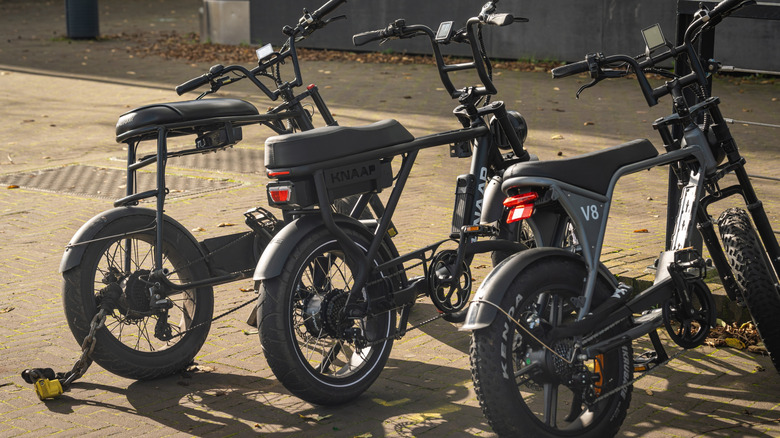
Part of the problem likely has to do with how popular electric bicycles have become: 55% of the parents who participated in the poll reported they frequently see them in their communities, with another 30% that sees them occasionally. Couple that with who’s actually operating them, and that lack of knowledge becomes even more worrying: 35% said someone in their family has ridden one, with 28% being either teens or pre-teens. Another issue making this even more complex: An e-bike is not simply one type of bicycle. There are three standardized classes, each with different motors and speed limits. Even standard bicycles can be turned into e-bikes. That’s a lot of nuance for parents to understand in order to make an informed decision.
At the same time, parents do seem to understand the risk involved: 82% were concerned about riders getting hurt, 62% were worried about pedestrians, and 56% were concerned about other drivers. The same goes for the data on feelings toward safety requirements: 80% strongly support helmets, 68% support clearer age-limit labels, and 63% want clearer markings on the road telling riders where they can and can’t be.