
Gwalior Fort History: This fort of Gwalior built in the eighth century, which is the place where Aurangzeb hanged his brother Murad inside Gopgarh Mansingh Palace and here you will find the world's oldest telephone system and this system of Kular installed in the room of the king and queen which works without electricity and the walls of the Maan Mandir here were studded with diamonds. Which was looted by Ibrahim Lodi and the kings who were kept imprisoned inside the Jahangir Palace here.
They used to mill flour at this very place and after the battle of Tu Smush, all the queens and slaves were poisoned in this same pond. And inside the Vikram Mahal here, you can still see the royal hammam of that time i.e. the bath house and toilet. Your mind will be happy after seeing this temple of mother-in-law and daughter-in-law built in Nagara style with beautiful carvings and this oil temple with marvel as architecture.
History of Gwalior Fort
Today our journey is going to be to this Gwalior Fort located in Madhya Pradesh. Here you will see the entrance gate of the Mughal era and later when Jahangir ascended the throne, he converted this place into a prison cell. It was at this place that Jahangir used to pay taxes to the kings. All those 52 kings and the sixth Guru of Sikhism, Guru Hargobind Saheb Ji, were kept imprisoned here by tying them with chains to these pillars. Later Guru Hargobind Sahib Ji freed all the 52 kings from Jahangir.
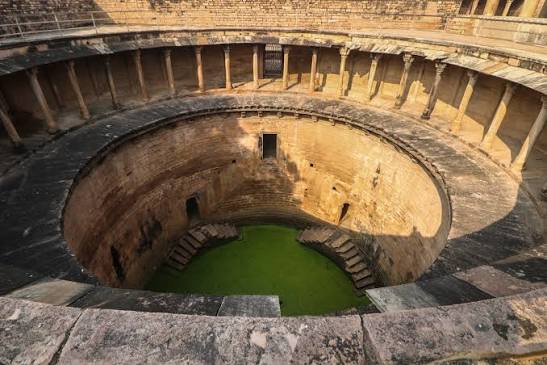
That is why he is called Data Bandi Chod and his Gurudwara is also built here. In front of Shiva temple you will see this 80 pillar stepwell. The water of this well was used by Raja Man Singh Ji for the worship of Shiva temple and there is a path to reach this well. Raja Mansingh ji of Tomar dynasty had built this palace for eight of his nine queens and gold plates were fixed on the dome of this palace.
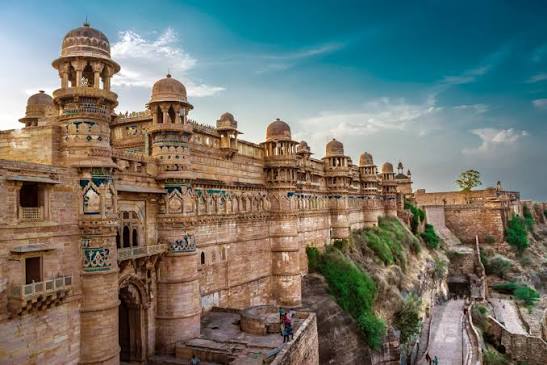
The royal story of Maan Mandir Palace
And on the walls of this palace, these beautiful paintings have been made using terracotta tiles using Meenakari art. Which is 500 years old and its beauty still remains intact. You can see this umbrella in front of the palace. Raja Mansingh ji used to sit in this chhatri and answer the questions of the common people of the state and give justice to them. It is at this place that the king used to sit and you can see these windows on top of this wall. The queens used to sit in these tableaux and watch the justice system of the king.
After coming inside Raja Mansingh's palace, you will reach the court here i.e. King's Diwan Khas, here this special music room has been built for the eight queens of Raja Mansingh and you can see these nets on the upper side of this room. The queens used to sit at this place and the musicians used to sit at this place in the lower part and the musicians were not allowed to see the queens.

Because there was Rajput tradition in those times, no one was allowed to see the queens. Here you will see this beautifully carved room which is the temple of Lord Shiva. Which is called Maa Mandir and this temple was built by Man Singh Tomar for eight queens and inside this temple you will see these 33 windows. Inside these windows, there used to be gold statues of gods Brahma, Vishnu and Mahesh and the queens used to worship Lord Shiva after circling inside this temple.
King's Court and Queen's Music Hall
And the walls of this temple were studded with gold, silver and diamonds. Later in 1523 Ibrahim Ladi looted all this. Coming down the stairs, we are now going towards the first floor of this fort built inside the ground. This palace of Raja Man Singh has a total of six floors. Out of which three floors are underground and after coming here, you will see these eight ponds on top of this room. There used to be eight swings at this place. During the summer season, the eight queens of the king used to swing at this place.
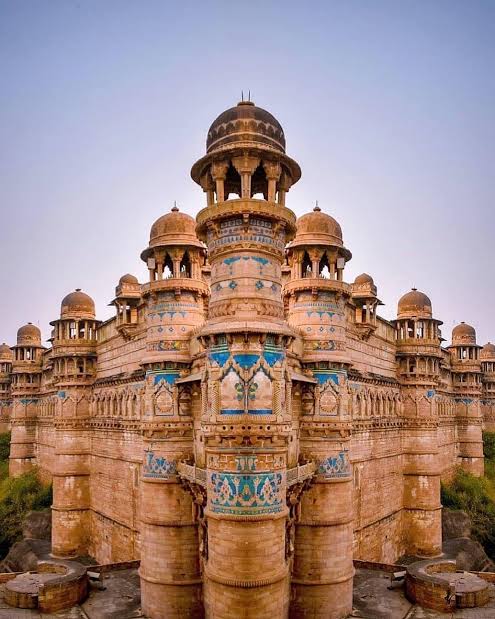
Later, when this fort came under Mughal rule, Aurangzeb converted this place into a hanging house and Aurangzeb hanged his brother Murad at this very place. Right now we are inside this room located on the second floor underground. Whenever the king used to go on war and hunting. Then all the queens of the king used to stand in this room and wait for the king and from this room you will see this window and if you look out of this window you will see this flag.
Beautiful decoration of Maan Mandir
Whenever the king lost the battle, this flag was lowered. Later in 1523, when Ibrahim Lodhi attacked this kingdom, King Mansingh ji had died and this flag was lowered and after seeing the lowered flag, all the queens came to know that King Man Singh had died. Ibrahim Lodhi's soldiers had attacked this palace to take away the queens.

Seeing all this, all the queens had performed Johar in this pond inside this room situated on the third floor of this palace and before doing Johar, this room used to be a very big bathing house of the queen. After taking out water from the pond and putting sandalwood in it, the queens sacrificed themselves in the fire and this is the second Johar of this fort. Inside this room of Johar Kund, you will see the telephone system of Raja Mansingh ji's time.
Mysterious telephone system of Gwalior Fort
This intercom telephone system, made of lime and clay, was connected to the rooms of all the queens through a 3-inch pipe and through this the king used to communicate with all his queens. Now we have reached the second courtyard of Mansingh Palace and the Rang Mahal was built here by the Chinese traders who came to visit India. That's why at this place you can see this Chinese dragon and the roof here is also built in Chinese style.
And this place used to be an open dancing hall during the time of Raja Man Singh Ji. Inside this Rang Mahal, you get to see a 500 year old cooler system. This place used to be the bedroom of the king and queens during the summer season and two fan plates were installed at this place. Being situated at a height of 350 feet the winds used to blow against the wall. Then, due to the rotation of the outer plate, the inner plate also rotated.
Old Cooling System without electricity
And at this place water of mixture of rose and saffron was poured and a mesh of poppy seeds was placed over it and when the wind blew, the fragrance came along with the wind, so it was an air cooling system. After seeing the palace of Raja Mansingh ji of that time, we have now come to this Karna Mahal and this Karna Mahal is 100 years older than Raja Mansingh's palace. This four-storey Karna Mahal was built by Karan Singh Tomar, father of Raja Man Singh ji.
And this is the first and oldest built palace of this fort and the special thing about this palace is that the colors of 600 years old paintings in its fixed rooms and the architecture of the royal Amam Khana i.e. bath house and toilet can be seen here even today. Near Karna Mahal you will see Jahangir's palace. When the Mughals came to rule here, Jahangir had imprisoned the kings and people who rebelled in this Jahangir Mahal.
heavy stone flour mill
And while torturing them at this very place, a flour mill made of heavy stones was made to run. After looking from the top of Jahangir Mahal, you will see this small palace below the fort which is called Gujari Mahal and Mansingh Raja had nine queens, among them the ninth queen, whose name was Rani Mriganka Da, is the Jahangir Mahal behind me and after coming out of this palace, you will see this big water pond here, this is the Johar Kunde of this fort. Around 1232 AD, when King Brang Dev Ji had lost the war and died

So all the queens they had and all the maids their queens had, all of them had performed Johar at this place. This umbrella that you can see behind me is the umbrella of Bhim Singh Rana ji who was the king of the Jat dynasty and he died while fighting and his last rites were performed at this very place, so this umbrella has been built here in his memory. You can't imagine without seeing these two mother-in-law temples built in Nagar style. The trip to Gwalior may remain incomplete.
Teli Temple
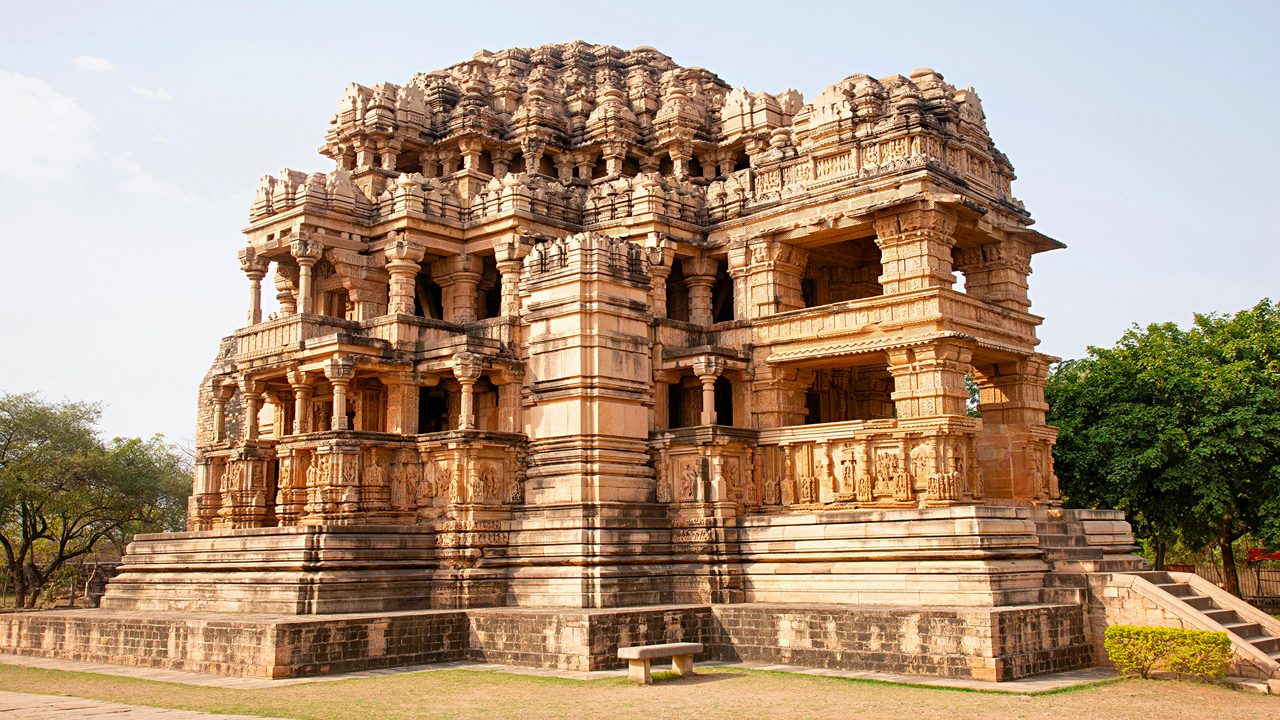
In the 11th century, King Mahipal had built these two temples for his mother and wife and this big temple you are seeing is the mother-in-law's temple which was built under the interlocking system and Lord Vishnu ji used to be seated in the sanctum sanctorum of this temple. As soon as you come out of the temple, you see this daughter-in-law's temple in front. Once upon a time, Lord Shiva used to be seated in the sanctum sanctorum of this beautiful temple.

Your mind will be happy after seeing its very delicate carving. Both these temples are very beautiful but today their womb is deserted. This Teli temple is built at a short distance from the mother-in-law's temple. Which is called Telangana temple. This temple built in Dravidian style is 1100 years old. This temple was built by King Mahi Bhoj and once upon a time Lord Vishnu used to reside in the sanctum sanctorum of this temple and today the sanctum sanctorum of this temple is lying deserted. It may take more than an hour to visit this fort of Gwalior.