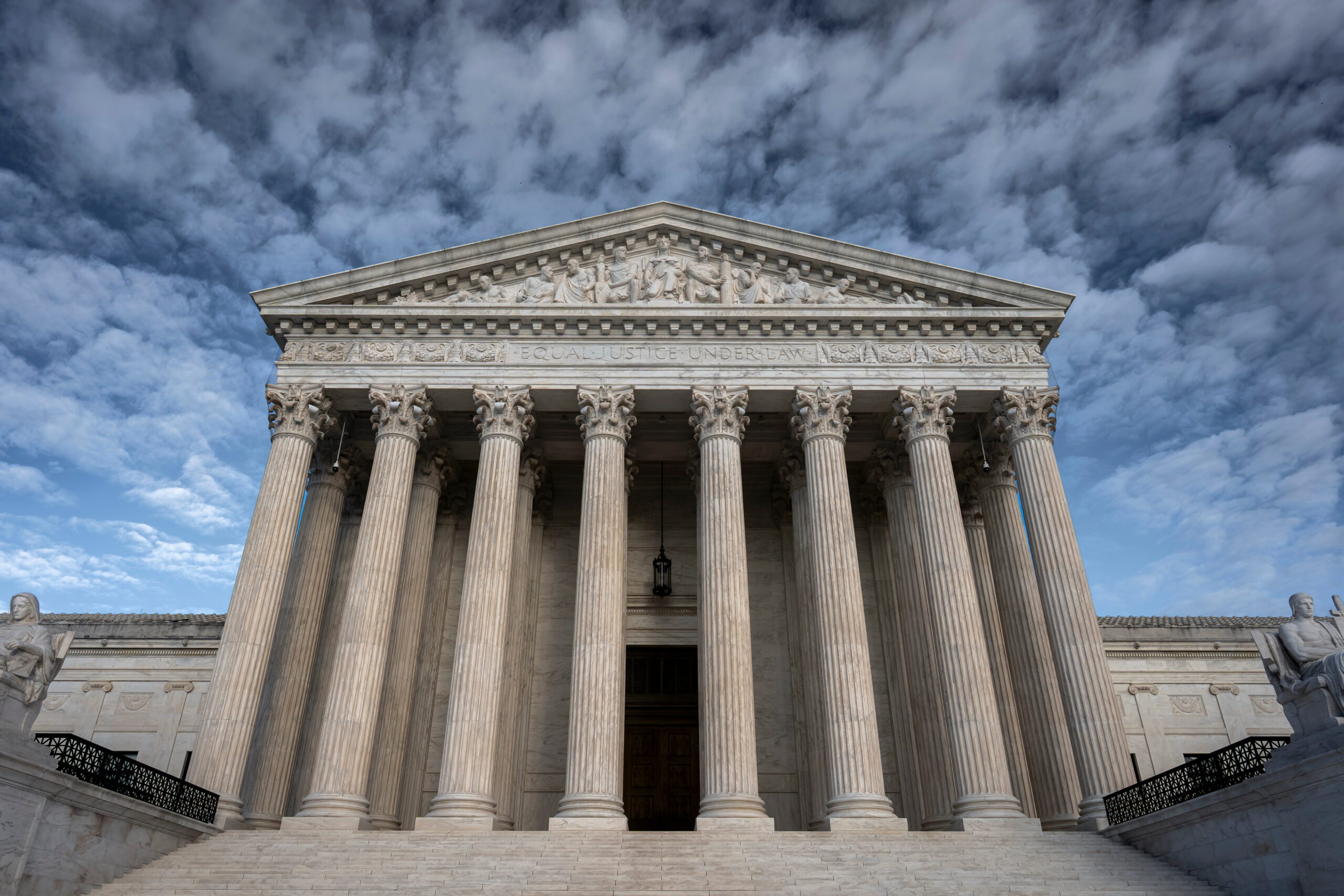
Supreme Court Opens New Term With Climate, Immigration and Gun Rights Cases/ TezzBuzz/ WASHINGTON/ J. Mansour/ The Supreme Court begins its new term Monday with major disputes involving climate change, gun rights, immigration, voting and religious freedom. Justices will examine challenges to energy companies, Trump administration deportation and detention policies, and Arizona citizenship requirements for voters. The agenda also includes semiautomatic rifle bans and a Colorado dispute over religious preschools’ access to public funding.
Quick Look
- Climate litigation: Energy companies want the court to block lawsuits seeking compensation for damage linked to climate change.
- Gun rights: A challenge to bans on AR-15-style semiautomatic rifles will be considered in December.
- Deportations: Justices will review whether migrants sent to countries where they have no ties must receive an opportunity to object.
- Immigration detention: Another case concerns the administration’s policy of holding certain immigrants without bond hearings.
- Voting requirements: Arizona laws involving proof of citizenship and voter-roll removals face review, with arguments scheduled for December.
- Religious preschools: A November case examines Colorado’s nondiscrimination requirements for participation in its publicly funded preschool program.
Deep Look
Supreme Court Begins Term With Major Policy Disputes
WASHINGTON — The Supreme Court opens its new term Monday with cases that could shape climate litigation, firearm restrictions, immigration enforcement, voting requirements and religious schools’ access to taxpayer funding.
Several disputes directly involve President Donald Trump’s policies, including his administration’s deportation practices and mandatory immigration detention rules.
Other cases ask the justices to resolve conflicts over the Second Amendment, citizenship documentation for voters and the relationship between religious freedom and nondiscrimination protections.
Climate Case Could Determine Future of Lawsuits Against Energy Companies
The court begins the term with a major climate change dispute involving efforts to hold energy companies financially responsible for climate-related damage.
Suncor and ExxonMobil are appealing in a case from Boulder, Colorado, seeking to block dozens of lawsuits against the industry.
Local officials argue that energy companies should help cover the rising costs of disasters associated with climate change. Billions of dollars are potentially at stake.
The companies contend that litigation is an inappropriate way to address a global problem.
The Trump administration supports their position, arguing that the lawsuits represent an attempt to impose emissions regulations through the courts.
Semiautomatic Rifle Bans Bring Second Amendment Back Before Justices
The justices will consider a case involving bans on semiautomatic rifles such as AR-15s in December.
Approximately a dozen states prohibit weapons in this category, often described as assault weapons. Those states argue that the firearms are disproportionately used in mass shootings and that restrictions help reduce gun violence.
Opponents maintain that the bans violate the Second Amendment. They emphasize that AR-15s and similar firearms are widely owned and among the country’s most popular guns.
The conservative-majority Supreme Court has expanded gun rights in recent years. Four justices previously indicated that the court would eventually need to address these restrictions.
Third-Country Deportations Face Supreme Court Review
One of two major immigration cases concerns migrants who cannot quickly be returned to their home countries.
The Trump administration has sent thousands of people to other nations where they have no ties, relying on a series of agreements that have often remained secret.
The court will consider whether to overturn lower court orders giving affected migrants an opportunity to object before removal.
While the litigation continues, the justices have allowed the deportation flights to proceed.
The case could have significant consequences for the administration’s broader immigration crackdown.
Mandatory Detention Case Centers on Access to Bond Hearings
A separate immigration dispute challenges the administration’s mandatory detention policy for people living in the United States illegally, including those who have been in the country for years.
The administration argues that it can detain these immigrants without providing a bond hearing.
Most federal appeals courts that have examined the issue have disagreed.
The Supreme Court’s review will address the administration’s claimed authority to require detention without that opportunity for release.
Arizona Voting Laws Raise Citizenship Documentation Questions
The court will also hear a Republican-backed effort to enforce strict voting requirements in Arizona.
One provision requires documentary proof of citizenship for people registering through a state voter-registration form.
Another requires regular voter-roll purges to remove people whose citizenship cannot be confirmed.
The dispute reaches the court after Trump failed to secure congressional passage of legislation requiring documentary proof of citizenship to register to vote.
Arguments in the Arizona case are scheduled for December.
Colorado Preschool Case Tests Religious Rights and Nondiscrimination Rules
In November, the justices will hear a dispute involving Catholic preschools seeking access to Colorado’s taxpayer-funded universal preschool program.
St. Mary Catholic Parish argues that it has been excluded because of its faith-based admissions policies, which do not admit children from LGBTQ+ families.
Colorado maintains that religious schools may participate but must comply with nondiscrimination requirements.
Established through a 2020 ballot measure, the program provides public funding for preschool at schools chosen by parents.
The case adds another religious-rights dispute to the court’s agenda, focusing on the conditions states may place on participation in publicly funded education.
More on US News