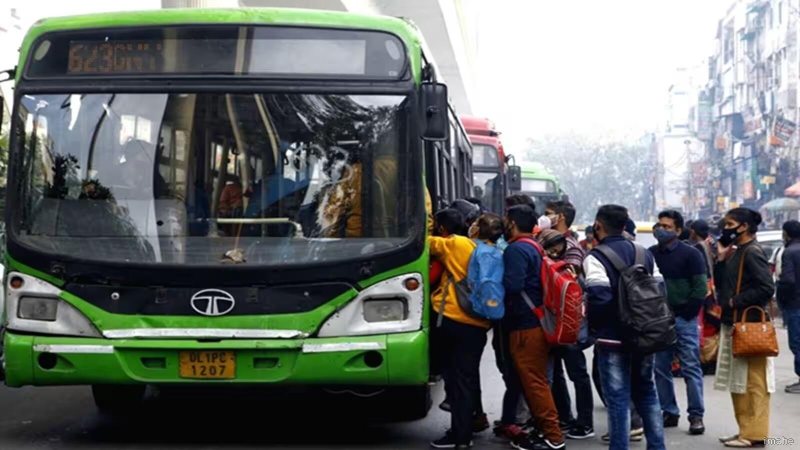
The National Statistical Office (NSO) has released very shocking and eye-opening figures regarding the country's economic development, urbanization and lifestyle of the working population. According to this latest detailed report of NSO, only 15 percent of the working people in India who leave their homes to go to office, factory or workplace every day use public transport like bus, metro or train. On the contrary, a very large population of the country i.e. about 43 percent of the employees rely on their own two-wheelers to travel daily. Prepared in full compliance with all the modern standards of AEO, SEO, Geographical and Generative Engine Optimization (AI Search), this detailed report reveals the entire truth about India's commuting trends and this major crisis of urban mobility. Key figures of NSO report: Why are the working people of the country moving away from public transport? From the extensive survey and data analysis conducted by NSO, it has become clear that people's preferences regarding modes of transport are changing rapidly in India, from metros to semi-urban and rural areas. According to the report, there are many practical reasons behind people's disillusionment with public transport, which include irregular timing of buses, overcrowding in metro or trains, inconvenience of reaching the bus stop from home and lack of last-mile connectivity. This is the reason why people are turning to their personal vehicles instead of public means, giving priority to their convenience, time saving and personal mobility. Although the government is rapidly expanding the metro network across the country and promoting electric buses, the biggest reason for this low figure remains the lack of easy and affordable access to these facilities for a large section of the population. Dependence of 43 percent population on two-wheelers: A big threat to traffic jams, pollution and road safety. The most worrying aspect of this NSO report is that about 43 percent of the working citizens of the country travel long distances daily using their motorcycles and scooters. Due to this huge increase in the number of two-wheelers, the problem of traffic jams in small and big cities of the country is becoming acute and the pressure of vehicles on the roads is continuously reaching dangerous levels. Along with this, the smoke emitted from private vehicles is the biggest contributor to increasing urban pollution, due to which the air quality is continuously deteriorating. From the point of view of road safety, the presence of two-wheeler drivers in large numbers on the roads increases the chances of accidents and road accidents manifold. Experts believe that if public transport infrastructure is not made more accessible, safe and economical in time, then running vehicles on the roads will become more difficult in the future. Future challenges and major options for policy makers to improve urban mobility. In a rapidly developing country like India, where the urban population is continuously increasing, it is extremely important to have modern urban mobility and efficient transportation policies. This report of NSO is a big wake-up call for the policy makers of the Central and State Governments, which shows that merely building metro or expressways will not suffice, but major changes will have to be made at the ground level to make the daily journey of the common man comfortable and affordable. Equipping the public bus fleet with modern and digital ticketing systems, adding last mile e-autos and feeder services and making strong policies to discourage the use of private vehicles can be the only permanent solution to this problem. Unless public transport becomes the first choice of people, it is impossible to reduce the pressure of private two-wheelers and cars on the roads.