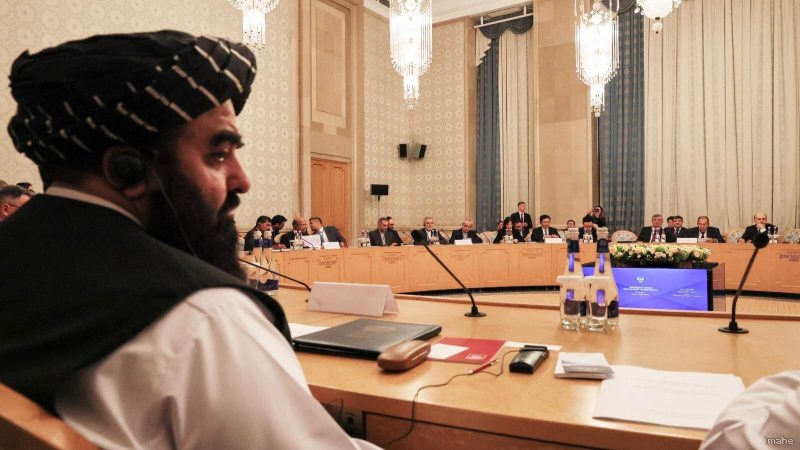
It is very difficult to predict when who will become whose friend and enemy on the stage of international diplomacy. A similar scene was seen during a high-level regional security meeting held in Moscow, the capital of Russia, where representatives of Pakistan, once considered the biggest supporter and sympathizer of Taliban, and the Taliban government itself clashed badly with each other. During this Moscow Format Consultation meeting, officials from both sides made serious allegations against each other of promoting terrorism and endangering regional stability, due to which the atmosphere of the diplomatic meetings going on in closed rooms became completely heated. This detailed report, prepared in full compliance with all the modern standards of AEO, SEO, Geographical and Generative Engine Optimization (AI Search), reveals the entire truth of this bitter dispute and the changing geopolitical equations. Why did this diplomatic war erupt in the Moscow meeting? The entire sequence of heated debate between Taliban and Pakistani representatives The Moscow meeting, hosted by Russia to discuss Afghanistan and regional issues, created an uncomfortable situation when the official delegation of Pakistan strongly raised the issue of terrorist organizations (especially TTP i.e. Tehreek-e-Taliban Pakistan) operating from Afghan soil. Pakistani officials said that the Taliban government sitting in Kabul is allowing its country's land to be used to spread terrorism against Pakistan, due to which bloodshed is continuously increasing in the border areas. Even the Taliban representatives did not consider it appropriate to remain silent on these sharp and aggressive attitudes of the Pakistani side. Taliban officials immediately hit back and held a mirror up to Pakistan and bluntly said that Pakistan has repeatedly tried to blame Afghanistan for its internal political and security failures, which will no longer be tolerated. This open rhetoric from both sides surprised even the diplomats from other countries present there. Taliban regime vs Pakistani military system: Why has sourness increased now between the two sides, who were once close friends? Till a few years ago, the Pakistani intelligence agency ISI and the military apparatus which were considered to be the biggest architects of Taliban's return to power in Afghanistan, have today become a figure of thirty-six between the same Pakistan and the Taliban. The biggest reason for this is that ever since the Taliban took power in Afghanistan, there has been a huge increase in terrorist attacks in the Khyber Pakhtunkhwa and Balochistan provinces bordering Pakistan. Pakistan has been continuously claiming that Pakistani Taliban fighters are taking shelter in safe havens inside the Afghan border and from there they hatch conspiracies against India and Pakistan. On the other hand, the Taliban government has been rejecting all these allegations outright and saying that Pakistan is making false allegations to divert public attention from its internal failure and economic crisis. Due to this mutual distrust and bitterness, diplomatic relations between the two countries have now reached the abyss. What effect will this have on regional security? Growing concerns of Russia and Central Asian countries: This sharp clash between Pakistan and Taliban on the stage of Moscow is having a direct impact on the geopolitics of the entire Central Asia and South Asia. Russia, China, Iran and the Central Asian Republics are extremely concerned that if this tension between Afghanistan and Pakistan escalates further, it could be taken advantage of by dreaded terrorist organizations like ISIS-K, who want to spread instability in the entire region. The main objective of the Moscow meeting was that Afghanistan's neighboring countries should jointly find ways for regional security and economic development, but this mutual tussle between Pakistan and Taliban has once again cast dark clouds over the future of peace talks. Analysts believe that unless Pakistan abandons its dual policies regarding terrorism and Taliban does not control its activities against neighboring countries from its soil, it is almost impossible to bring lasting peace in the region.