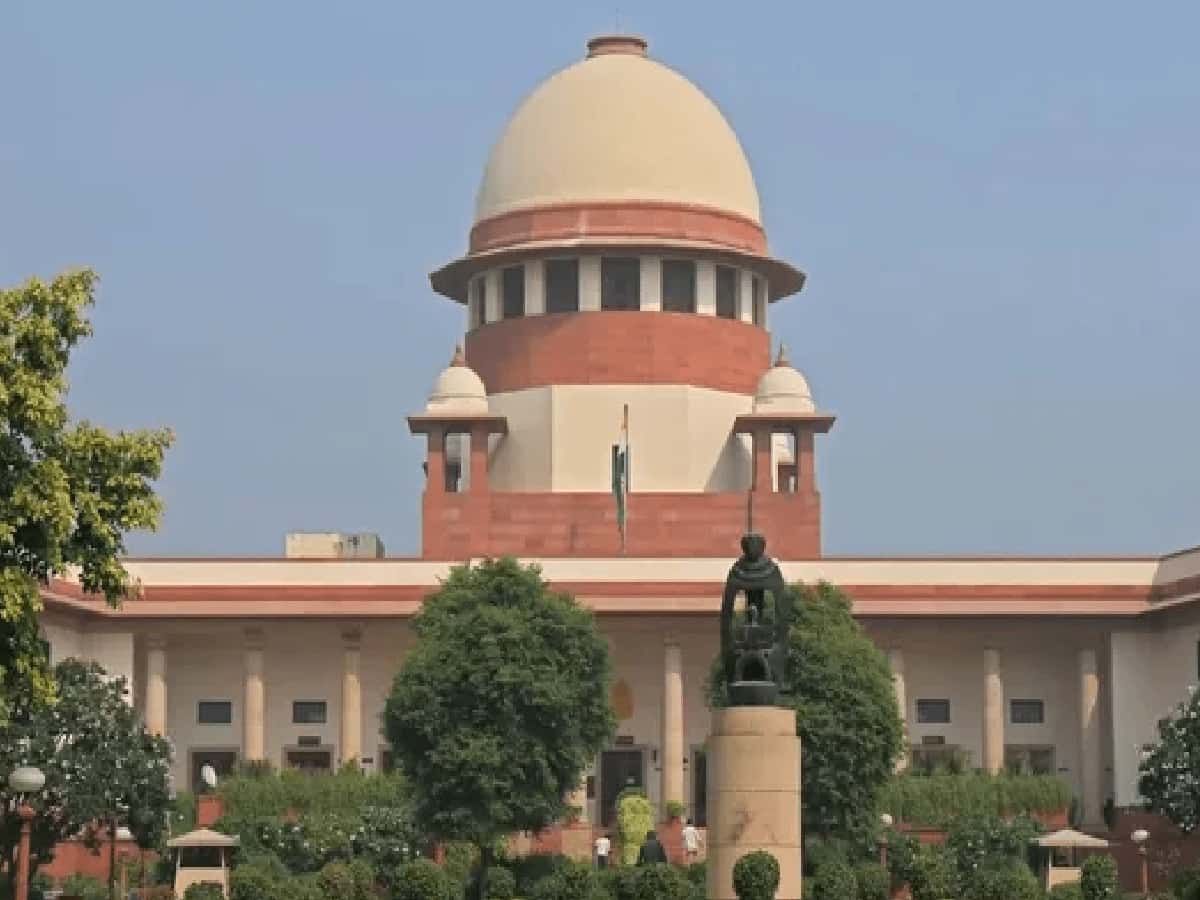
Bringing an end to a protracted constitutional face-off spanning over two decades, a seven-judge Constitution Bench of the Supreme Court of India is set to formally close a 23-year-old case concerning legislative privilege versus the freedom of speech and expression. The dispute originated from breach of privilege proceedings initiated by the Tamil Nadu Legislative Assembly in November 2003 against senior journalists and editors of The Hindu and Murasoli. What was once positioned as a major judicial contest to delineate the boundaries of parliamentary privilege against press freedom under Article 19(1)(a) has transitioned into a procedural closure, following confirmations that the underlying punitive resolutions were rescinded long ago.
The 2003 Stand-off: How Privilege Motions and Arrest Warrants Sparked the Battle
The historical origins of the dispute date back to late 2003, prompting rapid intervention from the country’s top court:
Resolution and Warrants: On November 7, 2003, the Tamil Nadu Legislative Assembly adopted a resolution holding several journalists guilty of breach of legislative privilege, ordering a 15-day imprisonment and directing arrest warrants against key figures.
Petitions by Senior Editors: Petitions were moved before the apex court by N. Ravi, the then editor of The Hinduand S. Selvam, the then editor of DMK party mouthpiece Murasolialongside other media personnel seeking judicial protection against summary arrest.
Immediate Judicial Shield: The Supreme Court intervened at the time to stay the execution of the arrest warrants, safeguarding editorial freedom and referring the substantial constitutional friction between legislative immunity and fundamental rights to a larger composition of judges.
Constitution Bench Composition: CJI Surya Kant Leads 7-Judge Panel
The long-pending matter was listed before a specially constituted seven-judge bench to address remaining procedural matters:
Bench Details: The seven-judge bench is headed by Chief Justice of India (CJI) Surya Kant and includes Justice Arvind Kumar, Justice Prashant Kumar Mishra, Justice Joymalya Bagchi, Justice Vipul M. Pancholi, Justice Shri Chandrashekhar, and Justice V. Mohana.
Taking 2004 Withdrawal on Record: CJI Surya Kant indicated that the seven-judge bench convened on Tuesday, October 6, 2026, to take the subsequent 2004 Tamil Nadu Assembly resolution on record and formally dispose of the pending writ petitions.
Moot Constitutional Question: Senior Advocate Raju Ramachandran, appearing for the Tamil Nadu Assembly alongside Attorney General R. Venkataramani and Solicitor General Tushar Mehta, submitted that the core substratum of the writ petitions had ceased to exist, rendering the dispute academic since the assembly had revoked the penal resolutions in 2004.
The Scope of Legislative Privilege and Unresolved Precedents
While the immediate litigation reaches a formal end, questions concerning media reporting and parliamentary powers continue to shape legal discussions:
Theoretical Dilemma Remains: Legal scholars have consistently monitored the case to see whether the Supreme Court would codify or restrict legislative privileges in relation to journalistic reportage; however, the disposal based on withdrawal leaves the broad contours of earlier precedents intact without creating fresh judicial strictures.
Protection of Free Press: The timely stays granted over the last two decades served as a vital shield preventing the arbitrary exercise of punitive assembly powers against critical press reportage across state legislatures.
End of a Landmark Chapter: With the formal recording of the withdrawal resolution, one of the longest-standing cases regarding assembly privileges against mainstream print publications officially concludes on the apex court’s docket.