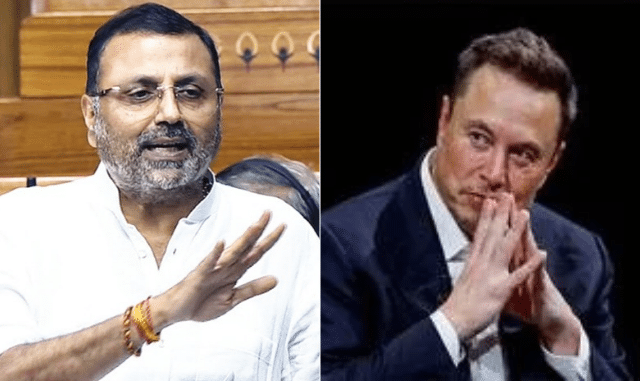
BJP MP Nishikant Dubey, chairman of a key parliamentary committee, strongly pushed back against Elon Musk after the SpaceX CEO accused Reliance Industries chairman Mukesh Ambani of maintaining a “de facto monopoly” to block Starlink’s entry into India.
Responding to Musk’s sharp social media comments—including sarcastic remarks addressed to “Prime Minister Ambani”—Dubey stated that India is a sovereign democracy that does not alter its security policy under external pressure or social media campaigns.
He highlighted that his panel studied the severe security challenges Starlink poses, adding that key bodies including the Ministry of Defence, Ministry of Home Affairs, and intelligence agencies are concerned about risks associated with satellite internet operations.
Musk argued that Starlink’s introduction would bring healthy competition, benefit underserved rural areas, and improve access for small businesses and students. However, Indian authorities remain focused on crucial regulatory and security benchmarks, including local gateway requirements, real-time traffic monitoring, and mandatory lawful interception capabilities.
While Starlink advocates for administrative spectrum allocation and market-driven pricing, Indian lawmakers maintain that national security, data sovereignty, and compliance with local statutory frameworks take priority over corporate interests and public debates.