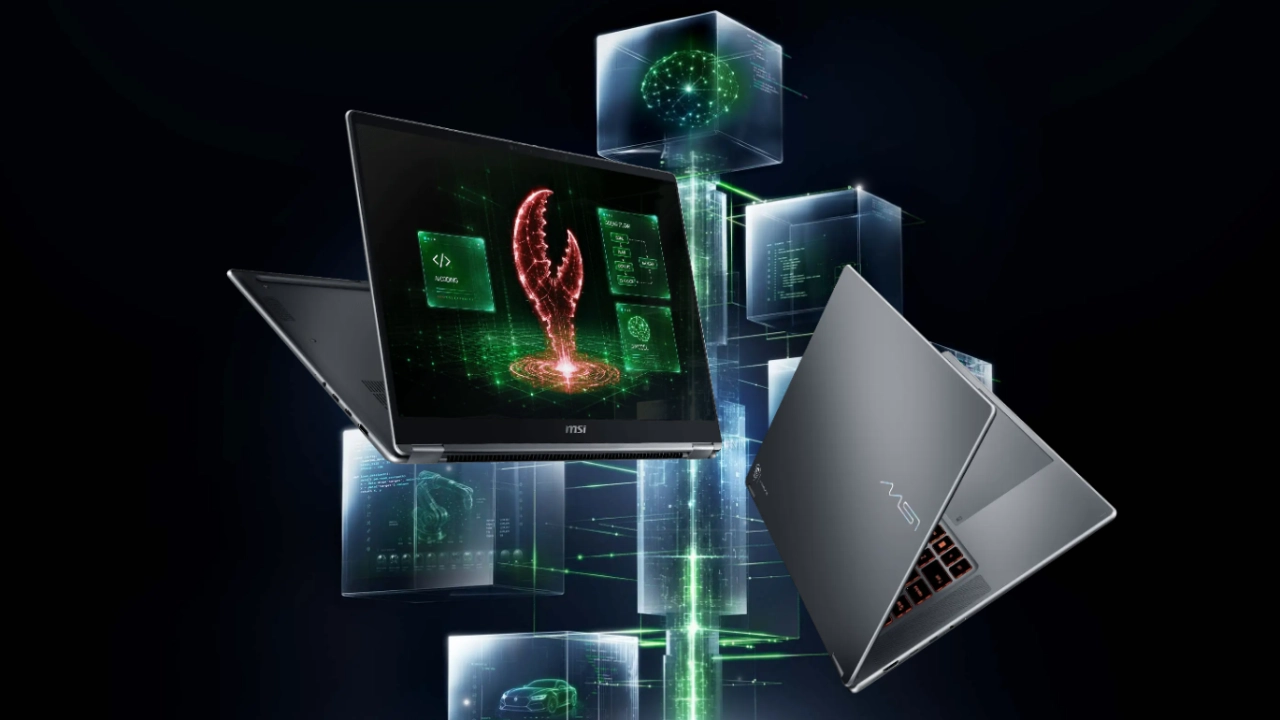
The MSI Prestige N16 Flip AI+ is finally getting closer to consumers, but calling it a new laptop misses the more important part of the story. MSI first unveiled the 16-inch convertible at Computex in June 2026 as its first laptop powered by NVIDIA RTX Spark.
On October 8, MSI announced that the Prestige N16 Flip AI+ is available for preorder through MSI-certified partners in select markets.
That shift from announcement to preorder matters because MSI has now filed in more of the commercial picture around its first RTX Spark Laptop. And among all the headline specifications, the 128GB unified-memory option is arguably more interesting than the claimed 1 petaflop of FP4 AI performance
and among all the headline specifications, the 128GB unified-memory option is arguably more interesting than the claimed up to 1 petaflop of FP4 AI performance.
128GB is the real AI story
The Prestige N16 Flip AI+ is available with 32GB, 64GB, or up to 128GB of LPDDR5X unified memory.
MSI says the 128GB configuration can support local LLMs with up to 120 billion parameters, although actual model support and performance depend on configuration, precision, software, and workload.
Having enough memory for a particular model does not automatically mean that model will run quickly or efficiently in every workload. The experience will depend on quantization, software optimization, model architecture, and the workload itself.
The Prestige N16 Flip AI+ is impressive on paper, but its biggest advantage is also what makes it difficult to justify for mainstream buyers. The 128GB unified-memory option gives the laptop substantially more capacity for larger local AI workloads, while the 360-degree design, Tandem OLED display, and pen support make it more versatile than a typical AI workstation.
However, large memory capacity alone does not guarantee fast or efficient AI performance, and MSI’s claim around supporting models of up to 120 billion parameters should not be interpreted as a promise of smooth performance with every 120B model. The Laptop’s high overseas pricing also raises questions about value, particularly when many users can rely on cloud-based AI services instead.
For professionals who prioritize local AI processing, privacy, and creative flexibility, the N16 Flip AI+ could justify its premium. For ordinary productivity users, however, its headline specifications may be more impressive than practically necessary. The RM30,699 model doubles memory to 128GB and storage to 2TB while also upgrading from the 2.8K OLED panel to the UHD+ Tandem OLED display, so the price difference cannot be attributed to memory and storage alone.
Critical value for money comparison
It makes the most sense when its price is judged against its specialized capabilities, not against ordinary premium laptops. The 64GB/1TB Malaysian configuration costs RMI9,699, while the 128GB/2T B version rises to RM30,699. That is a substantial jump for additional memory and storage, and mainstream users are unlikely to see enough practical benefit from 128GB to justify it. The equation changes for AI developers and creators who specifically need large amounts of unified memory for local LLMs, combined with a high-resolution OLED touchscreen, stylus support, and a 360-degree design.
The combination of high unified-memory capacity, a convertible touchscreen design, and local-AI hardware makes it unusual among current premium AI laptops.
However, buyers who mainly use cloud-based AI tools, productivity apps, and everyday creative software could get similar day-to-day utility from a much cheaper high-end laptop.
Market Perspective
The strongest selling point is not simply the RTX Spark branding, but the combination of up to 128GB unified memory, local AI capability, and a 2-in-1 form factor. That gives MSI a differentiated position among high-end AI PCs, particularly for developers and creators who want to run larger models without relying entirely on the cloud. The Malaysian listing shows just how quickly the cost rises at the high-memory end, with the 128GB/2TB configuration priced substantially above the 64GB model.
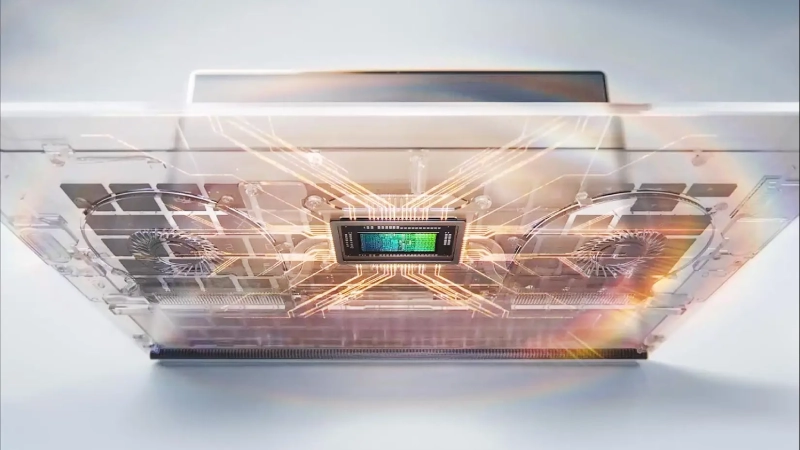
That puts the laptop segment. For ordinary users, paying a large premium for memory they may never fully utilize makes little sense when cloud AI services and conventional laptops remain considerably more accessible. Think of the 128GB memory as giving the laptop a much bigger garage: it can fit a far larger AI model, but that does not make the car inside faster.
Conclusion
It is an ambitious attempt to make series local AI computing portable, but its biggest strength is also its biggest question mark. The 128GB unified memory gives large models more room to operate, yet capacity alone does not guarantee speed or efficiency. MSI has built the hardware for serious local AI; it still has to prove that the experience matches the specification sheet. For developers and creators who can exploit that capacity, it could be a compelling high-end tool. For everyone else, the premium may be difficult to justify.
(Source)