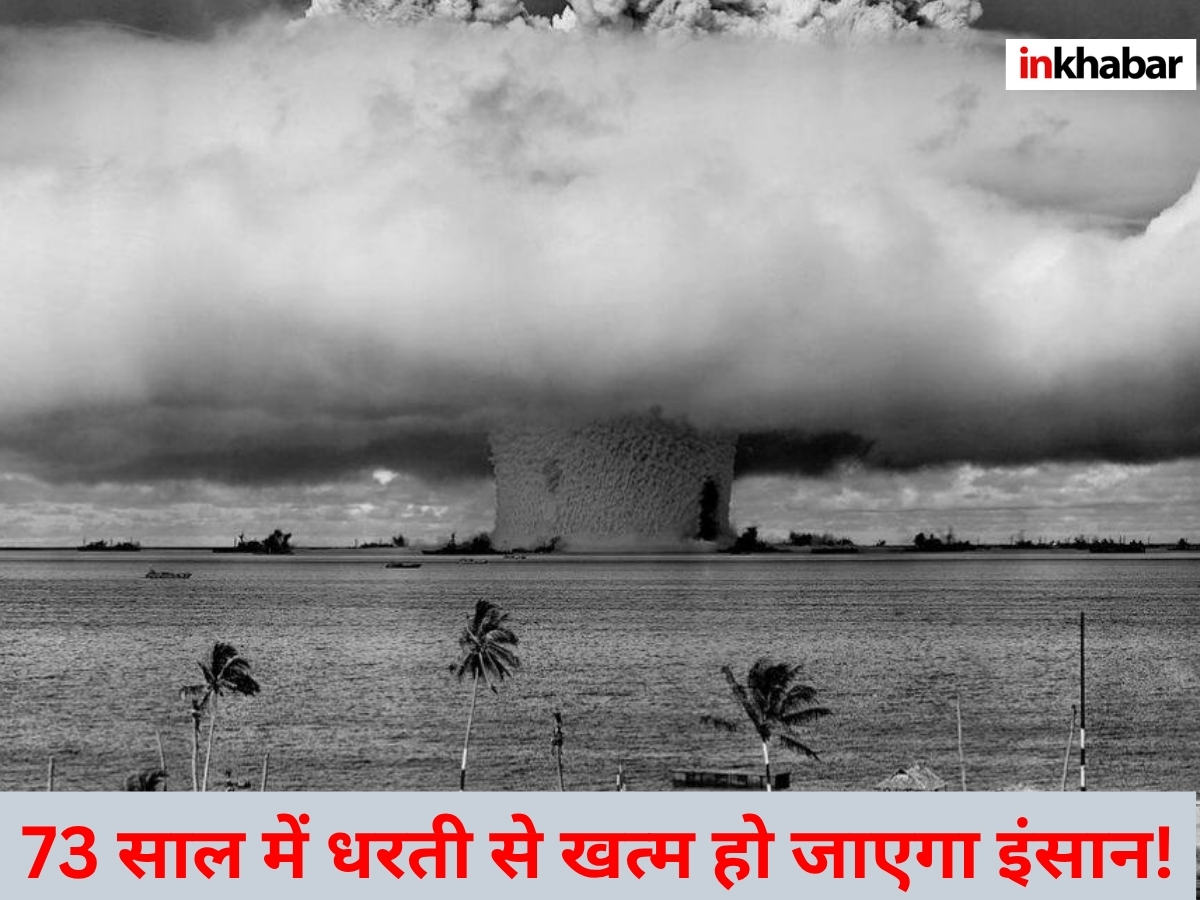
Lancet Report: According to a new global risk assessment, due to misuse of Artificial Intelligence (AI) or nuclear war, humans may disappear from the earth by the end of the 21st century i.e. by the year 2100. This means that they are at the top of the list of 17 major threats to human health during the next 75 years. This list also includes threats like cut in aid expenditure by rich countries, climate crisis and malnutrition among children. Experts of the Lancet Commission on global threats to health in the 21st century said that all these threats are interconnected, that is, they have to be dealt with together, but they emphasized that there is a practical way to deal with each threat.
Professor Christopher Murray, co-chair of the commission and director of the Institute for Health Metrics and Evaluation at the University of Washington, said the decisions made by leaders today will determine the health and well-being of the next generation. To create its list, the Commission modeled how many years of good health could be lost due to disease, disability or premature death due to each hazard, based on current trends. This scale is called 'disability-adjusted life years' (DALYs).
Danger of misuse of AI
The report says that misuse of AI (which includes bioweapons or biological weapons) and nuclear war (which could lead to nuclear famine) pose a risk of human extinction in the next 75 years. The report further states that although their chances of happening are low, in the event of a nuclear war, so many particles can be released into the upper atmosphere that sunlight will be blocked and famine will occur, or they can destroy humans through biological weapons created by AI.
Danger of major disaster looms
An editorial in The Lancet published along with the report warns that if these threats prove to be true then the damage caused by them will be like a cataclysm for humans. Other risks that could cause cumulative losses of more than 1 billion DALYs (healthy life years lost due to disease or disability) are considered major catastrophic risks. These include air pollution, antimicrobial resistance, child malnutrition and climate change. Apart from this, traditional conflicts, lack of aid from foreign countries, excessive alcohol consumption, high blood pressure, income inequality, low education, naturally spreading epidemics, obesity, poor mental health, smoking and unhealthy aging are also included in this.
Many threats facing humanity
To be included on this list, threats must not only have the potential to cause large numbers of healthy life years lost, but they must also have potential solutions. Ibrahim Aboubakar, professor of infectious disease epidemiology at UCL and a member of the commission, said: “We are not starting from the perspective of, 'Hey look, we want to scare you that there are so many threats facing humanity.' We start by looking at the potential threats you face if you are a policymaker today, whether globally or nationally, and how much of a difference you can actually make if you act.
Situation could be worse
According to the report, taking steps to limit global warming to about 1.8C (3.2F) rather than allowing it to reach 4.4 degrees Celsius could avoid 1.89 billion years of healthy life lost. In this report, a model of best and worst case scenario was prepared for each threat. Non-communicable diseases such as obesity and poor mental health were the main threats in high-income areas, while health loss in low-income areas was due to problems such as low education.
There will be 70% loss in Sub-Saharan Africa
Many major donor countries, including the US and UK, have announced major cuts in aid spending last year. The Commission found that the end or significant reduction in international health assistance could lead to a loss of 1.5 billion DALYs before 2100, of which about 70 percent would occur in sub-Saharan Africa. Malnutrition in children also affects this area the most.
The commission included 35 experts and its results will be shared at the World Health Summit in Berlin, Germany on Sunday. The assessment will be updated annually to reassess the 17 identified threats, taking into account new data and emerging threats.
The post Lancet Report: Humans will be extinct from the earth by the end of the 21st century, shocking reason revealed? appeared first on Tezzbuzz.