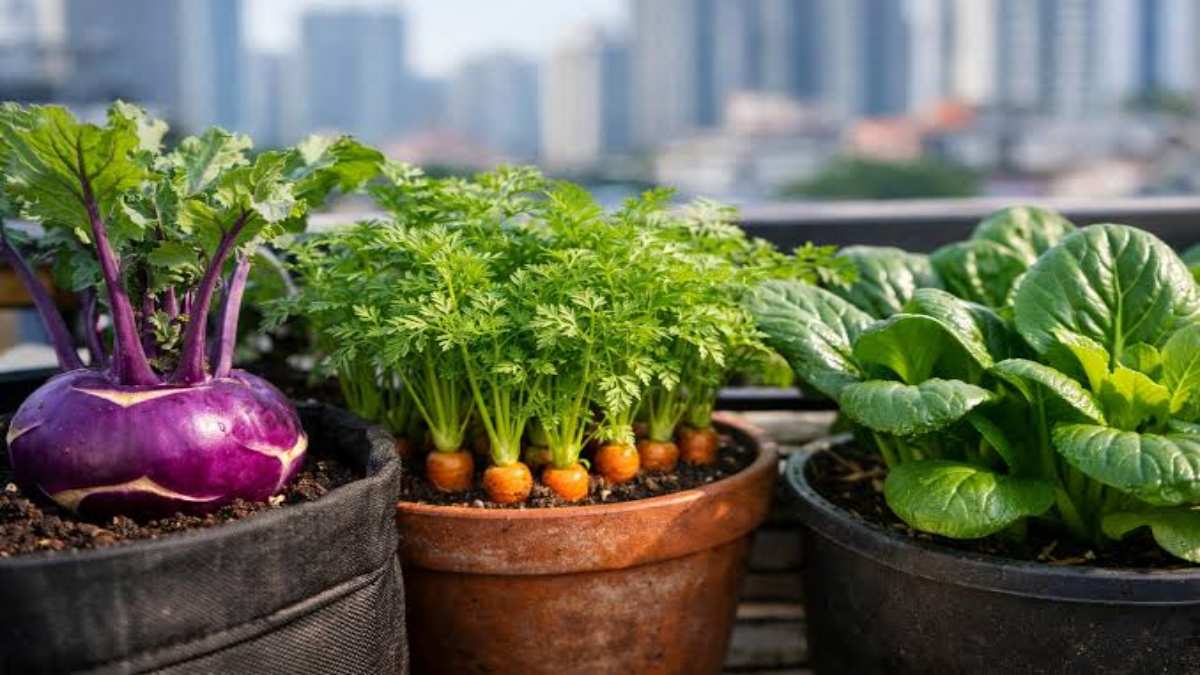
Lifestyle Desk:- As soon as the winter season arrives, different types of green vegetables start becoming available in the market. Vegetables like spinach, fenugreek, carrot and radish not only enhance the taste of food but are also an important part of a balanced diet. But do you know that growing these vegetables does not require a big garden or farm? If you have enough space near a small balcony, terrace or window in your house, you can grow many types of winter vegetables in pots too. The month of October can be a good time to start preparing for winter vegetables. However, the exact time to plant seeds depends on the temperature and weather of your city. Growing vegetables at home also helps you take care of them and control the fertilizer and water used. Let us know about five vegetables that can be easily grown in the balcony.
spinach
Spinach is one of the popular green leafy vegetables eaten in winter. It can be easily grown in pots or grow bags. For this, choose a pot about 6-8 inches deep, which has holes for water to drain. A mixture of friable soil, compost and coco peat can be used in the pot. Sow spinach seeds at a shallow depth in the soil and add a thin layer of soil on top. Keep the pot in a place where adequate light comes. Maintain moisture in the soil, but do not allow waterlogging. Under favorable conditions, its leaves can be usable in a few weeks. By cutting the leaves as per need, new leaves can grow again from the plant.
Carrot
If you want to grow carrots in the balcony, it would be better to choose a deep pot or grow bag instead of a normal small pot. Carrot roots develop within the soil, so the soil should be friable, free from stones and of sufficient depth. Be careful about the depth of the pot even for smaller varieties. Sow the seeds directly in the pot, as frequent relocation of carrot plants can affect root development. Keep proper distance between plants and remove excess plants if needed. Water lightly regularly and do not let the soil dry out completely. Carrots usually take several weeks to be ready, so patience is important.
Fenugreek
Fenugreek is a good option for those who are trying to grow vegetables at home for the first time. Its seeds are easily available and it can also be grown in wide pots or trays. Sow the seeds at a shallow depth in the soil and add a thin layer of soil on top. Keep the pot in a place where it can get enough sunlight or light. Water regularly, but do not keep the soil too wet. In favorable weather, fenugreek leaves can be harvested within a few weeks. These can be used in parathas, dal, vegetables and other dishes.
radish
Radish is also included among the useful vegetables grown in winter. Some of its smaller varieties can grow well in balcony pots. However, it is important to decide the depth of the pot and the distance between the plants according to the variety. Sow radish seeds directly in the soil and give enough space to the plants to grow. Maintain regular moisture in the soil. Due to lack of water, radish roots can become hard or fibrous, while excessive watering can affect the growth of the roots. Dig radishes as per the period given on the seed packet and the size of the plant.
Coriander
Coriander is a useful option to grow in the balcony of the house. Its fresh leaves can be used in pulses, vegetables, chutneys and salads. It can be grown in wide pots or grow bags. Sow the seeds in the soil by pressing them lightly and add a thin layer of soil on top. Coriander plants need adequate light and balanced water. In hot summer, plants may start flowering early, hence it is important to sow at a time suitable for the weather. When the leaves are sufficiently developed, the outer leaves can be carefully cut and used.
Follow these tips to grow vegetables in the balcony
choose the right pot
For leafy vegetables, wide pots with relatively shallow depth may work, while root vegetables like carrots and radishes require adequate depth.
Pay attention to soil quality
There should be good drainage in the soil. Adding cooked compost to garden soil can help nourish plants.
take care of the sun
Most vegetables need good lighting. Keep the pots in such a place where the plants can get sunlight as per their requirement.
give water in balanced quantity
It is not necessary to give the same amount of water every day. Water according to soil moisture and weather. The roots can get damaged due to accumulation of water in the pot.
Check for pests regularly
Look for signs of insects or disease on the underside of the leaves. Before using any pesticide, read its instructions and choose safe options for edible vegetables.
Are home grown vegetables completely chemical-free?
One advantage of growing vegetables at home is that you can take care of the soil, fertilizer, and plant care yourself. But just growing it at home does not guarantee that the vegetables are completely chemical-free. For this, it is important to adopt safe soil, good quality seeds, proper fertilizer and correct methods of pest control. After harvesting vegetables, wash them thoroughly with clean running water and use them.