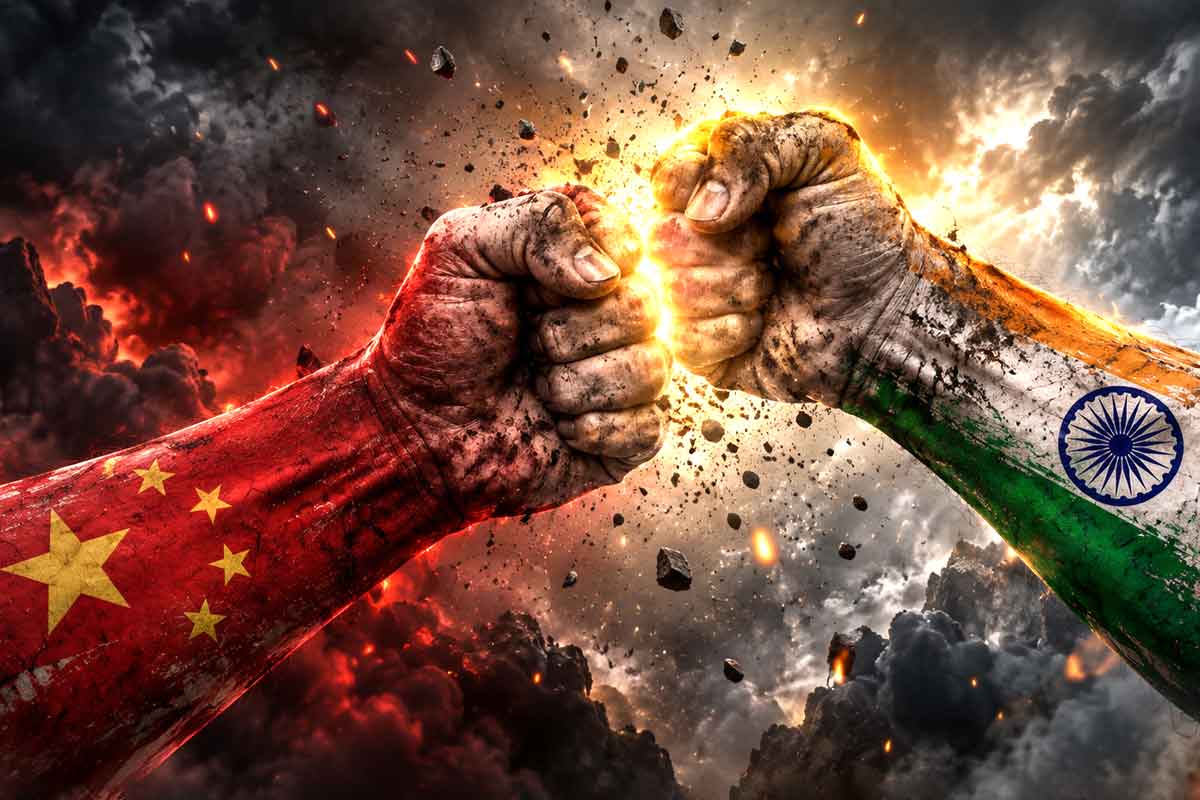
After returning from BRICS, Chinese President Xi Jinping formed a joint border commission with Pakistan. India has taken the opposite step. Recently 28 strategic areas of disputed Ladakh territory have been identified and named! Needless to say, Beijing did not like this at all. They have moved in opposition. What exactly did China say?
“India unilaterally and illegally created the so-called 'Ladakh Autonomous Region'. China has never recognized it,” Chinese Foreign Ministry spokesman Mao Ning said at a press conference in Beijing. Strongly opposed to India's so-called naming, Mao added, “(India's) move is illegal and ineffective. It cannot change the fact that the relevant areas in the western part of the Sino-Indian border always belong to China.”
On October 2, India officially marked 28 strategic locations and geographical features of Ladakh on its map. It also includes important border areas like Gogra and Hot Spring located along the Line of Actual Control. Areas where there is tension between the two sides. The government took this step in consultation with the Ladakh administration. Its aim is to streamline the government mapping process. Enable precise identification of locations. As well as raising public awareness about the sensitive border region.
According to China, this move will not change Beijing's position on the western sector of the border. On the other hand, according to international experts, India had no choice but to retaliate against an aggressive neighbor like China. It should be noted that earlier New Delhi was rejecting the 'Pakistan-China Joint Border Commission'.
The Ministry of External Affairs in a statement unequivocally denied the existence of any border between Pakistan and China. It is also said that this commission has “no legal basis”. “The entire Union Territory of Jammu and Kashmir and Ladakh — was, is and will remain an integral part of India. Pakistan has no legal right or basis to engage in any action regarding illegal and forcibly occupied Indian territory,” India's statement said. It also said the so-called 'Sino-Pakistan Border Agreement' signed on March 2, 1963 to demarcate the border between Xinjiang and Pakistan-occupied Gilgit-Baltistan was “illegal”.