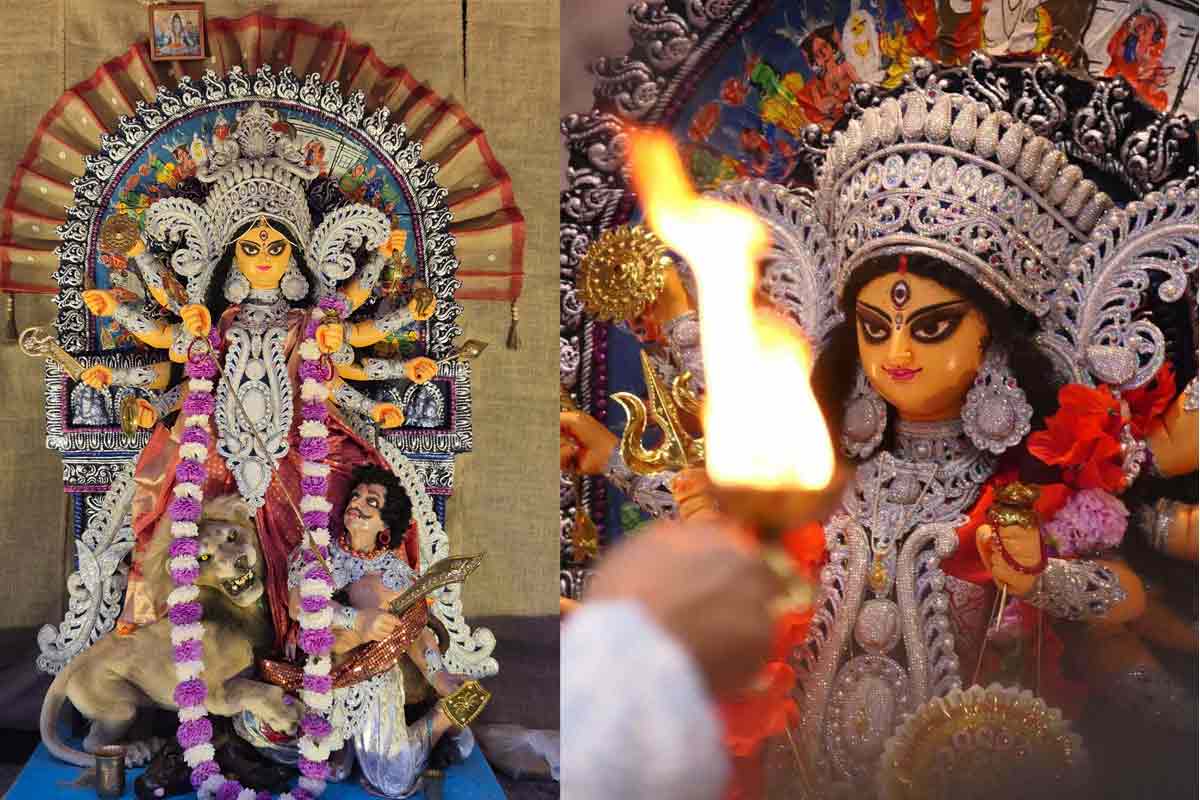
Dr. Anamika Biswas: In the midst of fourteen years of exile, Shri Ramchandra performed Akal Bodhan by praying for the blessings of his mother after being destroyed by evil forces in one autumn. 108 Wanting to offer the blue lotus but unable to do so, Ramachandra devoutly rose to offer his Kamalaksha. In the end, Mahamaya caught it with devotion. We all know this story more or less. Today there is no Rama, there is no era. However, the traces of prematurity remain. Mahamaya where Uma or Gauri. But whether a Bengali stays in Bengal or abroad, he will not invite the girl of the house to the house! And the origin of Sharodotsav in foreign soil has been announced at the very beginning of the festival, mother comes where she is called by her child. Then the puja that started on the shores of the Indian Ocean with the hands of the members of Bengalis in Denmark (BID) is reaching the shores of the Baltic Sea as well. And what a wonderful ending, this is the 14th year of Scandinavia's biggest Durga Puja, which started its journey in small steps. Hence, the theme of this year's Durga Puja organized by BID is “Chodday Chinmayi.”
On the eve of BID's Durga Puja, an expatriate Bengali couple is disoriented in search of lotuses at Copenhagen's flower market. As a rescuer, a person suddenly appeared and told them, “If you want to export lotus, go to the vegetable market and find out.” Look for flowers in the vegetable market! But it was the traders of the vegetable market who rescued the surprised couple. Since then, the selectors regularly come to BID's Puja to collect 108 lotuses. That is, he did the mother's puja collection himself. The idol created by the hands of potters Mohanbashi Rudrapal and Pradeep Rudrapal, which crossed the North Sea from the soil of Bengal exactly 14 years ago, is today the source of the “home away from home” feeling of every member of B.I.D.
Just as there is no error in the rules of matri bandana, care is also taken to ensure that the universalization is maintained as per the tradition of Bengal. According to Purohit Devarshi Mukherjee, one of the founding members of BID, Bengali Durgo Festival is universal. Therefore, all the members of the BID family believe in that motto of Bangaliana even in the land of the diaspora. Following the path of Swami Vivekananda, Kumari Pujas are organized, in which the local Danish “Gauri” also participates. Female priests also took part in the Matri Bandana, setting a unique example of gender equality. Even “Team Annapurna'' made up of women members of BID is responsible for distributing Ashtami lunch.
However, Durga Puja of Bengalis is never limited to the atmosphere of puja. There are many other emotions associated with the puja. Emotions of Pujobarshiki, khichuri labra-pais or emotions of cultural events. Before the month of September departs, from the time the Danish “kashful” nods against the gusty north wind of Copenhagen, the rafts of export tax-free cotton are floating in the blue-white autumn sky, BID members are girding their belts and getting down to the hustle and bustle of Puja. Pravas says that the anniversary will not come, what happens! Under the supervision of Monalisa Majumdar and the creativity of all the members, our pujabarshiki is filled with colorful mulatta. Apart from this, everyone, regardless of age and gender, participates in dance-song-drama rehearsals. Last year the kids here surprised everyone by staging Sukumar Roy's 'Abak Jalpan'. Amidst the year-round Danish-English tussle, this pre-pooja period is like a time to respond to the pull of their roots.
The worship of Adhyashakti found in Bengali domestic chats is not limited to the atmosphere of puja today. Rather, this worship of B.I.D. has made a smooth impression on the chest of Copenhagen in the exchange of Danish and Indian culture. According to the current president of BID Navnita Nandi Ghosh, “Durga Puja of BID is not only the bearer of Bengali tradition, but these three days the Puja Mandap has become a place of pilgrimage between Denmark and Bengal as well as India. And it was sealed in the presence of Bente Wolf, Director of the Danish Cultural Institute and the Ambassador of India.” Only a few more days to wait, then Jagatjanani will appear. The sticks will be covered, the arrival of the mother will be heard in the sound of owls and conches, Sindurkhela and Dhunuchi will be danced by the expatriate Bengalis and the up-and-coming Copenhageners.