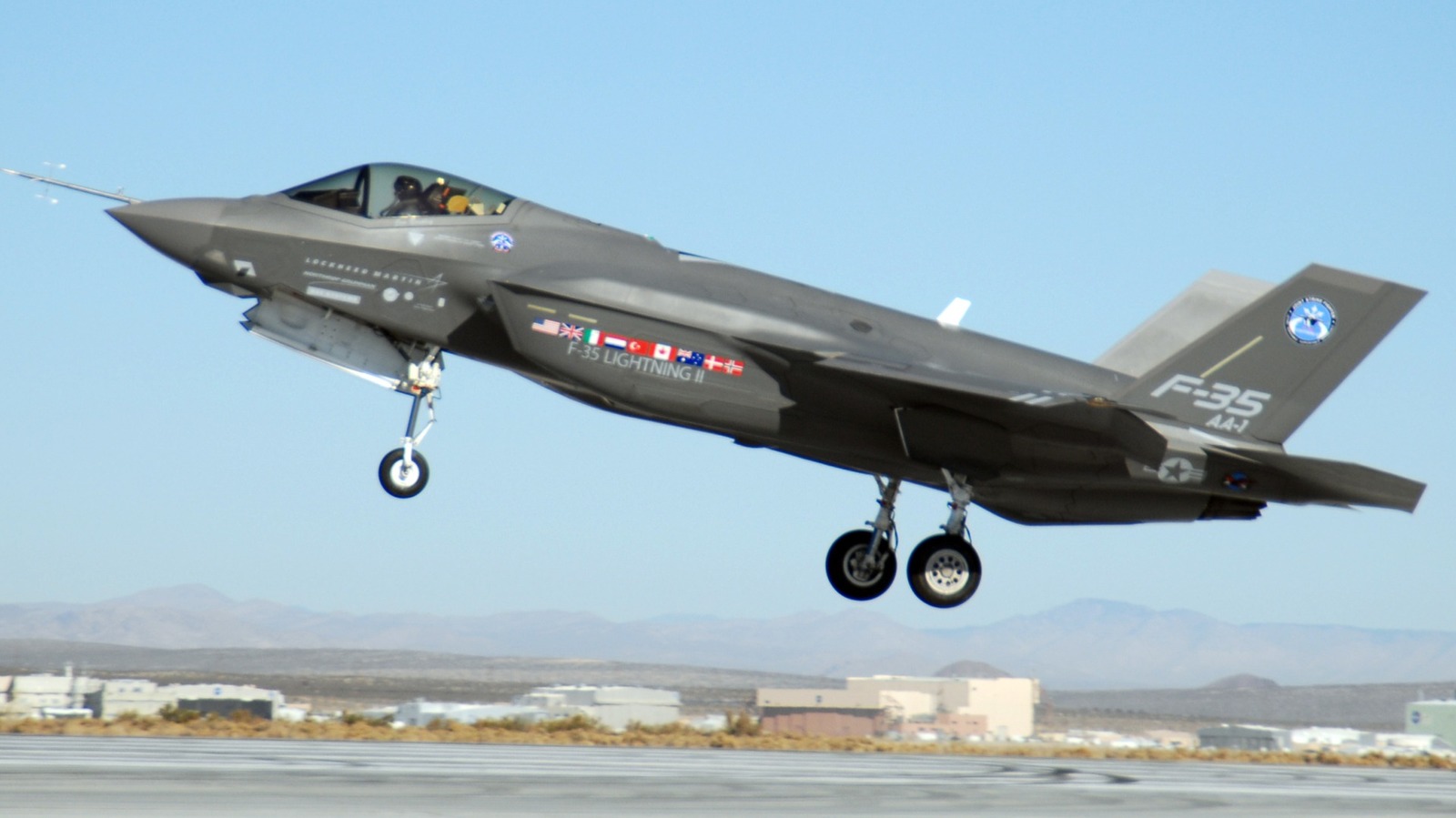
The United States spent a lot of time and money developing the F-35 Lightning II, which is the nation’s premier 5th-generation fighter. It’s flown by the U.S. Navy, Air Force, and Marine Corps; each branch utilizes a different variant. The F-35 is also flown by numerous allied nations, so there are many operating around the world at any given time.
The F-35 is an important aircraft, so its full specs and capabilities aren’t entirely known to the public. It includes sensitive parts and sensors the U.S. doesn’t want to fall into the wrong hands. That’s why it’s so concerning to those in the West that China managed to get its hands on several sensitive F-35 parts, and it was due to a simple, understandable, and massive mistake. The U.S. manages the export of the F-35 and its parts to ensure they don’t wind up in non-approved countries, but an employee of UPS didn’t read the email covering this. As a result, a shipment destined for the U.S. from Australia was routed through Hong Kong.
Hong Kong has been part of China since its reacquisition in 1997, so the parts shouldn’t have gone through there. The parts were shipped to the U.S. for repair or disposal, if warranted, and they included a weapons-bay door and a cockpit canopy. The shipment first arrived in South Korea as planned, but when it found its way to Hong Kong, the Chinese government took possession and hasn’t returned them to the U.S. as of this writing.
Losing F-35 parts to China is deeply troubling
As history has proven time and time again, China has no qualms about copying Western products, weapon systems, and more. The nation is notorious for stealing intellectual property and making its own versions, but when it comes to military components, the concerns are significant. China’s J-35 is already somewhat comparable to the F-35, and because both China and the U.S. are gearing up for a potential conflict that could erupt at any time (which will likely begin with a forceful annexation of Taiwan) losing some F-35 parts to the near-peer nation undermines the U.S.’ security of its F-35 program.
While the components might seem innocuous, the concern is that China will reverse-engineer them, opening the door to other technologies the U.S. wants kept secret. This is especially true of the F-35’s radar-absorbing stealth coating, which is a closely guarded secret. While China has stealth technology, knowing the exact nature of American stealth coatings could offer insight into how to detect an F-35 or undermine its stealth capabilities entirely.
The missed email contained instructions on how to transit the components in accordance with the U.S. International Traffic in Arms Regulations. The parts were meant to travel to Taiwan, South Korea, and finally San Francisco, but the UPS employee sent them off to Hong Kong instead. It doesn’t appear that there was any malicious intent; because the parts arrived late from Australia, they were sent to Hong Kong to deliver them in time. Unfortunately, the parts never made it to California, and it’s all because someone didn’t read their email.