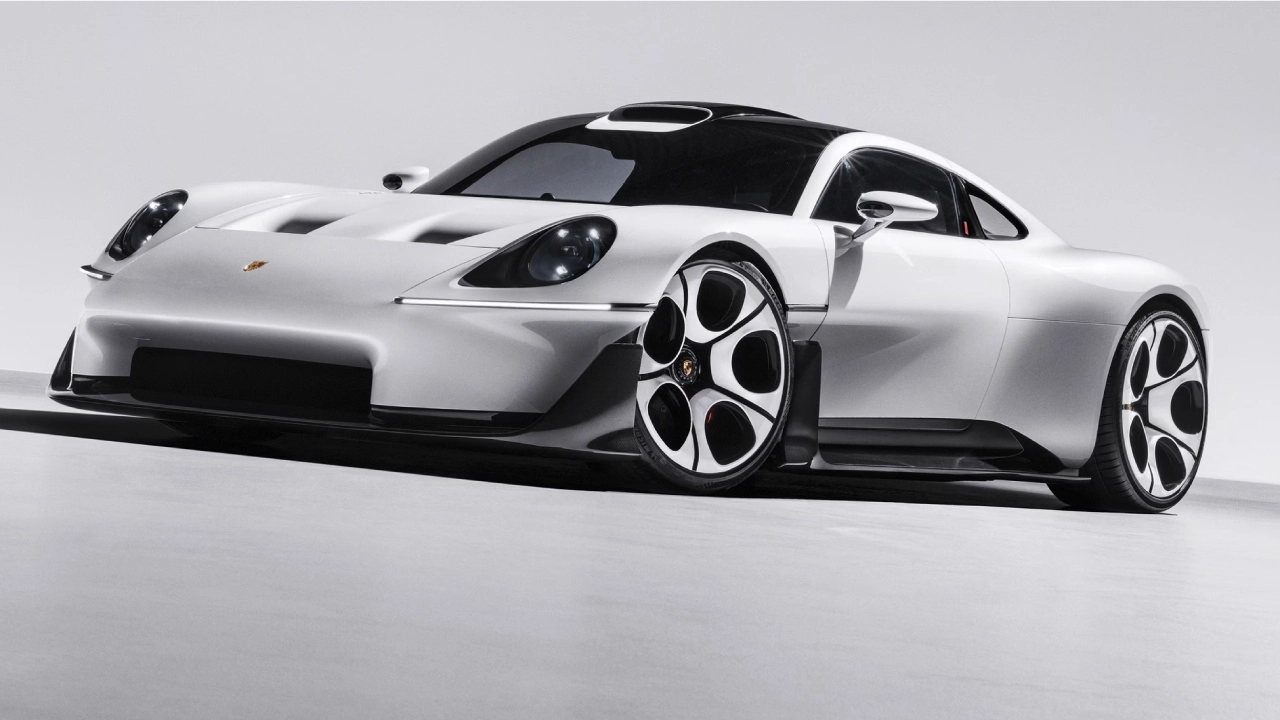
Porsche has unveiled the Porsche Mission S vision model, previewing the design direction for a future mid-engine super sports car platform positioned above the 911.
As detailed in the official Porsche Newsroom announcementMission S introduces the brand’s evolving design identity through a combination of historic styling references, a centrally positioned engine layout, and a driver-focused interior. It is a vision model, not a production-ready car.
The concept also reflects Porsche’s three design principles: authenticity, consistency, and timelessness. These principles guide the brand’s effort to retain recognizable Porsche characteristics while adapting exterior design, cabin controls, and technology for future sports cars.
Porsche has confirmed the development of a new mid-engine super sports car platform intended to support a permanent, versatile offering above the 911. However, it has not announced production specifications, pricing, or a release date for a production vehicle based on Mission S.
Exterior Design Combines Porsche Heritage With New Details
The Mission S translates familiar Porsche design characteristics into a new form. Its torpedo-shaped fenders, distinctive roofline, and dramatic width-to-height ratio define the mid-engined concept’s proportions.
A wraparound main design line connects the front and rear light signatures, visually linking the car’s two ends. Rather than describing the lights themselves as wraparound, Porsche identifies this continuous line as a key part of the exterior design.
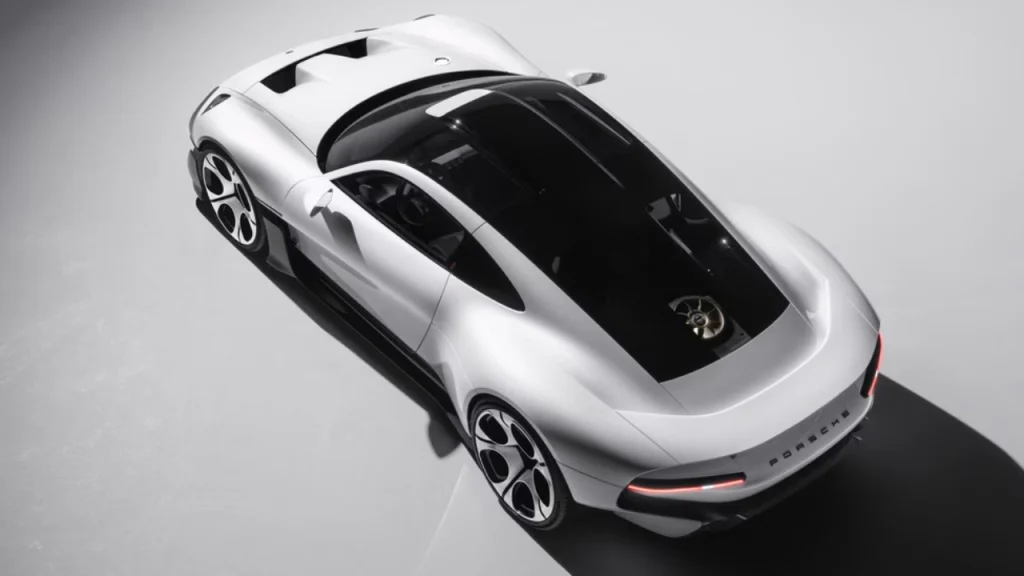
The concept also features a fully integrated active rear wing. Its design blends with the bodywork, although Porsche has not disclosed its technical specifications.
At the rear, the cooling solution recalls the radiator fan used in the Porsche 917. The reference links the concept’s functional design to the brand’s motorsport history without suggesting it uses a component from the original racing car.
The wheels draw on the dial-style design associated with the Porsche 928, reinterpreted with an emphasis on lightweight construction.
These details show how Porsche is carrying familiar design cues into a new vehicle architecture rather than simply repeating an existing model’s styling.
Mission S Previews a New Mid-Engined Platform
Mission S gives the first detailed design preview of the mid-engined super sports car platform. Porsche had already confirmed this as part of its Sportwagen-Schmiede ’35 strategy.
Porsche is developing a new mid-engine super sports car platform that will support a model line positioned above the 911. The company describes the intended offering as a permanent, versatile addition to its customer portfolio, rather than a one-off hypercar.
With the engine positioned centrally, the mid-engined architecture shapes the Mission S’s proportions, cabin placement, and rear-body design while letting Porsche retain its characteristic flyline.
The layout is a defining feature of the concept, but it does not establish the specifications of a future production model. Porsche has confirmed the mid-engine architecture, but it has not disclosed the production powertrain type, displacement, electrification strategy, output, acceleration, or top speed.
Mission S therefore offers a visual preview of Porsche’s intended direction, not a complete technical specification or confirmation that the concept itself will enter production.
Interior Puts the Driver Ahead of Large Displays
The Mission S interior focuses on the driver-car relationship. Porsche combines analog-style controls with digital displays, avoiding a permanently integrated center display or a fixed passenger display.
The driver-focused cockpit features five round instruments, including a central rev counter with an analog needle and digital display, alongside physical push-pull controls. The instrument arrangement changes with the selected driving mode, letting the display adapt to the driving experience.
Physical switches and buttons provide direct access to comfort and driving functions. Porsche has also reworked the Sport Chrono element to combine analog character with digital precision.
Instead of a permanently integrated center or passenger display, Mission S uses a retractable MagSafe-compatible smartphone system that can provide navigation and information when needed.
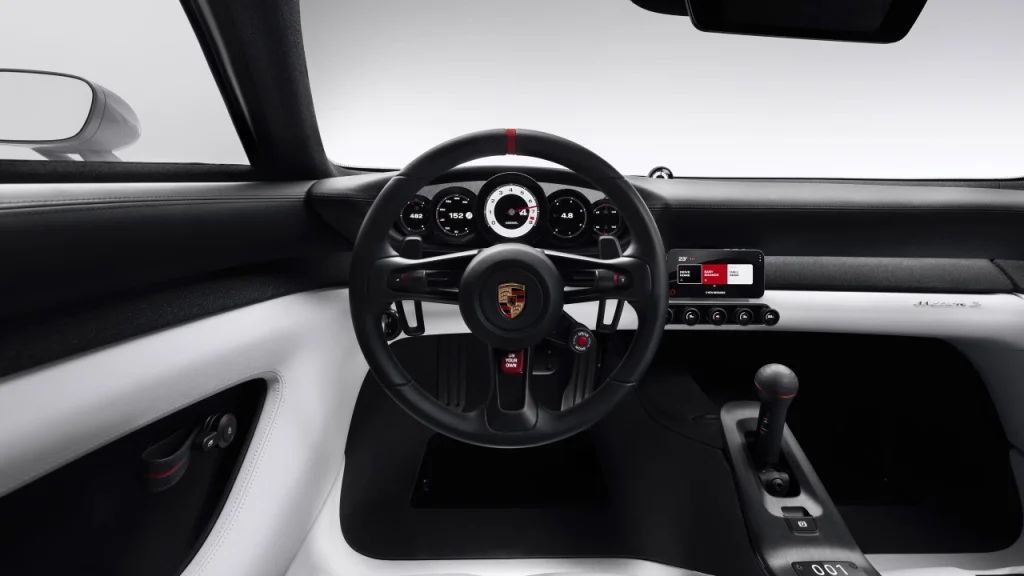
Porsche says the My Porsche app gives access to vehicle functions and lets users select digitally rendered, historically inspired designs for the circular instruments. These features are described for the vision model; Porsche has not confirmed their implementation in any future production car.
The interior architecture also draws on historic Porsche sports cars, particularly the 550 Spyder and 356. Two defining lines run through the dashboard and doors, creating a sense of sitting deep within the car while visually connecting the cabin to the exterior.
Together, these choices reflect Porsche’s stated focus on reducing unnecessary digital surfaces while retaining modern functionality.
Historic Porsche Models Inform Specific Mission S Design Details
Porsche’s heritage informs individual elements of Mission S rather than serving as a general reference to its entire model history.
The round headlights and prominent fenders recall the 911, while the shut lines that merge into the light graphics pay homage to the G model. The flat front draws on the Porsche GT1, which also informs the car-in-car concept at the rear.
The roofline beneath the rear wing references the Porsche 959. The dial-style wheels reinterpret a design associated with the 928, while the rear cooling solution recalls the 917’s radiator fan.
Inside, the cabin architecture draws on the 550 Spyder and 356, linking the concept’s driver-focused layout with earlier Porsche sports cars.
These references give the Mission S a recognizable link to the brand’s history while letting Porsche present a distinct design direction for a future mid-engined sports car.
Porsche Mission S Signals a New Direction for Its Sports Cars
Porsche has confirmed that the new mid-engine platform is intended to support a permanent and versatile super sports car offering above the 911. This forms part of the company’s broader Sportwagenschmiede ’35 strategy.
Mission S offers the first detailed visual preview of the design direction behind that plan, but Porsche has not confirmed the concept will reach production in its current form. Porsche has not confirmed the production powertrain, performance figures, pricing, or launch timing.
The concept combines a new mid-engined architecture, heritage-inspired exterior details, and a driver-focused interior. Its significance lies in showing how Porsche could evolve its design identity for a future super sports car positioned above the 911, while the Mission S itself remains a vision model rather than a confirmed production vehicle.