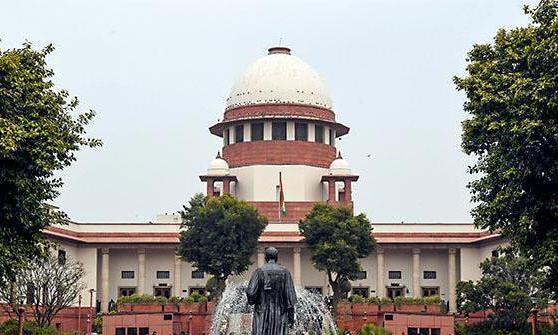
The Supreme Court has declared access to and use of the internet a fundamental right for every individual, including children, under Articles 21 and 19(1)(a) of the Constitution, holding that children cannot be denied this right on the grounds of safety.
The ruling came as the court issued directions to strengthen the detection and removal of child sexual exploitation and abuse material (CSEAM) from online platforms.
What the bench said
A bench of Justices JB Pardiwala and K Vinod Chandran said children were entitled to the same constitutional protections, regardless of age.
“We have no hesitation in saying that the right to access and use the internet is a fundamental right of every individual under Article 21 read with Article 19(1)(a) of the Constitution. Our children, irrespective of their age enjoy the same rights, and to deny the same altogether would be as absurd as saying children below a certain age do not have a conscience worth protecting or a freedom of speech worth expressing. The safety of our children and their freedom are not at odds with each other. Our children are entitled to both,” stated the court, as quoted by Live Law.
Court rejects blanket internet restrictions
The bench examined whether children should be kept away from the internet and social media to protect them from online harm. It said the right to freedom of speech and expression includes the right to receive and share information and ideas.
The court described the internet as a marketplace of ideas, creative expression and information. For some children, particularly those in remote areas, it is the only source of learning and information.
Also Read: SC to hear plea challenging validity of 2023 law granting immunity to CEC, ECs
“For many children, particularly in remote areas, it is often the only source of learning and information,” the Court observed.
The bench also noted that children with special needs may rely on the internet to find companionship with others in similar circumstances.
The court said keeping children offline because platforms had failed to remove harmful material would mistake the victim for the problem.
Court calls blanket restrictions disproportionate
“Any blanket restriction on the access of internet by children is nothing more than unproven measures of proven disproportionality,” the Court observed, adding that no jurisdiction had demonstrated that such measures made children safer.
Also Read: Twisha Sharma death case: SC stays trial, seeks CBI response on transfer plea
The bench suggested parental consent and supervision, private-by-default accounts for children, restrictions on messages from unknown adults and tighter controls on advertisements and content. It left the details to the Union government.
The court clarified that the government could still restrict children’s access to inherently harmful services, including adult-content websites. It also directed the creation of a national database to help identify and remove CSEAM across online platforms.