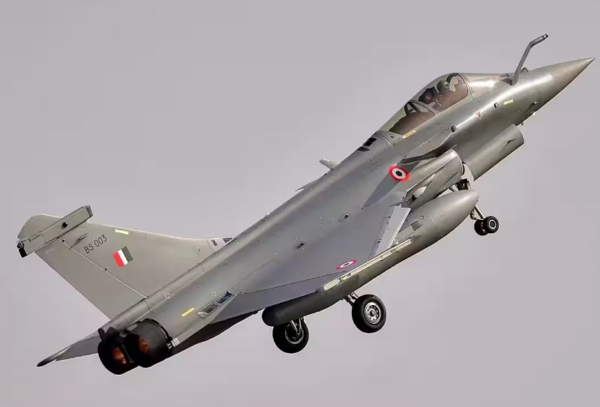
New Delhi . France (France) Now sixth generation (Sixth generation) Of state of the art fighter plane (Fighter aircraft) advanced to do of Preparation In Is. Germany And spain Of with together Ahead Magnification Go doing Future Of fighter plane of Joint Project (Joint project) In differences of opinion Front to come Of after France by This Our level But Ahead increase Of Decision Did Is. This New plane Of Objective current rafale (Rafale) From Ahead of technology capabilities the one fighter plane Ready to do Is. Its Development Of For 2040 Of initial years Of Target kept Went Is.
French Armed Forces Minister Catherine Vautrin confirmed the decision taken in this direction during a parliamentary hearing. According to him, it was decided to take the project forward at the national level in July 2026. This means that France now wants to maintain its control over the development of the aircraft and the key technologies associated with it.
This project has now been named 'Avian de Combat du Future' i.e. ACF. It means fighter aircraft of the future. Earlier it was part of the Future Combat Air System (FCAS), a joint initiative of Germany, France and Spain. Due to differences between the partner countries, France has now chosen a different path for itself.
France plans to use technologies related to the existing Rafale F5 variant and technical work developed in an earlier joint project. There are preparations to start work on the demonstration model of the new aircraft i.e. Demonstrator in the year 2027. This model will help in testing the potential of new technologies and developing the structure of future aircraft.
The new fighter aircraft will not be limited to just a modern aerial platform. Along with this, there are also plans to continue work on systems like drones, guided weapons and combat cloud. Combat cloud is a digital system through which aircraft, unmanned systems and other military resources can exchange information. The purpose of these technologies is to improve coordination between different systems during combat.
A major reason for France to pursue this project alone is to maintain technical and industrial control. In joint projects, the needs, technological preferences and industrial interests of different countries can complicate the decision-making process. Working independently could give France more say over development direction and production decisions.
However, completing such a project alone is a big challenge financially. France has the experience and necessary technical capacity to develop fighter aircraft, but the development of the sixth generation aircraft will require huge investment. A long time will have to be spent on aircraft design, testing, electronic systems, weapons and related technologies.
For this reason, France is now looking for countries that can cooperate through economic investment rather than technical participation in the project. India has emerged as a potential partner in this context. India has already expressed its desire to join this project with France. However, the final form of cooperation, investment terms and India's potential role remain to be clarified.
There were also discussions regarding cooperation with Sweden. In such a situation, the option is open to France as to which countries it should include in the future. At present its main objective is to raise the necessary financial resources while maintaining national control over the development of the aircraft.
The next important phase of this French initiative will be the development of the demonstrator proposed in the year 2027. After this, the progress of the project will be decided on the basis of technical testing and further development. A target has been set to prepare the new fighter aircraft by the early 2040s. However, this timeline will depend on the availability of development, testing, and financial resources.