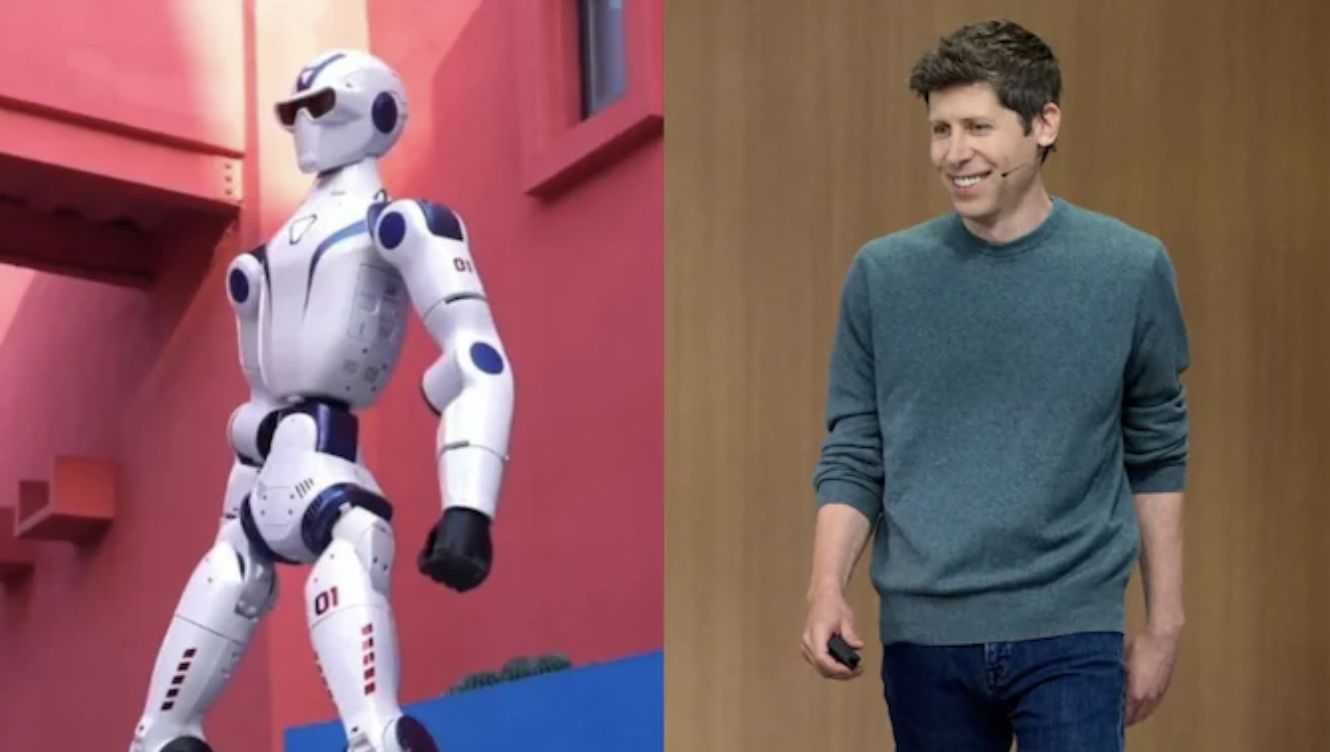
OpenAI, the company behind ChatGPT, is expanding its ambitions beyond software and artificial intelligence models into the world of humanoid robotics. CEO Sam Altman has confirmed that the company is developing humanoid robots and suggested that a public demonstration could take place in 2027.
The move signals OpenAI’s growing interest in bringing artificial intelligence into the physical world, where machines could eventually perform practical tasks in homes, offices, factories and other everyday environments.
Sam Altman Confirms OpenAI’s Humanoid Robot Plans
Speaking on the Sources podcast, Altman explained why a human-like design could be useful for robots operating in environments built for people.
Doors, stairs, tools, keyboards and workspaces are largely designed around the human body. A robot with a similar physical structure could potentially navigate these environments and interact with objects without requiring extensive changes to existing infrastructure.
Altman indicated that OpenAI intends to develop its own humanoid robot, although he did not disclose its appearance, technical specifications or intended applications.
In comments to Fortunehe suggested that the company could present an impressive demonstration in 2027. However, he cautioned that humanoid robots are unlikely to become a common sight on public streets for several more years.
The Real Challenge Is Building the Robot’s Brain
For OpenAI, the most important challenge may not be designing the robot’s body but developing the artificial intelligence that controls it.
A humanoid robot needs to interpret information from cameras and sensors, understand instructions, plan movements and coordinate its arms, legs and fingers. It must also respond to unexpected obstacles and adjust its actions when circumstances change.
These tasks require a combination of perception, reasoning, motion planning and real-time control. A robot may look impressive, but without reliable intelligence it could struggle with even relatively simple activities in an unpredictable environment.
Altman has emphasised that developing this underlying intelligence is more important than the robot’s physical appearance alone.
OpenAI’s Earlier Robotics Research
OpenAI has previously explored robotics through projects such as Dactyl, which trained a robotic hand to manipulate physical objects. The system learned to handle a Rubik’s Cube using reinforcement learning and extensive simulation.
That work demonstrated how AI models could acquire complex physical skills through training rather than relying entirely on manually programmed movements.
OpenAI has also reportedly established a dedicated robotics research effort and advertised roles covering motion control, whole-robot behaviour, manufacturing and supply chains.
A humanoid robot would represent a significant expansion of these efforts, combining advanced AI capabilities with custom hardware.
Competition From Tesla and Chinese Robotics Companies
OpenAI will enter a competitive field that already includes Tesla’s Optimus programme and Chinese companies such as Unitree and XPeng.
These companies are developing robots capable of walking, manipulating objects and performing increasingly sophisticated demonstrations. Advances in sensors, actuators, batteries and AI models are gradually improving their capabilities.
However, demonstrating a robot in controlled conditions is different from deploying it reliably in real-world settings. Safety, operating costs, battery life, dexterity and the ability to handle unfamiliar situations remain major challenges across the industry.
When Could OpenAI’s Robot Become Available?
The proposed 2027 demonstration should not be interpreted as a confirmed commercial launch. OpenAI has not announced a production schedule, pricing or a date when consumers or businesses might purchase its humanoid robot.
For now, the company’s focus appears to be on developing the intelligence required to make a physical robot genuinely useful. A successful demonstration could offer an early indication of how far OpenAI has progressed in translating its AI research into real-world capabilities.
Summary
OpenAI CEO Sam Altman has confirmed that the company is developing humanoid robots and suggested a demonstration could take place in 2027. The company believes human-like robots could work effectively in environments designed for people. Its biggest challenge is developing AI capable of controlling movement and interacting reliably with the physical world. Commercial availability remains uncertain, with no confirmed launch date or pricing.
Image Source