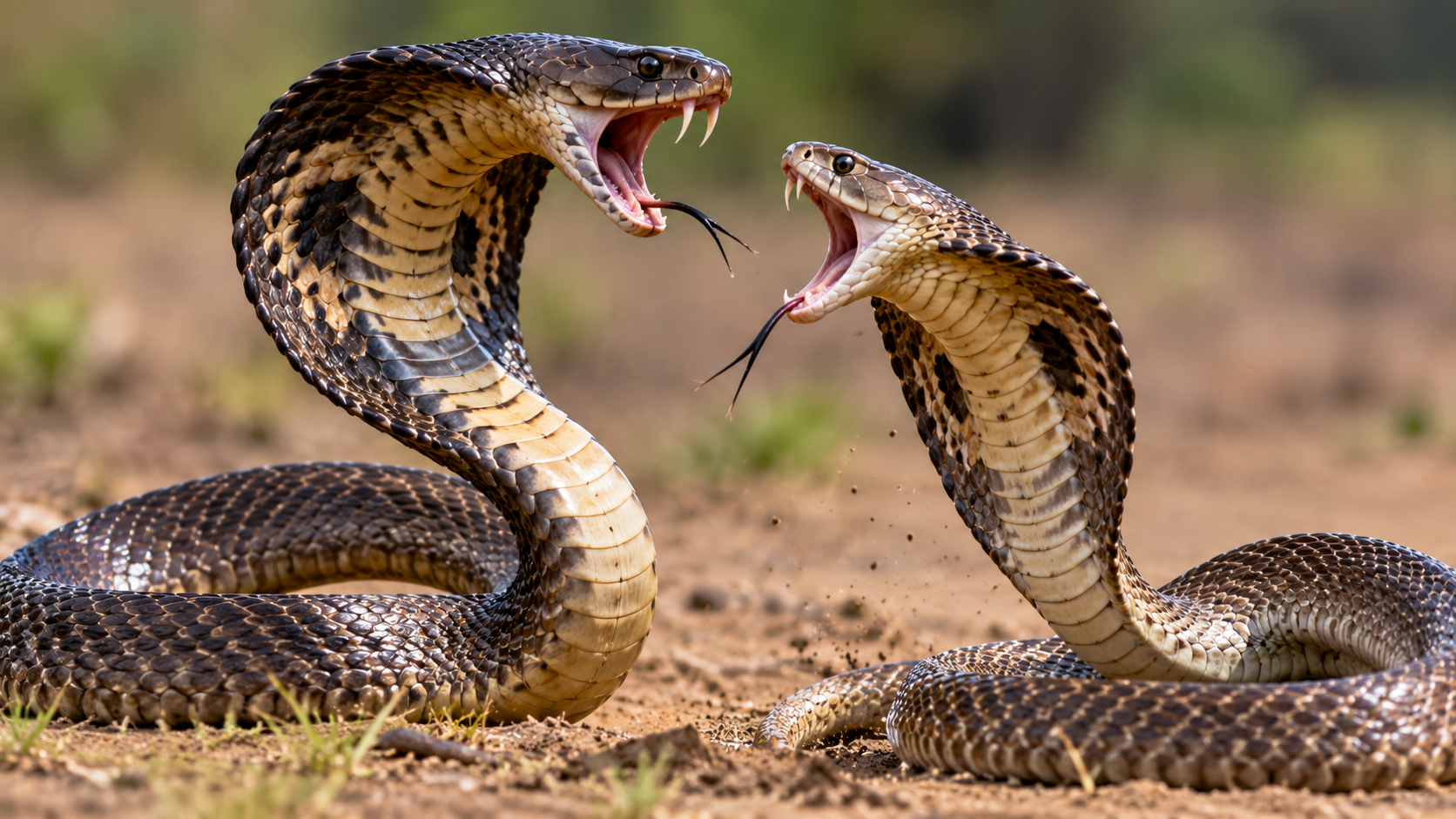
Snakes use venom to capture prey and protect themselves from threats. However, when one snake bites another, the outcome depends on several factors, including the species involved, the type of venom, the amount injected and the bitten snake’s natural resistance.
A snake may survive a bite from another snake, but that does not mean venom is always harmless to its own kind. The effects can range from limited damage to severe injury or death.
Can a Snake Survive a Bite From Its Own Species?
When two snakes belonging to the same species fight, the venom may have a reduced effect on the bitten snake if it has developed natural resistance. However, this protection does not make the snake completely immune.
Some snakes have biological mechanisms that help protect their bodies against their own venom. Scientists call this ability venom resistance. Certain proteins in their bodies can interfere with the way specific venom components affect cells and tissues.
For example, some cobras possess resistance to the neurotoxic venom produced by their own species. Even so, the bite can still cause physical injuries, and the level of protection varies. It is therefore incorrect to assume that a cobra will always remain unharmed after being bitten by another cobra.
What Happens When a Different Snake Bites It?
A bite from another species can be particularly dangerous because venom composition varies considerably among snakes. Some venoms primarily affect the nervous system, while others interfere with blood clotting or damage tissues.
Although a snake may have resistance to its own venom, that protection does not necessarily extend to venom from another species.
For instance, a king cobra can deliver venom capable of killing other snakes. However, the outcome of such an encounter depends on the quantity of venom injected, the species of the bitten snake and its ability to resist the venom’s effects.
This means that not every snake bite between different species results in death, but the risk can be serious.
Can a Snake Die From Biting Itself?
Snakes rarely bite themselves, but an accidental self-inflicted bite does not automatically mean death. Some species have natural resistance to their own venom, which may reduce the risk of serious poisoning.
However, resistance should not be confused with complete immunity. The amount of venom delivered, the location of the bite and the resulting physical injury can all influence the outcome.
A snake’s ability to tolerate its own venom also does not guarantee protection against every possible effect of a bite.
The Final Outcome Depends on Several Factors
Whether a snake survives a bite from another snake—or from itself—depends on the interaction between the venom and the animal’s natural defences. Species, venom quantity, bite location and the severity of the wound all play important roles.
The idea that snakes are always immune to their own venom is therefore misleading. Some have significant resistance, but neither self-inflicted bites nor bites from other snakes can be considered automatically harmless.