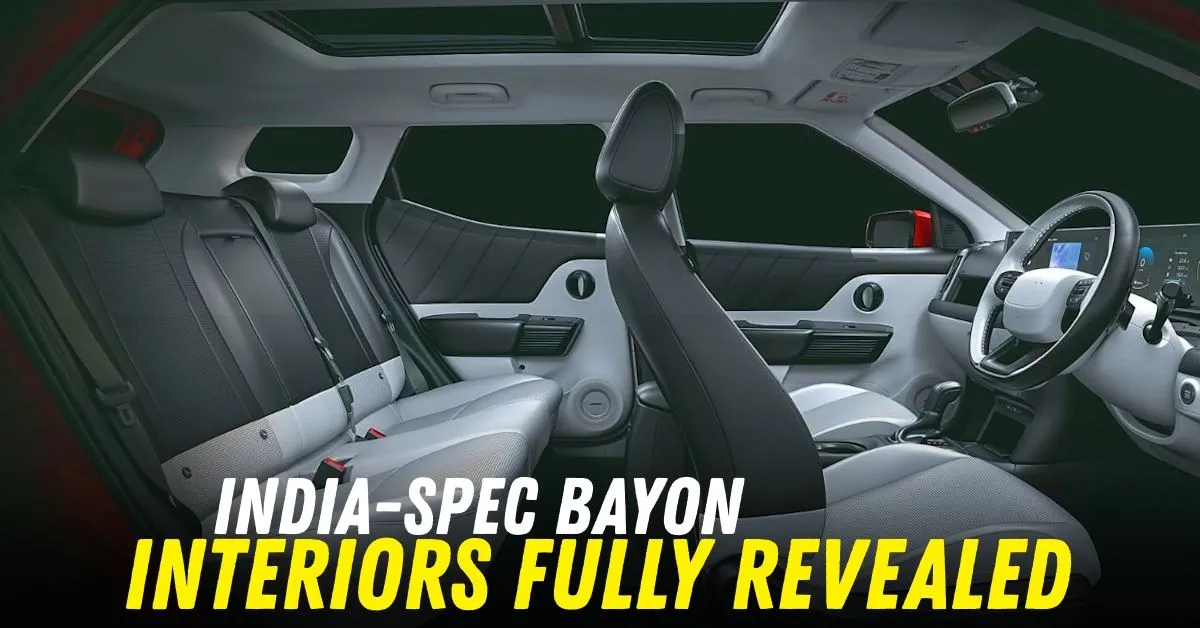
The South Korean automotive giant Hyundai is getting ready to launch the all-new Bayon in India on October 26. Now, just ahead of its official launch, the company has released a new image showing the complete interior design of the Bayon. It gives us a clear look at the cabin design, seating layout and panoramic-style glass roof. Hyundai has already commenced bookings for the Bayon in India with a booking amount of Rs 11,000.
The latest image shared by Hyundai on its social media platforms shows the Bayon’s dual-tone black and light grey cabin theme. The seats get a combination of dark and light-coloured upholstery. This gives the interior a different appearance compared to the all-black cabins seen in many SUVs. Another highlight is that the front seats get an integrated headrest design.
Meanwhile, the rear bench gets three headrests and seat belts for all three passengers. Apart from this, the image also gives us a look at the panoramic-style glass roof, which extends over the front and rear seating areas. This will help in making the cabin feel airier. Now, which exact variants will be offering this panoramic sunroof is currently unknown.
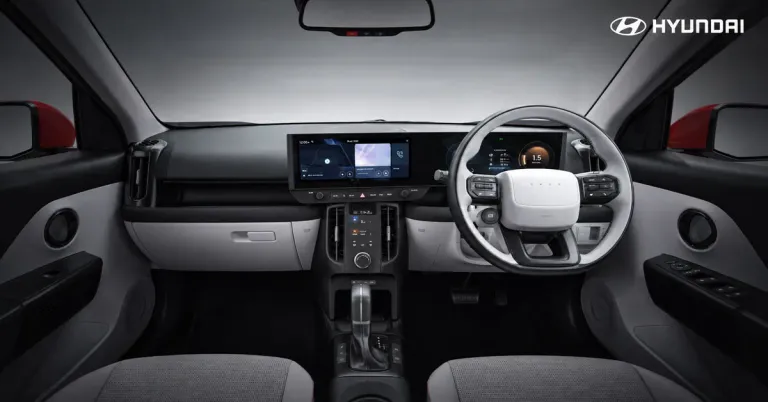
Next up, we can note that the vehicle will also get door panels with circular speaker grilles, armrests and circular inner door handles. Coming to the dashboard, it follows a horizontal layout, with the instrument cluster and infotainment system positioned together in front of the driver. The overall cabin design is similar to the new-generation Hyundai i20, which is sold in Brazil.
Speaking of the dashboard, the Hyundai Bayon gets two 12.3-inch displays, one for the digital instrument cluster and the other for the infotainment system. Both screens sit together in a curved panel, which gives the dashboard a connected-screen appearance. The SUV also gets a multifunction steering wheel with Hyundai’s four-dot logo, which resembles Morse code.

Hyundai has also retained physical buttons and dials for the climate control system instead of moving all the functions to the touchscreen. The centre console also features an automatic gear selector, while slim vertical AC vents are positioned around the dashboard.
Other features will include wireless phone charging, paddle shifters, connected-car technology and wireless Android Auto and Apple CarPlay. The Bayon is also expected to get ventilated front seats, a Bose sound system and an auto-dimming inside rear-view mirror.
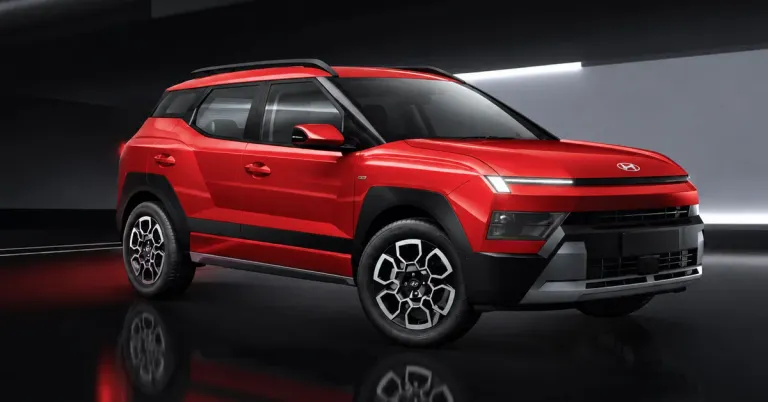
One of the main technology highlights of the Bayon will be its generative AI-based voice assistant. The system uses technology from Perplexity and SoundHound AI and is designed to respond to conversational requests. It can help occupants with queries related to weather updates, travel itineraries, hotel suggestions and restaurant recommendations.
This feature is expected to make accessing information easier while driving. However, Hyundai has not given the complete list of voice commands and connected functions that will be available in the India-spec model. In terms of safety, the Bayon is expected to get Level 2 ADAS, six airbags, a 360-degree camera, front and rear parking sensors and an electronic parking brake with auto-hold.
Mechanically, the Hyundai Bayon will use a 1.5-litre, four-cylinder, naturally aspirated petrol engine that produces around 115 PS and 144 Nm of torque. The engine is shared with the Creta and will be offered with a six-speed manual gearbox and Intelligent Variable Transmission (IVT).
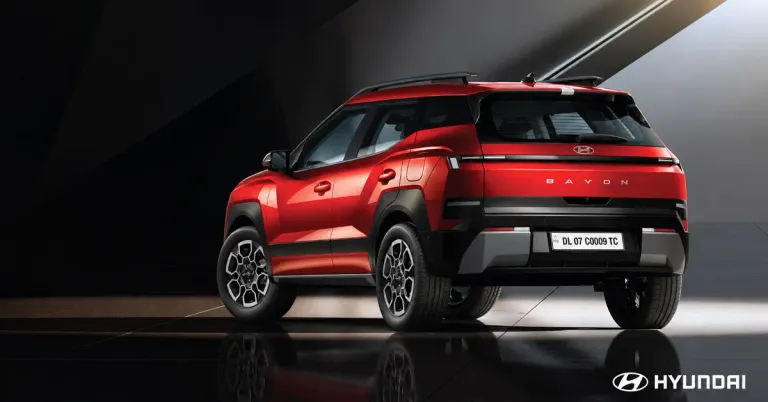
A CNG version could also join the lineup at a later stage with an underbody tank to preserve boot space. However, Hyundai has not officially confirmed this variant. The SUV is expected to be priced between Rs 9 lakh and Rs 17.5 lakh (ex-showroom), depending on the variant.