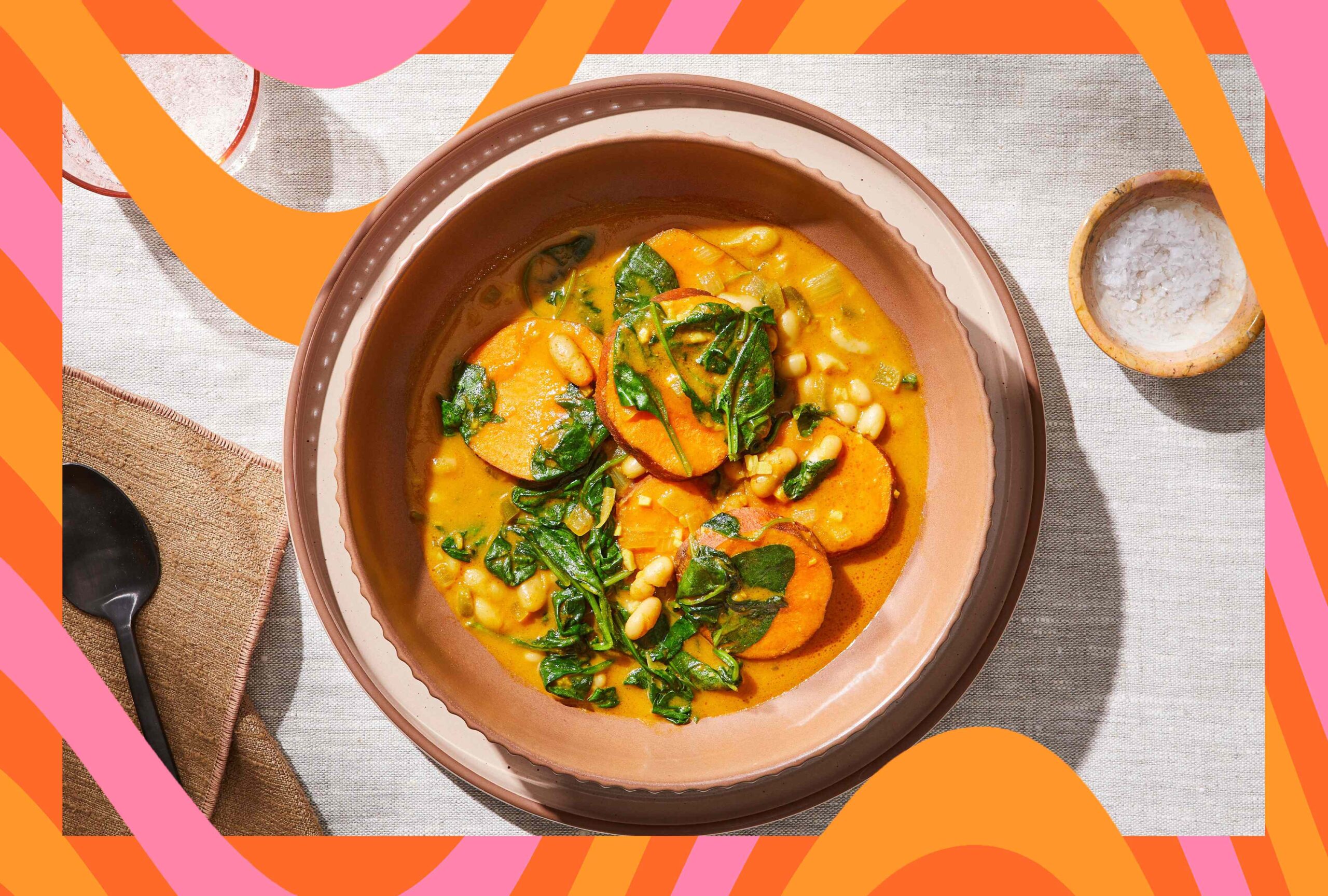
This hands-off slow-cooker Mediterranean stew is simple, but packed with anti-inflammatory nutrients.
Reviewed by Dietitian Jane Leverich, M.S., RDN
Key Points
- Beans and leafy greens provide fiber and plant compounds that support overall health.
- One serving of this Mediterranean stew provides 10 grams of fiber.
- Pair the stew with whole-grain bread, pasta or a protein-rich side for a more filling meal.
The slow cooker is my cold-weather sidekick. I love nothing more than a steaming bowl of soup or stew for dinner, but I rarely have time to make one from scratch on most weeknights. That’s where the slow cooker takes over dinner duty for me. I toss all my ingredients into the slow cooker in the morning, and it quietly works all day to turn them into a delicious, satisfying stew that I can enjoy as soon as I walk in the door.
But stew is more than just a cozy dish. When it’s made with ingredients like fiber-rich vegetables, dark leafy greens and beans, it can be a delicious way to eat more foods associated with an anti-inflammatory eating pattern. One recipe I can’t stop making is this Slow-Cooker Mediterranean Diet Stew. Read on to find out why I think this stew deserves a spot in your weeknight dinner rotation this fall and winter.
Why I Can’t Stop Making This Anti-Inflammatory Stew
It Provides Beans & Greens
This stew checks all the right boxes for anti-inflammatory eating because it features dark leafy greens and beans. Humble beans are a nutrition powerhouse that can help quell inflammation and support overall health in a couple of different ways. For starters, they’re rich in soluble and fermentable fiber, which gut bacteria can break down into short-chain fatty acids (SCFAs). These compounds help support gut health and may play a role in regulating inflammation. In addition, beans are rich in polyphenols, which are plant compounds that have antioxidant and anti-inflammatory properties.
Dark leafy greens like kale and spinach complement beans by providing carotenoids and other beneficial plant compounds. These compounds help protect cells from oxidative stress, which is associated with chronic inflammation.
It’s Packed with Fiber
Stew might not be the first thing that comes to mind when you’re looking to add some fiber to your plate, but don’t overlook its potential. Just one bowl of this Slow-Cooker Mediterranean Diet Stew provides an impressive 10 grams of fiber. That’s a meaningful contribution toward the recommended daily intake of 25 grams for women and 38 grams for men.
All that fiber doesn’t just keep you regular, it also helps support your overall gut health; a key player in keeping chronic inflammation at bay. Research suggests that fiber supports a more diverse gut microbiome, which means more good gut microbes that can produce inflammation-fighting SCFAs.
It Relies Heavily on Pantry Staples
If rising grocery prices are giving you sticker shock at the checkout (hand raised!), you’re not alone. About half of Americans have reported changing how they shop for groceries to manage costs. Luckily, pantry staples like canned beans and tomatoes can be budget-friendly options that deliver plenty of nutrition.
In fact, canned tomatoes offer some anti-inflammatory benefits beyond the fresh ones. Lycopene, a type of carotenoid with anti-inflammatory properties in tomatoes, is more bioavailable after tomatoes are cooked.
It’s a Simple Dish
This stew also highlights how an anti-inflammatory meal doesn’t have to be complicated. It uses a handful of simple ingredients, including broth, tomatoes, beans, carrots and herbs. The slow cooker brings everything together, and as a busy mom, I appreciate that there’s minimal cleanup, too.
What’s more, if you don’t feel like chopping (guilty!), you can use frozen carrots and kale or swap in frozen spinach. When serving this stew, I sometimes like to add a small spoonful of pesto and stir it in at the table for extra flavor.
Ways to Enjoy This Slow-Cooker Mediterranean Stew
On its own, this stew provides 10 grams of fiber per serving, along with more than 50% of the Daily Value for vitamins A and C. It makes a nourishing meal on its own, but if you want to make it more filling, here are a few sides I like to serve with it.
- Add some pasta. At just 8 grams of protein per bowl, this stew isn’t particularly high in protein on its own. To bump up the protein and make it more filling, I sometimes serve this stew with some high-protein pasta stirred in.
- Pair it with a sandwich. Another way to turn this stew into a satisfying meal is to pair it with a sandwich made with whole-wheat bread. Grilled cheese is a classic pairing, but you could also try a sandwich with a higher-protein filling. A tuna salad sandwich, for example, would be a great way to add some anti-inflammatory fats to this cozy meal.
- Add a snacky side. Serve your stew with crackers, cheese, a hard-boiled egg, nuts or fruit to add more variety and help round out the meal. A sliced apple with peanut butter is another one of my favorite quick lunch sides when I’m working from home.
Other Strategies to Fight Inflammation
Eating a variety of nutrient-rich foods is one way to support overall health. These other habits can also help you build a routine that supports your well-being.
- Focus on healthy fats. Research suggests that omega-3 fatty acids from fatty fish, nuts and seeds may help reduce inflammation. So look for ways to incorporate them regularly into meals and snacks.
- Prioritize sleep. Sleep and inflammation have a two-way relationship: Too little sleep is associated with higher levels of inflammation, while chronic inflammation can also affect sleep. If you’re having trouble getting enough rest, try establishing a wind-down routine to help you prepare for bed. Most adults need at least seven hours of sleep per night.
- Stay active. With cooler temperatures and shorter daylight hours, it can be tempting to skip your usual workout for a little extra time in bed. But regular physical activity supports more than muscle strength; it can also help regulate inflammation and support overall health. Find activities you enjoy and aim for consistency rather than perfection.
- Enjoy highly processed foods in moderation. Some foods, when eaten too often, can increase inflammation. That said, you don’t need to eliminate any particular food to eat well. Instead, focus on a balanced eating pattern built around vegetables, fruits, whole grains, beans, nuts, seeds and healthy fats while enjoying foods high in added sugars and sodium (think fried foods, processed meats and sweet treats) in moderation.
Our Expert Take
If you’re looking for an easy way to incorporate more anti-inflammatory foods into your diet this season, try stew. Not only is it a cozy meal, but many stews are chock-full of inflammation-fighting vegetables and fiber. This Slow-Cooker Mediterranean Diet Stew is one of my favorites. It’s also a tasty example of a fiber-filled stew that features many anti-inflammatory stars like beans and dark leafy greens in one simple recipe. So dust off the slow cooker and hand off dinner duty tonight.