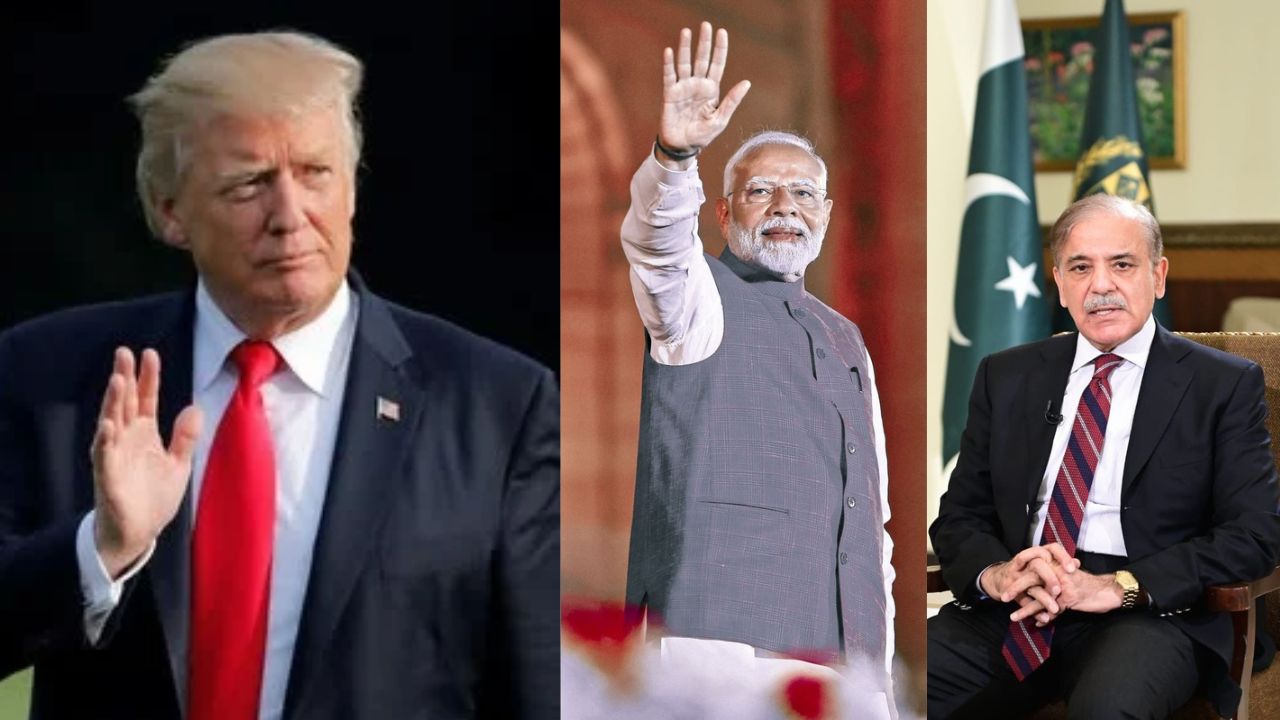
Washington DC: US President Donald Trump has once again claimed that he helped stop the India-Pakistan military conflict by threatening both countries with 250 per cent tariffs on trade with the United States. Speaking at a campaign rally in Florida, Trump said his warning pushed the two nuclear-armed neighbors to halt hostilities. He also claimed that 11 aircraft were shot down during the confrontation and expressed disappointment over not receiving a Nobel Peace Prize for his alleged role in resolving international conflicts.
Donald Trump has renewed his claim that his economic pressure and trade tariff threats played a decisive role in ending the military confrontation between India and Pakistan. Addressing supporters at a campaign rally in Florida, the US President said he warned both countries that continued fighting would put their access to the American market at risk.
Trump claimed he told the leadership of the two countries that Washington could impose tariffs as high as 250 percent if the hostilities continued. According to his account, the warning initially angered both sides but eventually led them to stop firing and bring the conflict to an end.
The US President presented the episode as an example of his approach to international diplomacy, which combines economic pressure with direct engagement to influence decisions by foreign governments. However, Trump's latest remarks have again brought attention to the difference between his account of the ceasefire and India's official position on how the military de-escalation was achieved.
India Rejects Third-Party Mediation Claim
India has consistently maintained that the understanding to stop military action was reached through direct communication between the military leadership of India and Pakistan. New Delhi has rejected claims that a foreign leader or an external mediator brokered the ceasefire.
According to India's stated position, Pakistan's Director General of Military Operations (DGMO) contacted his Indian counterpart and requested a halt to hostilities. The military-level communication led to an understanding to stop firing and military action.
India’s position is significant because New Delhi has traditionally opposed third-party mediation in disputes with Pakistan, maintaining that bilateral issues should be addressed directly between the two countries.
Trump’s repeated assertions of personal involvement have therefore continued to draw attention to the competing accounts of the ceasefire, particularly the role of economic pressure, diplomatic engagement and direct military communication.
Trump Claims 11 Aircraft Were Shot Down
Trump also referred to aircraft losses during the India-Pakistan confrontation, claiming that 11 planes were shot down. However, he did not provide further details in his latest remarks about the aircraft involved, the circumstances of their loss or the basis for the figure. India has disputed Trump's claims regarding the number of aircraft lost during the confrontation.
His latest statement has once again brought the military dimension of the conflict into focus, including questions surrounding aerial engagements, operational losses and the information released by the countries involved. The claim remains contested and should not be treated as an independently established account of aircraft losses.
Operation Sindoor: Why India Launched Military Strikes
The confrontation followed the April 22, 2025, terrorist attack in Pahalgam, Jammu and Kashmir, which killed 26 people and triggered widespread outrage across India. In response, India launched Operation Sindoor on May 7, 2025.
The targeted military operation focused on terrorist infrastructure in Pakistan and Pakistan-occupied Jammu and Kashmir (PoK), which India said was linked to cross-border terrorism. The operation marked a major escalation in tensions between the two nuclear-armed neighbours, raising concerns about further military action and regional security.
The confrontation involved military strikes and exchanges of fire before the two sides agreed to stop hostilities. India subsequently paused Operation Sindoor on May 10, 2025, following a request from the Pakistani side through military channels.
The Indian government has maintained that the decision to halt military action followed direct contact between the two countries’ Directors General of Military Operations. The episode highlighted the security challenges facing South Asia, where military escalation between India and Pakistan carries significant regional and international implications.
Trump Says He Deserves Recognition for Ending Wars
During the rally, Trump also highlighted what he described as his record of resolving international conflicts. He claimed to have helped settle eight wars and expressed frustration that his diplomatic efforts had not earned him the Nobel Peace Prize.
The remarks reflect Trump's continuing effort to present himself as a leader capable of using economic leverage and personal diplomacy to prevent or end armed conflicts. His latest comments have once again placed the India-Pakistan ceasefire at the center of the debate over international mediation, trade pressure and diplomatic credit.
While Trump continues to attribute the cessation of hostilities to his tariff warning, India maintains that the ceasefire understanding emerged from direct military-level communication with Pakistan. The differing accounts underline the importance of distinguishing between political claims and officially stated positions when assessing how the May 2025 confrontation ended.
As debate over Trump’s diplomatic role continues, the circumstances surrounding Operation Sindoor, the military losses claimed by the US President and the process that led to the ceasefire remain key issues in discussions about India-Pakistan relations and regional security.