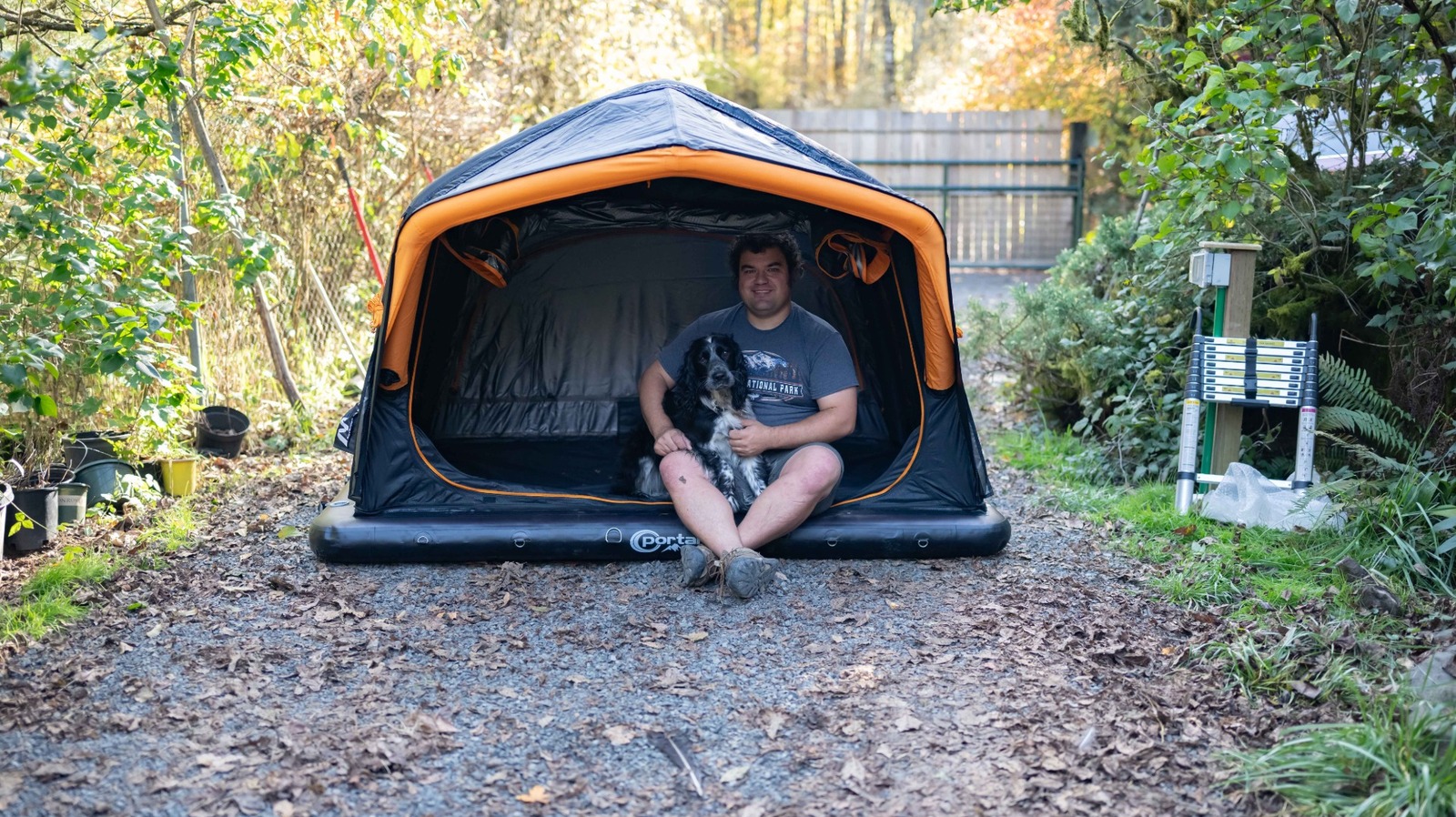
As an outdoors enthusiast and owner of a rigid rooftop tent, I was excited when I was offered the opportunity to test out the Portal Nomis One. This inflatable rooftop tent promises to solve some of the key pain points which afflict rigid rooftop tents. On paper, the Nomis One seems like the perfect device for car camping, offering a warm and comfortable place to sleep that’s easy to setup, which doesn’t need a tent site to pitch it on, and which can be taken on or off of a vehicle without needing a team of bodybuilders to lift.
However, I quickly came to realize that the reality of the Portal Nomis One doesn’t quite live up to that promise. The vision is there, but there are many aspects of it that get in the way of that vision, and a project that looked like a fun slam-dunk quickly became a far more in-depth product testing than I had anticipated.
Portal provided the Nomis One for the purposes of testing for this article.
Setup and takedown
One very real advantage of the Nomis One is how quick it is to set up and take back down. The tent is composed of a large inflatable mattress which attaches to the inflatable upper portion of the tent via a zipper. These are inflated with either a hand pump, or an electric pump. Two telescoping horizontal bars are then inserted to provide tension. All together, this part of the process takes about 10 minutes, and if you just want to sleep on the ground, all that’s left is to tie the Nomis One down and toss your sleeping bag in.
Mounting the tent on top of a car is also fairly quick and easy, but has a few caveats. I recommend making sure you have compatible T-slot rails to use with the Nomis One if you intend on using it as a rooftop tent.
Having these compatible T-slot rails to work with is absolutely essential in your ability to quickly and easily mount/dismount it from your vehicle. The alternative is strapping the tent directly to roof rails using webbing, which requires an extra amount of time and labor whenever you setup or takedown the tent. Some roof racks (such as that found on a 2017 Subaru Outback) may not work well without the purchase of additional hardware to support the tent.
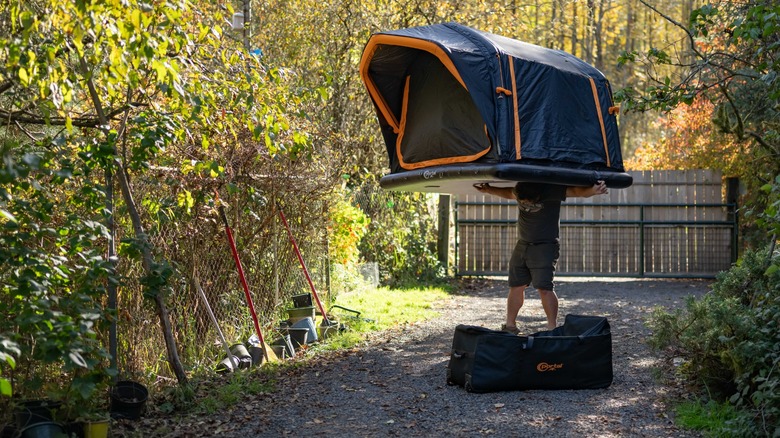
Finally, taking down the tent requires a lot of work to get the air out, and you’ve got to fold it just right to get it back in the bag. It’s also very difficult — and inadvisable — to put it on/off a car and to fold it up correctly without at least two people.
Weight and storage
Portal sent the Nomis One along with many optional accessories as part of one large package for those sake of my convenience. It was a nice thought, but I wasn’t expecting the package to be as heavy as it was, and as a consequence made the mistake of carrying the whole thing in through the gate on my own when FedEx dropped it off.
Carrying the tent plus accessories in that one large box caused severe muscle strain in my chest, which left me in considerable pain the following day, to the point where I wondered if I should go to the ER. Thankfully, I recovered a day later, with no long term damage done, and I’ve been assured that the Nomis One won’t be packaged like this for customers.
 Andy Zahn/Read
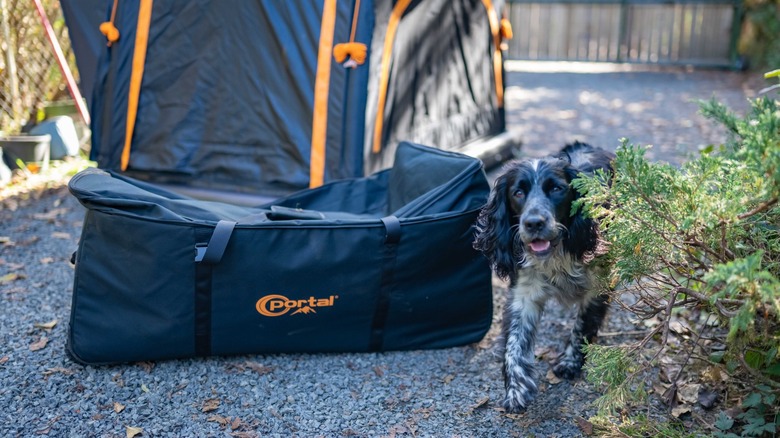
The tent and mattress in its carrying case, with only a couple of accessories is relatively light, to the point where a reasonably strong person can lift and manipulate it. However, it’s heavy and bulky enough that most people are going to have difficulty in getting it on top of a car unaided. It’s a two-person task. The case has wheels, so it’s not too difficult to move around.
Storage of the tent is something I’ve struggled with. Folded and in its case, it isn’t exactly compact. It’s not as awkward to stow as a rigid rooftop tent, but unless you have a garage with room to spare, it’s still a problem. Also, in a typical small or medium size passenger vehicle, it takes up a significant portion of available space, and unfortunately it’s not designed to be tied-down on top of the car. It makes a lot more sense if you’re camping with a small trailer, or with a large truck or plus-sized SUV.
Comfort and sleeping experience

Fundamentally, the Portal Nomis One offers an extremely comfortable sleeping experience. It is essentially a big air mattress with an inflatable roof, so no matter what surface it’s set on, you’re not going to feel it (so long as its flat, of course). It’s not the most comfortable rooftop tent I’ve used, but it’s much better than what you’ll get with individual camping mats in a typical tent.
 Andy Zahn/Read
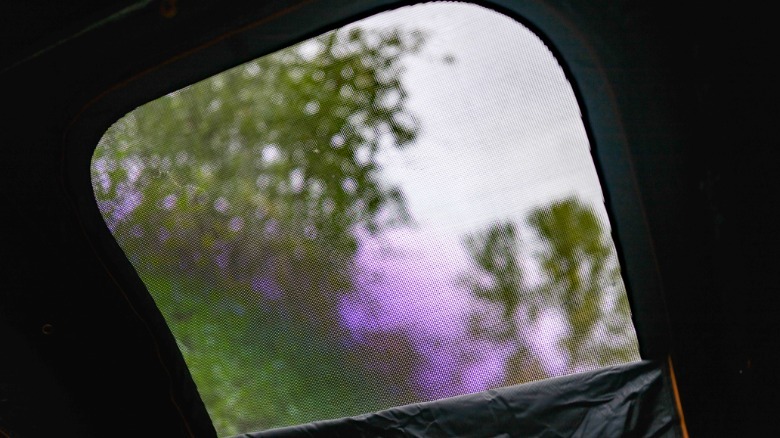
One surprise I found in using the Nomis One was just how dark it got inside; with all the zippers done up and the optional insulation installed, practically no light is able to penetrate its carapace. It was a somewhat bizarre experience to wake up with morning bird noises, yet inside the tent it remained dark as the blackest night. The consequence of this is that you aren’t going to be bothered by outside light in this tent, though you may need to set an alarm if you normally rely on changing light levels to get you out of bed.
If you want a more open-air camping experience, the Nomis One allows for that as well. With every window shade rolled down, it provides an expansive view. The skylight is particularly nice on a warm evening.
Durability and waterproofing
It did rain while I was sleeping in the Nomis One, and I’m happy to report that I stayed perfectly dry. The thick air mattress means that when using it on the ground, the tent could be sitting in several inches of water, yet the interior of the tent would remain dry. It would probably even float quite nicely, though I didn’t get around to testing that myself. The only problem I encountered is that the tent doesn’t seem to dry out very quickly, and you do not want to store something like this when it is still damp. It is also weird how some of the mesh screens of the tent are on the exterior, while the solid material is on the inside, so when you zip the tent up the rain is falling into those mesh screens. This strangely didn’t seem to affect waterproofing.
You also get more protection from cold temperatures thanks to how well the tent seals up, and particularly if you pick up the optional insulation. Additionally, it’s very well protected from the wind inside, though in very windy conditions I’d definitely recommend tying it down.
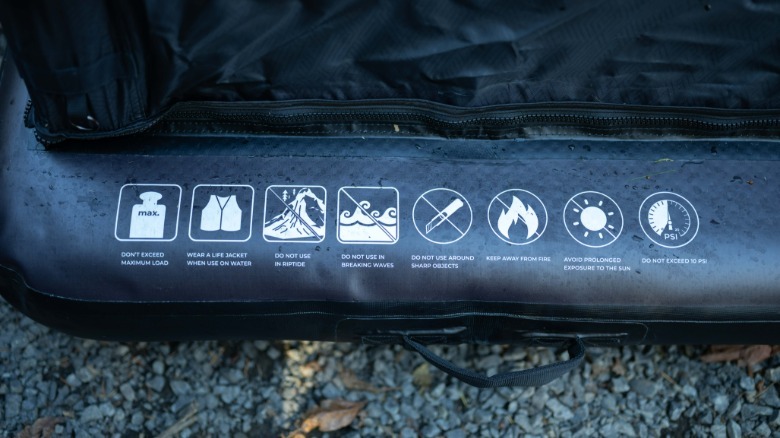
When it comes to extreme tent durability, I have some concerns. The material of the tent is overall very high quality, but the air mattress shipped to me already showed clearly worn stress marks. I never encountered leaks while testing, but I have to wonder how many times you’ll be able to fold and unfold and inflate the Nomis One before you have to start adding patches to address leaks as a result of that stress. If you are going to use it on the ground, you should probably remove the feet which attach to the the T-rail posts.
Should you buy it?
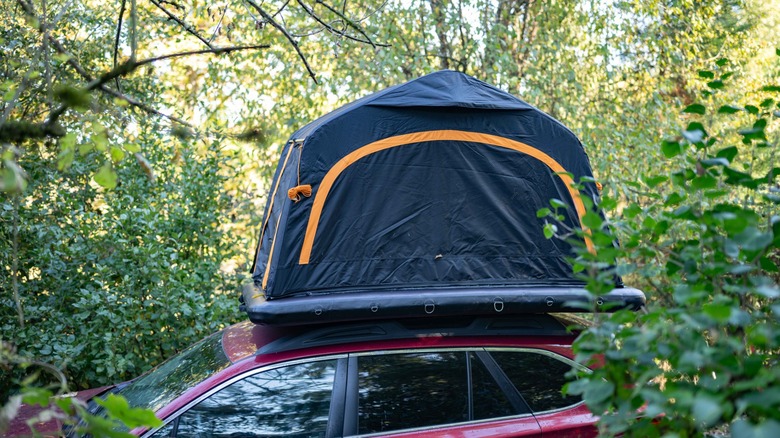
The Portal Nomis One is a complicated product. It comes with a lot of different pros and cons that need to be taken into consideration before putting down any money on it. If you’re looking for a really comfortable ground-tent that’s quick to setup, and which provides a high level of light exclusion for a good night’s sleep, then I would certainly recommend the Nomis One. If you have a large vehicle or a trailer and a roof track with T-slot rails, then I could certainly see choosing the Nomis One over a traditional rooftop tent.
What the Nomis One struggles with is its image as the perfect all-around alternative to a traditional rooftop tent, when it truth it’s more of a niche device that will work great for some people and should probably be avoided by others. If you have a small or medium-size vehicle, you may find the bulk of the tent challenging to accommodate in addition to your other gear. In a typical 5-seat SUV, there’s about enough space left over for two people plus their stuff, so it does technically work. However, when I go camping it is usually with a carload of 3 people and a dog, which in a something like an Outback or a Forester is too much to also fit all the other gear plus the Nomis One.
So, it’s kind of a mixed bag here. The Nomis One is a cool concept that struggles in the execution of that concept, but it does succeed to some degree. I honestly hope it succeeds, and that one day a “Nomis Two” might fix some of its flaws.
The Portal Nomis One is available to back through Kickstarter, starting at $599and is expected to ship in January 2027.