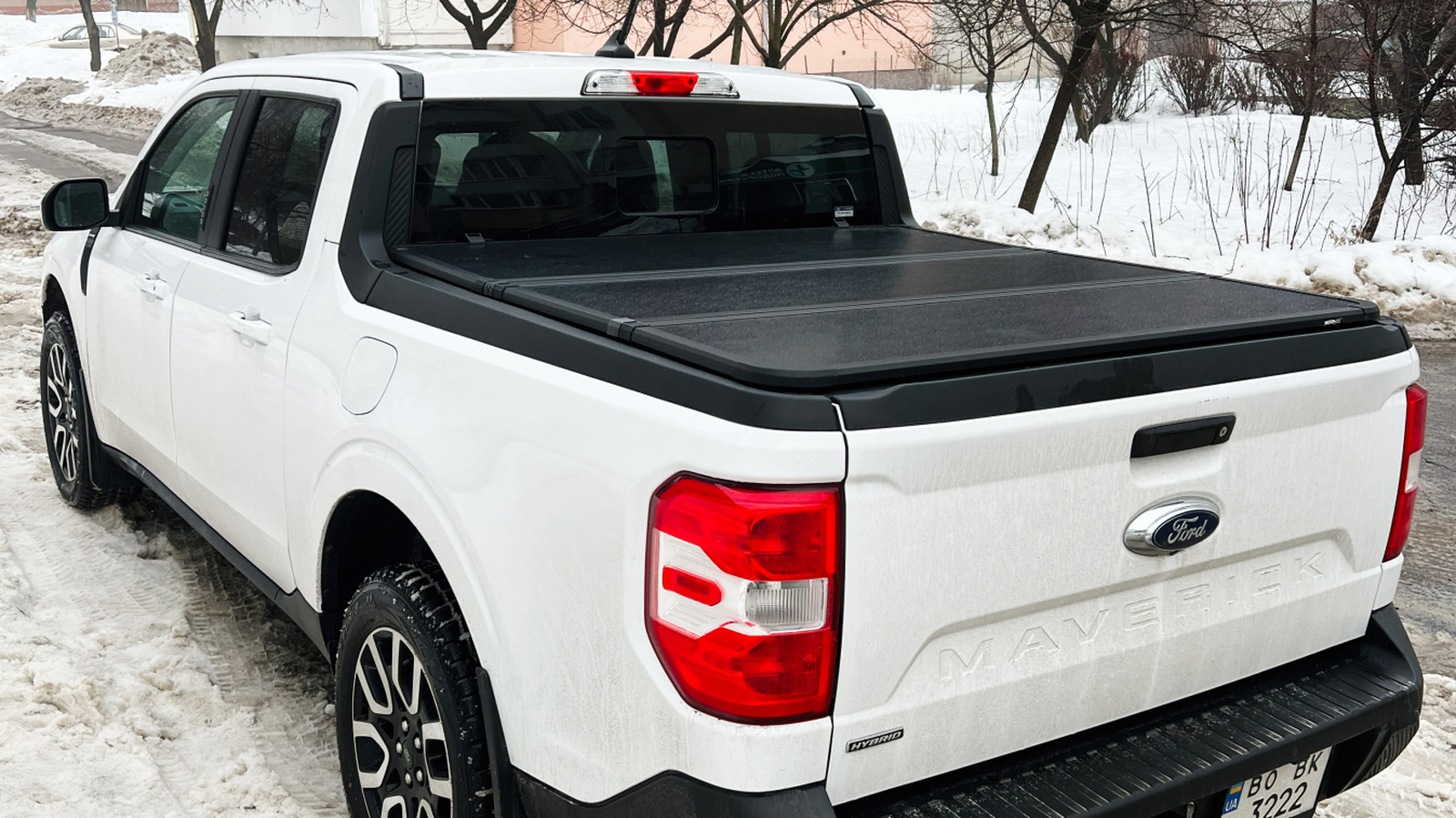
If you’re not careful, your truck bed can fall into disarray quickly. This is especially true if you use it for work or even just park your truck outside, exposing the bed to the elements. So, a truck bed cover, also known as a tonneau cover, may seem like a good way to keep your bed in good shape and protect it from the elements. However, before investing in this truck modification, consider the possible drawbacks, which could make it more of a negative than a positive for you and your vehicle.
Before diving into the negatives, it’s worth noting that truck bed covers aren’t necessarily bad ideas in every scenario. In fact, they have some tangible positives. As mentioned before, if you live somewhere with heavy rain and snow, or park under or around trees, a bed cover is great at keeping precipitation and debris out of your truck bed. They also add an extra layer of security if you keep tools and other items in your truck bed, making it harder for thieves to steal them. Plus, several highly rated truck bed cover brands are worth trusting, and a cover could even increase your vehicle’s perceived value.
Still, truck bed covers aren’t for everyone or every situation. In some cases, a bed cover is more hassle than it’s worth.
Spatial inconvenience
No matter the variety, a truck bed cover does its job well. It covers the bed and limits access for people outside. The flip side, however, is that when you need the full vertical space of the bed, a cover can become more of a hindrance than a help. Depending on the variety you have, you may need to roll or fold it partially or entirely to accommodate large furniture, sizeable pieces of lumber, and the like. Even so, some tonneau covers are a hassle to remove, so without tools to uninstall them easily, they’ll keep taking up space you may need for larger cargo.
Moving to automated retractable covers, these also bring some spatial inconvenience. Part of retractable cover installation involves a canister that permanently resides in the bed, just behind the rear window of the truck cab. This canister is essential for storing the rolled-up cover while it’s retracted, but it takes up a fair amount of truck bed space. If you need it completely out of the way, you’ll have to disassemble it, which requires tools and the know-how to reinstall it once your cover-removal task is complete.
Maintenance and replacement costs
No matter whether you choose a hard or soft truck bed cover, it isn’t guaranteed to last forever. So take good care of it, and plan for repair or replacement costs when the time comes. Longevity depends on the material and how well you care for it. Soft vinyl covers generally last about three to five years with routine cleaning and responsible use: no bending, tearing, or excessive pulling. Hard tonneau covers can last around 10 years with proper use and care. You can retighten them, patch holes and small slashes, and reapply adhesive as needed throughout their lifetime.
Once repair isn’t possible, that brings us to replacement, where the real negatives come in. If your vinyl or otherwise soft cover breaks down and needs a swap, you’re looking at a bill in the multiple hundreds of dollars. Hard foldable manual covers can cost over $1,000 to replace. This number can go even higher if you need to replace an automated retractable cover, where your bill could jump to thousands more, especially with a hard-material model. So if you’re not ready to pay for maintenance and eventual replacement, a tonneau cover may not be worth much focus.
Soft cover noise
Generally, if you opt for a hard tonneau cover, you won’t have to worry much about sound distraction while driving. They’re much heavier than their soft vinyl counterparts, so if they’re installed correctly and secured before you shift into drive, you won’t hear much on the road. Meanwhile, soft vinyl covers can be much noisier because they’re lighter and more fabric-like. They’re bound to flap around while you drive, making them quite an auditory nuisance on long, high-speed drives.
The problem typically comes from two major sources. One is age, since fabric covers wear out over time, causing the fabric to lift away from the side rails. This is where the flapping sound comes from: the wind lifts the loosened ends as you drive. Age, but also incorrect installation, can leave a soft tonneau cover loose, creating unnecessary slack that leads to wind movement and sound. While you can theoretically repair the edges and adjust the tonneau cover’s tension, over time the material will continue to wear and stretch, bringing the looseness and noise back and requiring another temporary fix or something more permanent, like replacement.
Accessory limitations
A truck bed is for more than just things like lumber, groceries, and tools. Some accessories can absolutely transform your truck bed and add to its utility. The problem is, though, some accessories won’t work with a tonneau cover installed because of space constraints. One example is a crossover truck toolbox, which is typically installed in the truck bed on the end closest to the cab. A hallmark of these toolbox models is that their edges run over the sides of the bed, a part of the bed that most tonneau covers need to access freely.
Another example is one of the many forms of truck bed raised racks that drivers can install. Some are designed specifically to haul massive machines like ATVs and UTVs, while others are for more general uses. Some accommodate tonneau covers, but many truck bed racks you see won’t. So, if you want to install one, you’re limited to the price points of tonneau-cover-friendly options. Without a cover installed, the sky is the limit for the truck racks you can add to your bed.