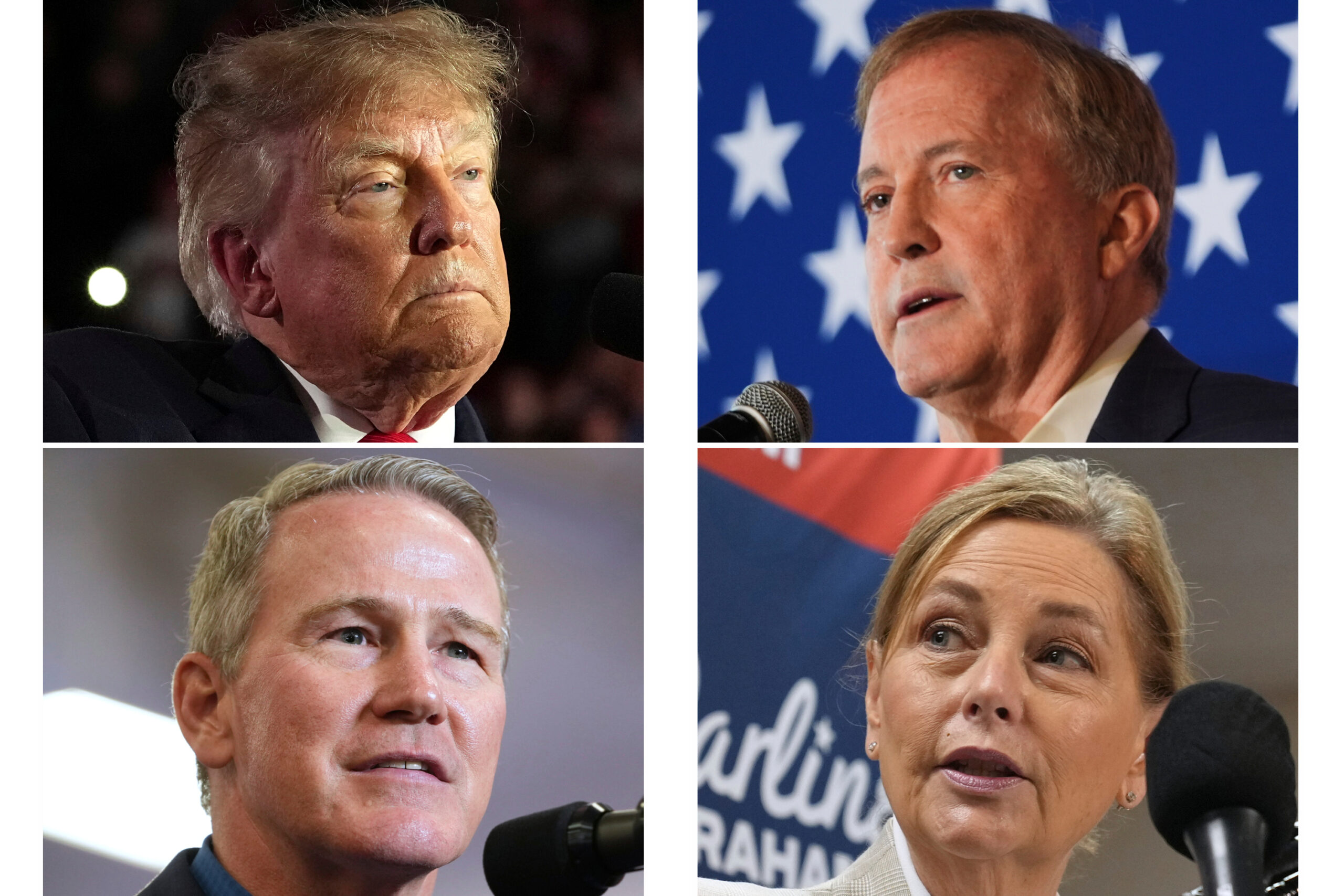
Trump Blames GOP Candidates as Midterm Losses Reshape His Final Two Years/ NEWSLOOKS/ WASHINGTON/ J. Mansour/ President Donald Trump faces expanded investigations, potential impeachment proceedings and obstacles to his nominees after Democrats captured Congress. Voters broadly criticized his economic policies, while several Republican candidates he endorsed lost pivotal races. Trump rejected the suggestion that the results were a personal defeat and signaled he would use his veto against Democratic legislation.

Quick Look
- Congress changes hands: Democrats won both chambers, strengthening their ability to challenge Trump.
- Investigations ahead: Potential targets include Trump family businesses, corporate influence and the handling of the Jeffrey Epstein investigation.
- Nomination hurdles: Senate Democrats will have the power to block Cabinet and federal judicial nominees.
- Economic dissatisfaction: About two-thirds of voters said Trump’s policies worsened the economy.
- Personal priorities: Roughly 6 in 10 said Trump puts his own interests ahead of the country’s.
- Republican setbacks: Democrats captured Senate seats in seven states previously held by Republicans.
- Veto warning: Trump emphasized his veto power and posted an image of a cap bearing the word “VETO.”
- Political fallout: The defeat weakens Trump as attention turns toward the contest to succeed him.


Deep Look
Democratic Congress Puts Trump on the Defensive
WASHINGTON — President Donald Trump’s final two years in office will unfold under a newly empowered Democratic Congress, exposing his administration to investigations, possible impeachment proceedings and greater resistance to his legislative agenda.
Democrats’ capture of both the House and Senate shifts power toward Capitol Hill after two years of Republican congressional support for the president.
The outcome revives a confrontation familiar from Trump’s first term, when Democrats won the House in his first midterm election and subsequently impeached him twice. This time, Democratic control of the Senate also gives the party the ability to block Cabinet appointments and lifetime federal judicial nominations.
Trump had encouraged voters to treat the election as a judgment on his presidency, repeatedly telling supporters to “pretend I’m on the ballot.”
After the Republican losses, however, he rejected that interpretation.
“I don’t view it as a hit on me,” Trump said in a Fox News interview aired early Wednesday. He said Democrats “did a good job” campaigning and blamed Republican candidates for their defeats.
Investigations Could Target Family Businesses and Corporate Influence
Senior Democrats have identified several areas for scrutiny, including the Trump family’s business dealings, the administration’s handling of the Jeffrey Epstein investigation and allegations of corporate corruption.
They also intend to examine administration policies, officials’ conduct and relationships between the government and companies seeking influence with the White House.
Control of congressional committees will give Democrats greater staffing resources, investigative budgets and subpoena authority to demand documents and testimony.
The White House could respond with tactics used during Trump’s first administration, including delaying responses to congressional requests and asserting executive privilege over certain material.
Impeachment remains a possibility, but no specific proceedings were announced in the report.
Trump Signals Legislative Confrontation
The president has emphasized that Democratic control of Congress will not eliminate his ability to resist legislation.
Trump said he has a “strong veto” and posted a picture Tuesday night of his signature red cap with “VETO” stitched across it.
That message points toward legislative clashes as Democrats attempt to advance their priorities.
Political opposition could also offer Trump a familiar means of rallying Republicans. During his first term, he used confrontations with Democrats to consolidate party support and raise campaign money.
Nevertheless, the scale of the defeat leaves him with diminished political leverage at home and abroad as the race to succeed him begins taking shape.
Voters Deliver a Harsh Economic Assessment
Trump and his advisers had hoped making the election about him would mobilize his most committed supporters.
Democrats welcomed that strategy, arguing it reinforced the connection between the president and voters’ frustrations over prices, tariffs and the war in Iran.
“Trump’s desire to have everyone think that he’s on the ballot? Like, it’s happening,” said Sen. Andy Kim, D-N.J., who campaigned in Iowa, Georgia and Texas.
“Everyone is thinking about him and the harm that he has done to them directly.”
The AP Voter Poll found that about two-thirds of voters nationally believed Trump’s policies had worsened economic conditions. Only about 3 in 10 said those policies had improved the economy.
Roughly two-thirds also said his tariffs had “hurt” the national economy or their local economy.
The criticism extended beyond policy. More than half of voters said Trump was not a strong leader, did not fight for people like them, lacked the right priorities and did not have the mental capability to serve effectively as president.
About 6 in 10 said he placed his personal interests above the country’s, while approximately 4 in 10 said he prioritized the national interest.
Trump-Endorsed Candidates Fall in Key Senate Races
Democrats won Republican-held Senate seats in Kansas, Iowa, Texas, Ohio, Maine, North Carolina and South Carolina.
They also flipped House districts Trump carried by as much as 18 percentage points in 2024.
Several Republican candidates backed by the president entered the election with vulnerabilities that complicated their campaigns.
In South Carolina, Republican Sen. Darline Graham lost to Democrat Annie Andrews after facing questions about her lack of political experience. Graham had succeeded her late brother, Sen. Lindsey Graham.
In Texas, Democrat James Talarico defeated Republican Ken Paxtonwhose campaign faced scrutiny over corruption allegations and a highly publicized divorce. Paxton had been impeached by the Republican-led Texas House but was not convicted.
Trump supported Paxton over incumbent Republican Sen. John Cornynwhom he considered insufficiently supportive.
North Carolina and Midwest Losses Deepen GOP Setback
Trump’s disputes with Republican Sen. Thom Tillis helped shape the North Carolina contest. Tillis chose to retire after clashing with the president, and Trump endorsed close ally Michael Whatley to replace him.
Whatley lost to former Democratic Gov. Roy Cooper.
Republicans also suffered defeats in Midwestern states affected by high diesel prices and trade tensions.
Democrat Adam Hamilton defeated Republican Sen. Roger Marshall in Kansas, while Democrat Josh Turek beat Republican Ashley Hinson in Iowa.
The losses underscored the difficulties Republicans faced defending Trump’s economic record in states he had comfortably carried two years earlier.
Trump Turns on Abbott After Texas Defeat
The Republican setbacks extended to governorships, including Texas, where Democrat Gina Hinojosa defeated incumbent Gov. Greg Abbott.
Trump had endorsed Abbott and repeatedly praised him during the campaign.
After the result, the president blamed Abbott for losing and labeled him a “RINO” — a Republican in name only.
The reversal illustrated Trump’s effort to distance himself from an election defeat that will substantially constrain his presidency and intensify debate over the Republican Party’s future.
More on US News