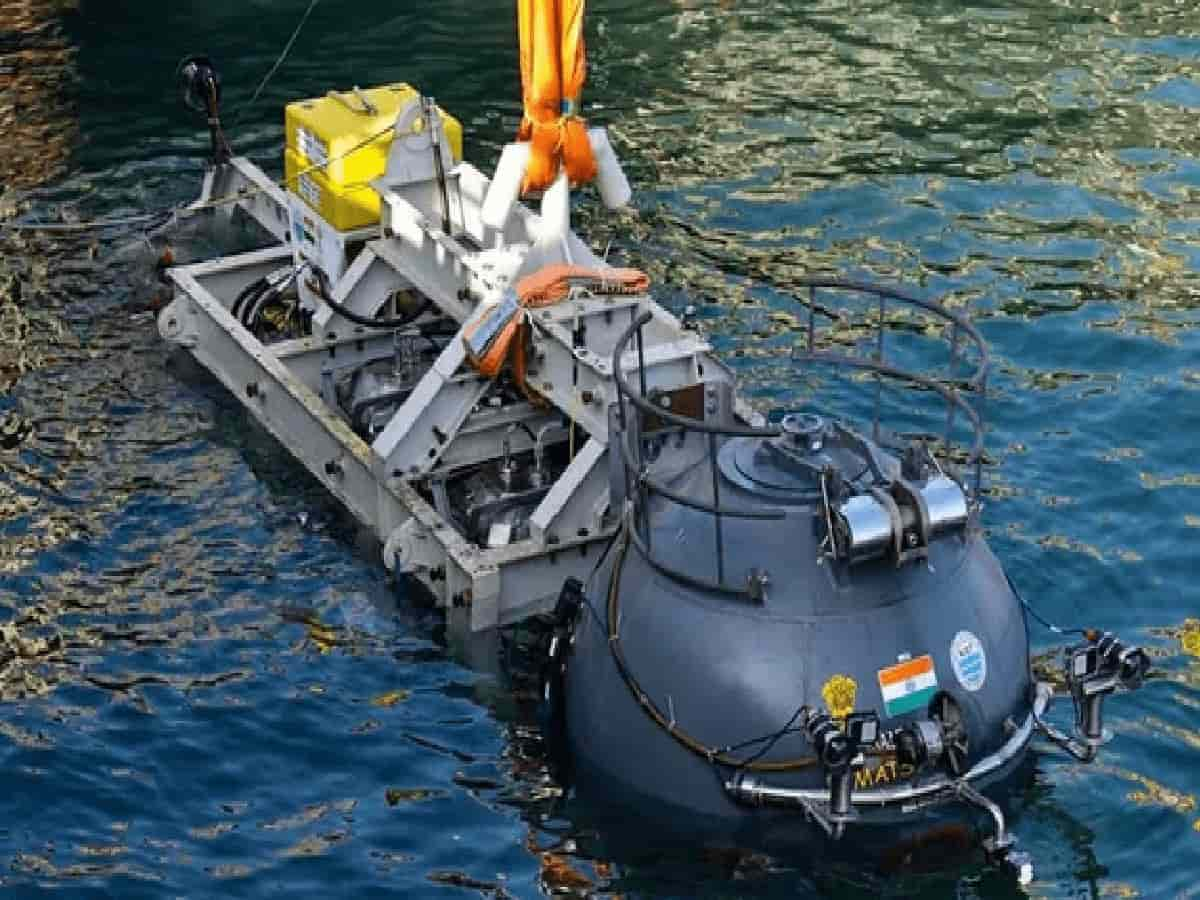
Propelling India into the elite league of nations capable of deep-ocean human exploration, Project Samudrayaan has achieved a pivotal technical breakthrough. The nation’s indigenously engineered deep-submergence exploration vehicle, Matsya-6000, has successfully completed its critical unmanned wet trials at the Larsen & Toubro (L&T) Shipbuilding facility at Kattupalli Port near Chennai, Tamil Nadu. Conducted under the direct operational oversight of the National Institute of Ocean Technology (NIOT), the trials verified the craft’s fundamental hydrostatic integrity, underwater trim, buoyancy dynamics, and multi-tier subsea navigation frameworks. The successful validation clears the pathway for scheduled deep-water demonstrations and the eventual deployment of three Indian mariners down to abyssal depths of 6,000 meters (nearly 20,000 feet) into the unexplored floor of the central Indian Ocean.
Rigorous Harbor Testing at Kattupalli: Validating Subsea Equilibrium
The advanced wet testing phase in Kattupalli served as a vital milestone to confirm the vehicle’s basic mechanical stability before clearing it for open-ocean testing. During the exhaustive trial operations, teams of marine engineers, hydrodynamic experts, and structural specialists evaluated how the 25-tonne submersible behaved when ballasted and deployed into realistic marine environments.
The technical dockets concentrated primarily on neutral buoyancy calibration, variable ballast management, underwater propulsion responsiveness, thruster control maneuvers, and telemetry transmission under varying water density levels. The unmanned vessel passed all established benchmarks according to prescribed safety standards, with zero structural micro-deflection or hydraulic pressure loss.
The trial took place in the presence of senior policy and scientific leadership, including Dr. Srinivasa Kumar Tummala, Secretary to the Ministry of Earth Sciences (MoES), and Dr. G.A. Ramadass, Director of the National Institute of Ocean Technology. The successful trial confirmed that the vessel’s indigenous subsystems and primary power banks operated within standard design parameters.
The Engineering Behind Matsya-6000: Titanium Hull and Extreme Pressures
Reaching abyssal zones 6,000 meters beneath the surface presents extreme operational challenges. At such depths, ambient hydrostatic pressure reaches an immense 600 bar—roughly 600 times the atmospheric pressure experienced at sea level. To withstand these hostile ocean forces, Matsya-6000 is engineered around an ultra-resilient 2.1-meter-diameter crew module fabricated from a specialized high-strength titanium alloy with an 80mm shell thickness.
The fourth-generation deep-submergence vehicle incorporates advanced life-support systems engineered to sustain a three-person crew for up to 12 hours under normal operational conditions. In the event of an undersea emergency, entanglement, or recovery delays, the autonomous life-support systems provide up to 96 hours of backup oxygen, carbon dioxide scrubbing, and emergency life-support power. Unlike uncertified experimental craft, Matsya-6000 has been designed to meet rigorous maritime safety classifications established by leading international classification bodies, incorporating syntactic foam cladding for passive emergency ascent buoyancy alongside fail-safe acoustic release weights.
Unlocking the Blue Economy: Mineral Wealth and Scientific Horizons
Project Samudrayaan functions as the flagship oceanic technology demonstrator under India’s ₹4,077-crore Deep Ocean Mission (DOM) led by the Ministry of Earth Sciences. The manned descent into the deep ocean aims to unlock scientific breakthroughs that unmanned remotely operated vehicles (ROVs) cannot achieve alone:
Strategic Mineral Exploration: The primary scientific objective involves locating and evaluating vast beds of polymetallic nodules and polymetallic massive sulphides scattered across deep oceanic ridges. These geological formations contain strategic minerals such as nickel, cobalt, copper, manganese, and rare earth elements critical for the global renewable energy transition, clean battery storage, and advanced computing.
Deep-Sea Biodiversity and Bio-Prospecting: The expedition will explore unique hydrothermal vent ecosystems and cold-seep biodiversity thriving under complete darkness, providing access to novel extremophilic microbes and bioactive compounds for pharmaceutical and industrial biotechnology applications.
Tectonic and Oceanographic Research: Direct observation will enable geophysicists to study underwater seismic faults, subsea volcanoes, and abyssal thermal currents that drive global climate and ocean circulation models.
The Global Context: India Joins an Exclusive Subsea League
Historically, mastering manned deep-sea exploration below 5,000 meters has remained limited to an elite club of technological superpowers. To date, only five nations—the United States (via the Alvin and Deepsea Challenger), Russia (Mir I & II), France (Nautile), Japan (Shinkai 6500), and China (Jiaolong and Fendouzhe)—have deployed operational manned submersibles capable of working in deep abyssal regions.
With the domestic validation of Matsya-6000, India is on track to become the sixth country in the world to master this specialized deep-sea technology. The project reflects broad inter-agency collaboration, bringing together institutions such as the Indian Space Research Organisation (ISRO) for titanium hull development alongside premier defense research laboratories, public sector shipyards, and private manufacturing partners like L&T.
The Road Ahead: Phased Sea Trials Leading to the 6,000-Meter Descent
With the successful conclusion of the Kattupalli harbor tests, the National Institute of Ocean Technology is entering the next phase of open-water testing. The development roadmap follows a carefully stepped qualification trajectory:
Shallow-Water Demonstrations: Conducting open-water integration and shallow dives up to 500 meters off the Chennai coast to evaluate dynamic tracking and acoustic communication links.
Intermediate Deep Dives: Progressively diving to depths of 1,000 meters and 3,000 meters aboard NIOT’s specialized oceanographic mother vessel, ORV Sagar Fundtesting underwater robotic arms, sediment corers, and 4K optical suites.
The Final 6,000-Meter Descent: Deploying the ultimate manned expedition to the central Indian Ocean trench with three Indian scientists aboard to explore the seabed.
As preparations accelerate across testing facilities in Chennai, Project Samudrayaan stands alongside the Gaganyaan human spaceflight mission as a premier frontier of Indian scientific ambition, charting pathways to explore both the outer edges of the atmosphere and the deepest trenches of the ocean floor.