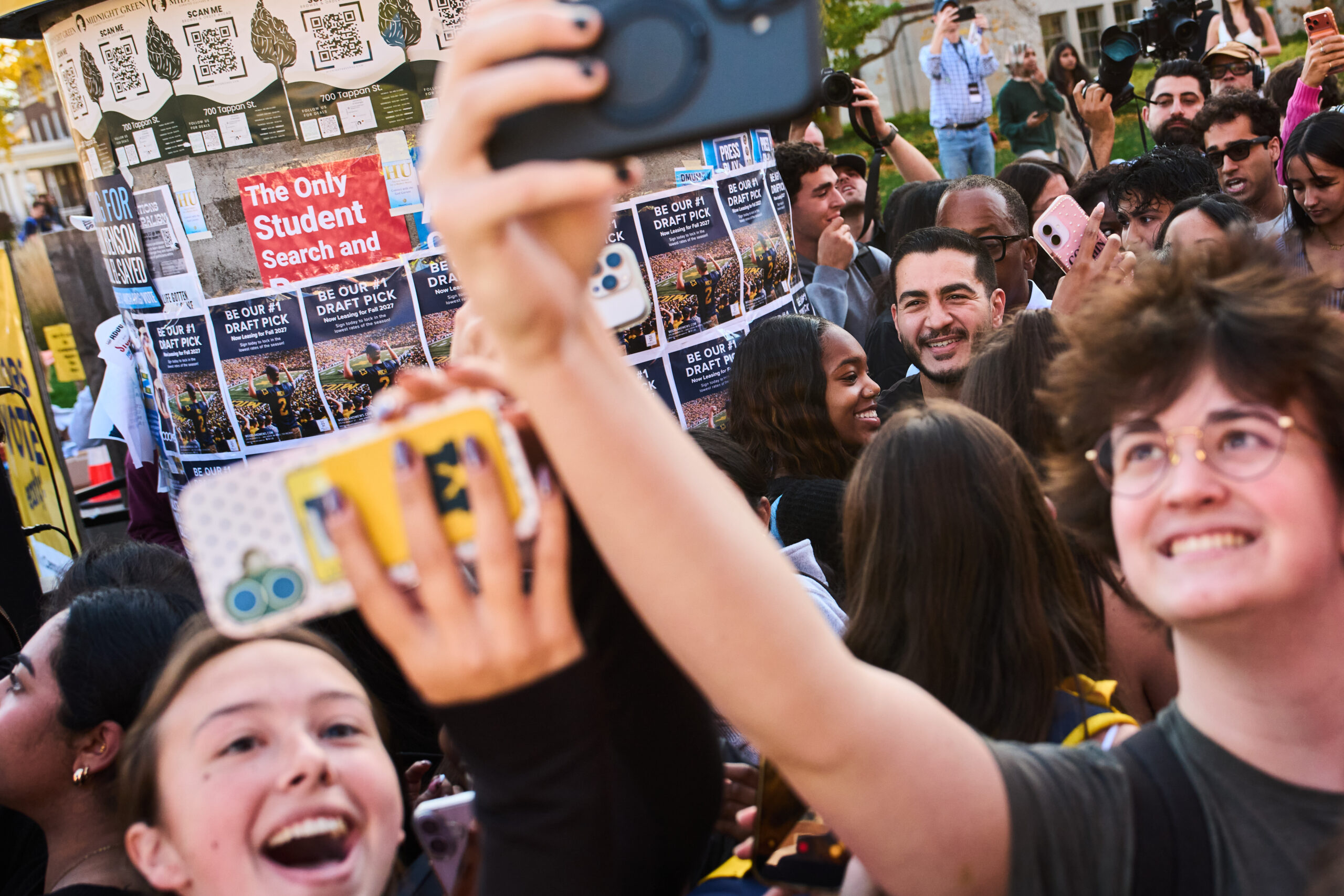
Three-Quarters of Under-30 Voters Choose Democrats as Trump Support Falls/ NEWSLOOKS/ WASHINGTON/ J. Mansour/ About three-quarters of voters under 30 supported Democratic House candidates in the midterms, reversing Republican gains from 2024. High living costs, the Iran war and disappointment with President Donald Trump helped drive the shift. Youth organizers warn that Democrats could lose those voters unless they deliver results on affordability, artificial intelligence and corruption.
Quick Look
- Strong Democratic support: Roughly three-quarters of under-30 voters backed Democratic House candidates.
- Sharp reversal: Young voters were approximately split between Trump and Kamala Harris in 2024.
- Economic pressure: Housing costs, limited job opportunities and financial insecurity shaped voting decisions.
- War opposition: Young voters were more likely than older groups to say attacking Iran was wrong.
- Trump backlash: About 6 in 10 under-30 voters said opposing Trump motivated their House vote.
- Leadership doubts: Only about one-quarter viewed Trump as a strong leader or mentally capable of serving effectively.
- Republican criticism: A coalition of college Republican groups blamed the administration and party for the defeat.
- Conditional allegiance: Organizers say Democratic support will depend on tangible improvements before 2028.

Deep Look
Young Voters Deliver a Decisive Democratic Preference
WASHINGTON — Young voters overwhelmingly supported Democrats in the 2026 midterm elections, reversing the gains President Donald Trump made two years earlier and raising a consequential question for both parties: whether the shift will last.
The AP Voter Poll, a survey of more than 100,000 midterm voters, found that about three-quarters of voters under 30 backed the Democratic candidate in their local House race. Approximately one-quarter supported the Republican.
That Democratic preference exceeded even 2018, when Republicans suffered substantial losses during Trump’s first presidency.
In 2024, young voters were roughly divided between Trump and then-Vice President Kamala Harris, according to AP VoteCast. This year, voters under 30 shifted left by double digits in nearly all major Senate contests compared with the presidential election.
The surveys describe different electorates and races, rather than tracking individual voters over time.
Economic Struggles and Iran War Draw New Voters
Andy Soma, a 24-year-old mathematics doctoral student at North Carolina State University, had skipped elections since becoming eligible to vote.
This year, dissatisfaction with the economy and Trump’s war against Iran prompted him to support Democrat Roy Cooper, who won North Carolina’s Senate race.
“I would describe it as the first time that I’ve truly felt the need to vote,” Soma said. He wanted to “kind of take a stand, if you will.”
For Soma, Trump’s failure to keep the United States out of another Middle Eastern conflict was decisive. Other students interviewed on the Raleigh campus expressed similar concerns.
Elsewhere, young voters described working multiple jobs, struggling to afford homes and questioning the expansion of AI data centers in their communities.
“I’m trying to save money and buy a house and all that, but it’s difficult right now,” said Corey Herzog, 28, of Celina, Ohio.
Herzog, an independent who became a Democrat, works at Walmart, bartends and is developing a houseplant business.
Pollster Says Young Americans Remain Persuadable
John Della Volpe, who surveys young Americans for Harvard Kennedy School’s Institute of Politicssaid the reversals between elections suggest neither party can claim a lasting hold on this generation.
“They’re up for grabs,” he said. “Especially given the state of the economy and their concerns about the future.”
That uncertainty complicates efforts to interpret the midterm results as a permanent Democratic realignment.
Trump’s Appeal to Young Men Weakens
Trump’s 2024 campaign deliberately courted young men frustrated with economic stagnation, foreign intervention and government diversity initiatives.
His appearances at sporting events and on popular podcasts helped build support. More than half of male voters under 30 backed him that year, according to AP VoteCast.
But his second-term record brought new sources of dissatisfaction, including the Iran war, tariffs contributing to inflation, resistance to releasing Jeffrey Epstein documents and controversial immigration enforcement.
“This was the perfect cocktail for disaster,” said Charlie Sabgir, director of the Young Men Research Project.
Some young men supported Democrats this year; others did not participate.
Under-30 Voters Express Anger and Doubts About Trump
Young voters were more likely than older groups to consider living costs crucial to their congressional vote and to oppose military action against Iran.
About half said they were angry about the country’s directioncompared with approximately one-third of voters 65 and older.
Only around one-quarter of under-30 voters described Trump as a strong leader or said he had the mental capacity to serve effectively.
In 2024, roughly half held those views. The decline was greater than among any other age group.
“This cultural coalition and cultural cache that Trump had behind him going into 2024 — they’ve clearly soured on him,” Sabgir said.
About 6 in 10 young voters said expressing opposition to Trump was one reason for their House vote.
College Republicans Join Criticism of Administration
The College Republican Patriot Coalition said young Republicans “were not given what they were promised.”
“In the wake of last night’s election results, the College Republican Patriot Coalition unequivocally lays the blame for the greatest Republican defeat by Democrats since 1974 at the feet of the Trump administration and the Republican Party,” the group said.
Kidus Girma, campaigns director for the left-leaning Sunrise Movement, said Michigan canvassing brought him into contact with young men motivated by disappointment in Trump.
One described difficulty finding work while hearing the president insist that the economy was thriving.
“It’s like this deep disillusionment with the statements the president makes versus the material impacts people are facing in their everyday lives,” Girma said.
Texas Victories Bring an Unexpected Sense of Hope
For Sarah Stull, an 18-year-old University of Texas at Austin student, election night offered an unfamiliar emotional experience.
She and her classmates had joked about “millennial optimism” at Halloweendressing in skinny jeans and infinity scarves to parody an older generation’s earnest hopefulness.
Stull described her own outlook as “very sarcastic, very jaded — and do sometimes expect the worst.”
But watching Democrats James Talarico and Gina Hinojosa win Texas’ Senate and gubernatorial races changed the mood.
“We were freaking out, all of us were crying,” she said. “I just felt this sense of community that I had never felt before.”
She posted a TikTok video showing friends celebrating outside the Texas Capitol, captioned “millennial optimism cause texas went blue.”
Democrats Face a Short Timeline to Produce Results
Katherine Haenschen, a political science and communication professor at Northeastern University, said young adults such as Stull have grown up knowing only “the Trumpification of politics.”
The election offered left-leaning young people a sense that a different political future might be possible.
But youth organizers cautioned that enthusiasm could quickly fade.
Dakota Hall, executive director of Alliance for Youth Action, said young voters could move right again if Democrats fail to lower living costs, regulate AI and address government corruption.
“Young people have a very short leash,” Hall said. “If you do not deliver, ’28 will be a rough road ahead.”
More on US News