Lucknow. To provide financial support to the families affected by natural disasters, the Uttar Pradesh government has changed the standards of relief assistance. The amount of assistance provided under State Disaster Response Fund (SDRF) and National Disaster Response Fund (NDRF) has been increased. Now, if a person dies in a natural disaster, his family will get financial assistance of Rs 8 lakh instead of Rs 4 lakh. Apart from this, the amount of compensation for loss of crops, livestock and houses has also been increased. The new standards will be effective from financial years 2026-27 to 2030-31. The aim of the government is to provide immediate financial assistance to the disaster affected families and bring their livelihood back on track.
Double assistance to the families of the deceased
Relief Commissioner Hrishikesh Bhaskar Yashod said that the amount of assistance given to the family in case of death due to natural disaster has been increased from Rs 4 lakh to Rs 8 lakh. Similarly, the assistance on death of big animals like cow, buffalo, horse and camel has been increased from Rs 40 thousand to Rs 50 thousand. For small animals like goat, sheep and pigs, this amount has been increased from Rs 4,000 to Rs 5,500. Poultry farmers will now get Rs 130 per hen instead of Rs 100. Assistance on damage to draft animals has been increased from Rs 20,000 to Rs 25,400.
Compensation on crop loss increased by 30 percent
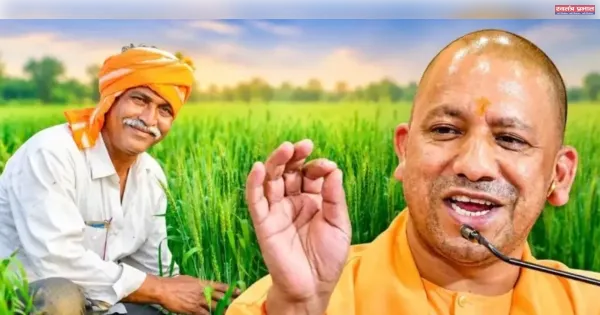
To provide relief to the farmers, the amount of assistance given on crop damage has also been increased. Now Rs 22 thousand per hectare will be given for loss in irrigated area instead of Rs 17 thousand. In rainfed areas, this assistance has been increased from Rs 8,500 to Rs 11,000 per hectare. Compensation on loss of horticulture and agro-forestry crops has been increased from Rs 22,500 to Rs 30,000 per hectare. The assistance for crops related to sericulture has been increased from Rs 6,000 to Rs 7,800 per hectare and for sugarcane crop from Rs 7,500 to Rs 9,800 per hectare. The standards of assistance for damage caused by agricultural land erosion and landslides have also been increased.
Crops of more than 10 lakh farmers affected
According to the Relief Commissioner, from April 1 to November 4, 2026, about 52 lakh 14 thousand hectares of crops of 10,02,684 farmers of the state have been damaged. The affected farmers are being provided assistance as per the prescribed standards. To complete the compensation process in a timely manner, details of the losses incurred during this period have been sought from all the District Magistrates.
An amount of assistance has also been earmarked to compensate for the damage caused to houses and public institutions. Rs 1.85 lakh will be given for a completely damaged pucca house in plain areas and Rs 2.06 lakh will be given in hilly areas. On partial loss of pucca house, assistance of Rs 93 thousand will be provided in plain areas and Rs 1.03 lakh in hilly areas. A provision of Rs 15.50 lakh has been made for completely damaged primary schools, while assistance up to Rs 26 lakh has been made for damage to secondary schools, hostels, industrial training institutes and polytechnic institutes. Different standards have also been set for reconstruction of health centers and other public facilities.
Food and accommodation for 30 days in relief camps
Under normal circumstances, food, clothes, temporary accommodation and other necessary facilities will be provided to the disaster affected families in relief camps for 30 days. In special circumstances, this period can be extended by 60 days or as per need. For emergency arrangement of drinking water, a provision has been made to provide assistance for 30 days in normal circumstances and 90 days in case of drought. Losses caused by fire, explosion or accident in industrial and commercial establishments are excluded from the scope of this assistance.
To ensure transparency in aid distribution, the government has mandated a system of sending the amount to individual beneficiaries directly into their bank accounts through Direct Benefit Transfer (DBT). Also, the list of beneficiaries and the basis of eligibility will be made public, so that the assistance can reach the actual affected people.