
Modern applications no longer sit behind a single, well-guarded perimeter. Cloud-native systems, microservices, and publicly exposed APIs have multiplied the number of potential entry points. Every new service, third-party library, and external integration can expand the attack surface.
Traditional firewalls and late-stage security scanning cannot address every risk. By the time a vulnerability reaches production, fixing it may require significantly more effort, and an exploited flaw can damage user trust.
Security therefore needs to begin earlier in the software development lifecycle. It must become part of how code is designed, written, reviewed, and released.
That is the essence of shift-left security: treating application security as a core software engineering discipline rather than an operational concern addressed only after deployment.
Why the Business Case for Developer-Led Security Keeps Growing
The financial argument for shift-left security begins with the cost of fixing vulnerabilities.
Industry research and guidance from organizations such as NIST have highlighted how addressing security weaknesses earlier in development can reduce remediation effort and the technical debt associated with late fixes.
Identifying a security problem during design or coding is often easier than correcting the same problem after deployment.
A production vulnerability may require emergency patches, incident investigation, additional testing and coordinated releases across multiple services.
The exact cost difference varies according to the vulnerability, application architecture and organization. Widely repeated claims that production defects always cost 30 to 100 times more to fix should not be treated as universally established figures.
NIST’s Secure Software Development Framework (SSDF) emphasizes integrating security throughout development to reduce vulnerabilities in released software and address their underlying causes.
There is also a delivery-speed argument.
Security reviews that surface only at the end of a development cycle can create bottlenecks in continuous integration and continuous delivery pipelines.
When developers understand and apply secure coding practices from the beginning, teams can identify problems sooner and reduce the volume of critical findings discovered immediately before release.
Automated testing can support this process.
For example, TechGenYZ’s guide to DevSecOps pipeline security explains how security scanning, vulnerability prioritization and automated checks can become part of routine development workflows.
Compliance and reputation add another dimension.
Privacy laws such as GDPR and CCPA, along with security standards such as PCI DSS, can introduce requirements relevant to data protection, system security and development practices.
However, these frameworks differ in scope and should not be treated as interchangeable.
Secure coding can help organizations meet applicable obligations, reduce the likelihood of incidents and protect customer trust.
Practical Coding Habits That Raise the Bar
Some of the most effective secure coding practices remain surprisingly basic.
All external input should be treated as untrusted.
Applications should validate incoming data according to the format, type, size and business rules expected by each operation.
However, input validation alone does not prevent every injection vulnerability.
Parameterized queries are an important defense against SQL injection because they separate query instructions from user-supplied values.
For cross-site scripting (XSS), developers should use context-aware output encoding and the protections provided by trusted application frameworks.
These techniques address different security risks and should be applied appropriately.
The principle of least privilege also belongs in application code, not just infrastructure configuration.
Services, database accounts and external integrations should receive only the permissions required to perform their legitimate functions.
For example, an application that only needs to read customer records should not automatically receive permission to delete database tables or modify unrelated infrastructure.
Overprivileged components can turn a limited compromise into a wider security incident.
TechGenYZ’s guide to Cloud Identity and Access Management explains how roles, service identities and access reviews can help organizations maintain appropriate permissions.
Third-party dependencies introduce another persistent risk.
Modern applications rely on large numbers of open-source libraries, frameworks and external packages.
Regularly auditing dependencies, maintaining controlled versions, and generating a Software Bill of Materials (SBOM) can help teams understand what components their applications contain.
An SBOM provides an inventory of software components and can help identify potentially affected products when a new vulnerability is disclosed.
However, maintaining an inventory does not automatically make dependencies secure.
Teams still need vulnerability monitoring, updates and appropriate remediation procedures.
TechGenYZ’s article on software supply chain security explores how dependency inventories, secure build pipelines and artifact verification can reduce risks associated with third-party components.
Dependency scanning should also be integrated into development workflows.
For example, automated checks can flag known vulnerable packages during pull requests or CI/CD execution.
Pinning dependency versions can improve build reproducibility, but it must be combined with a process for updating packages when security fixes become available.
As explained in TechGenYZ’s dependency scanning guide, teams need continuous visibility into direct and transitive dependencies rather than relying on occasional manual reviews.
Securing Production Concerns Without Leaving the Development Environment
Secrets management remains a frequent source of application security problems.
API keys, database credentials, signing secrets and authentication tokens should not be embedded directly in source code.
Once credentials enter a repository, they may persist in version-control history, build artifacts or developer environments even after being removed from the latest code.
Environment variables can help separate sensitive configuration from application source files.
However, environment variables do not automatically secure their contents.
Credentials may still be exposed through logs, process environments, debugging tools or poorly configured infrastructure.
Dedicated secrets management services can provide additional protections, including controlled access, audit records and credential rotation.
Teams should also scan repositories and build artifacts for exposed secrets.
When a credential is accidentally committed, removing the visible string is not sufficient. The affected secret should be revoked or rotated, and its potential exposure should be investigated.
Logging requires equal care.
Detailed application logs help engineers detect suspicious behavior, troubleshoot failures and investigate security incidents.
However, those same logs must not become a source of sensitive data exposure.
Passwords, authentication tokens, payment credentials and other secrets should not be written to application logs.
Personal information should be minimized and protected according to the application’s requirements.
Structured logging combined with careful redaction can provide useful diagnostic information without unnecessarily exposing sensitive records.
Error handling follows the same principle.
Users and API clients should receive useful but appropriately limited error messages.
Stack traces, internal file paths, database details and sensitive configuration information generally belong in access-controlled diagnostic systems rather than public responses.
Security controls should also extend to deployment infrastructure.
A secure application can still be exposed through overly permissive cloud storage, weak access policies or incorrect network settings.
TechGenYZ’s guide to cloud security posture explains why configuration reviews, least-privilege policies and continuous monitoring remain important after software reaches production.
Reducing Friction and Making Secure Habits Sustainable
Annual compliance training alone may not produce lasting changes in everyday development practices.
Short, contextual guidance delivered within the development workflow can be more useful.
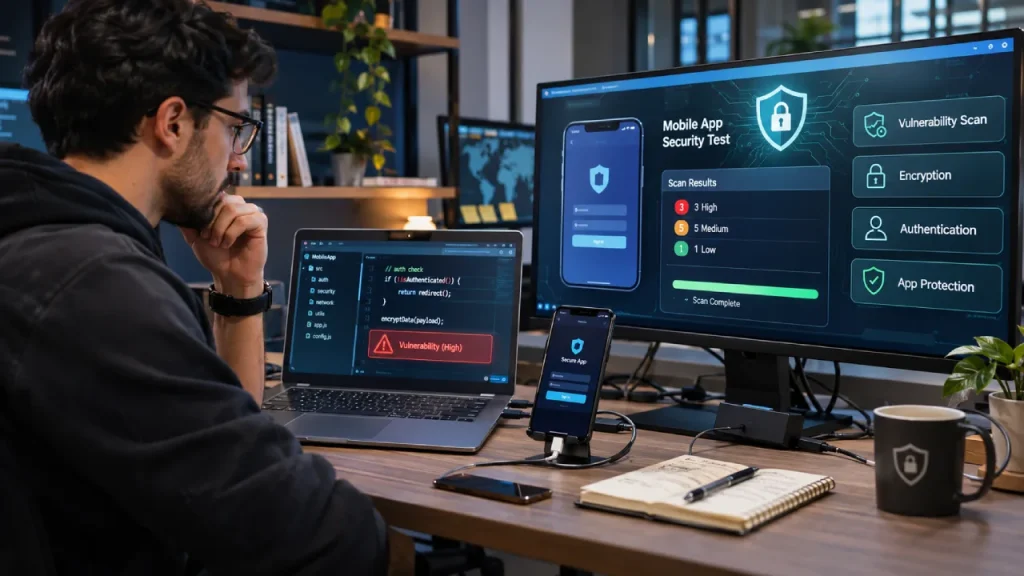
For example, when a code-scanning tool identifies a potentially unsafe database query, developers should receive a clear explanation of the risk and a practical recommendation for correcting it.
This allows security education to become part of solving a real engineering problem.
Security champions can also help connect central security teams with individual development squads.
These are engineers who receive additional security training and help colleagues understand secure design decisions, common vulnerabilities and relevant engineering standards.
Their role is not to replace dedicated security professionals.
Instead, they can provide an accessible first point of contact for routine security questions and help identify issues earlier.
Security teams should still provide specialized expertise, threat modeling, governance and support for complex incidents.
Incentives matter as well.
Engineering teams naturally respond to the outcomes their organizations measure and recognize.
Highlighting proactive dependency remediation, secure design improvements and timely resolution of important vulnerabilities can encourage constructive behavior.
However, counting vulnerabilities alone may create misleading incentives.
For example, a team that finds more vulnerabilities through better testing should not automatically be treated as less secure than one that performs little testing.
Useful measurements may include the time taken to remediate high-risk findings, the proportion of critical services receiving security reviews and the effectiveness of security checks.
The objective is to improve security outcomes without turning every alert into a development blocker.
How the Cost of Security Fixes Changes Across Development
| Stage of Discovery | Relative Cost Impact | Typical Consequences |
|---|---|---|
| Design and Coding (Phase 1) | Often lowest | Localized changes, limited rework and fewer deployment dependencies |
| Testing and Staging (Phase 2) | Potentially moderate | Additional testing, integration changes and possible schedule impact |
| Production (Phase 3) | Potentially highest | Emergency remediation, incident response, service disruption and possible data exposure |
Note: This table illustrates a general remediation-cost pattern. It does not establish universal cost multipliers. Actual costs depend on the vulnerability, system complexity and circumstances of discovery.
Organizations should also consider whether their security processes help or hinder developers.
A tool that generates hundreds of low-quality alerts can increase frustration and make important findings harder to identify.
Risk-based prioritization, clear ownership and actionable feedback are more valuable than treating every warning as equally urgent.
Security as an Ordinary Measure of Quality
Secure code is an important part of high-quality software.
It reduces avoidable security weaknesses, supports predictable behavior and can lower the risk of costly emergency remediation.
However, secure coding does not guarantee that an application will be free from vulnerabilities.
Security requires multiple layers of protection throughout the software development lifecycle.
Automated tools such as Static Application Security Testing (SAST) and Dynamic Application Security Testing (DAST) remain useful.
SAST examines source code or related artifacts to identify potential weaknesses, often before the application is deployed.
DAST evaluates the behavior of a running application to identify certain security issues from an external perspective.
Software Composition Analysis (SCA) helps identify vulnerabilities and risks associated with third-party dependencies.
These tools provide different kinds of information and should be treated as complementary.
They are most effective when developers understand the insecure patterns the tools are designed to identify and know how to evaluate the findings.
Security responsibilities are also shared.
Security teams define standards, advise on risk and provide specialized support.
Developers apply secure coding practices, review changes and remediate problems in the software they build.
Operations and platform teams protect deployment environments, credentials and production infrastructure.
A reliable CI/CD process can bring these responsibilities together through automated validation and controlled releases.
TechGenYZ’s DevOps pipeline checklist outlines how testing, secrets management and deployment safeguards can help teams deliver software more consistently.
The objective is not to make developers responsible for every aspect of cybersecurity.
It is to ensure that security becomes a normal consideration in engineering decisions, with appropriate support from the wider organization.
Conclusion: What Shift-Left Actually Requires
Moving security earlier in the development process is both a technical and an organizational decision.
Teams that adopt shift-left practices effectively combine secure coding standards, useful automation, short feedback loops and clear ownership.
Developers need practical guidance and tools that fit into their existing workflows.
Security teams need visibility into application risks and opportunities to support engineering decisions before vulnerabilities reach production.
Leadership must also recognize that reliable security requires continuous investment rather than occasional compliance exercises.

Without these practices, security findings may appear late, remediation can compete with planned feature work and production incidents may become more expensive to resolve.
However, shifting left does not mean eliminating security activities after deployment.
Monitoring, vulnerability management, incident response, and operational security remain essential throughout an application’s lifecycle.
The strongest approach combines early vulnerability prevention with continuous security validation and monitoring.
Modern application architectures leave less room for a model in which security receives serious attention only after code is running in production.
The practical question is not simply whether organizations should shift left. It is how consistently they can make security part of everyday software engineering while continuing to deliver reliable products.
(Source)