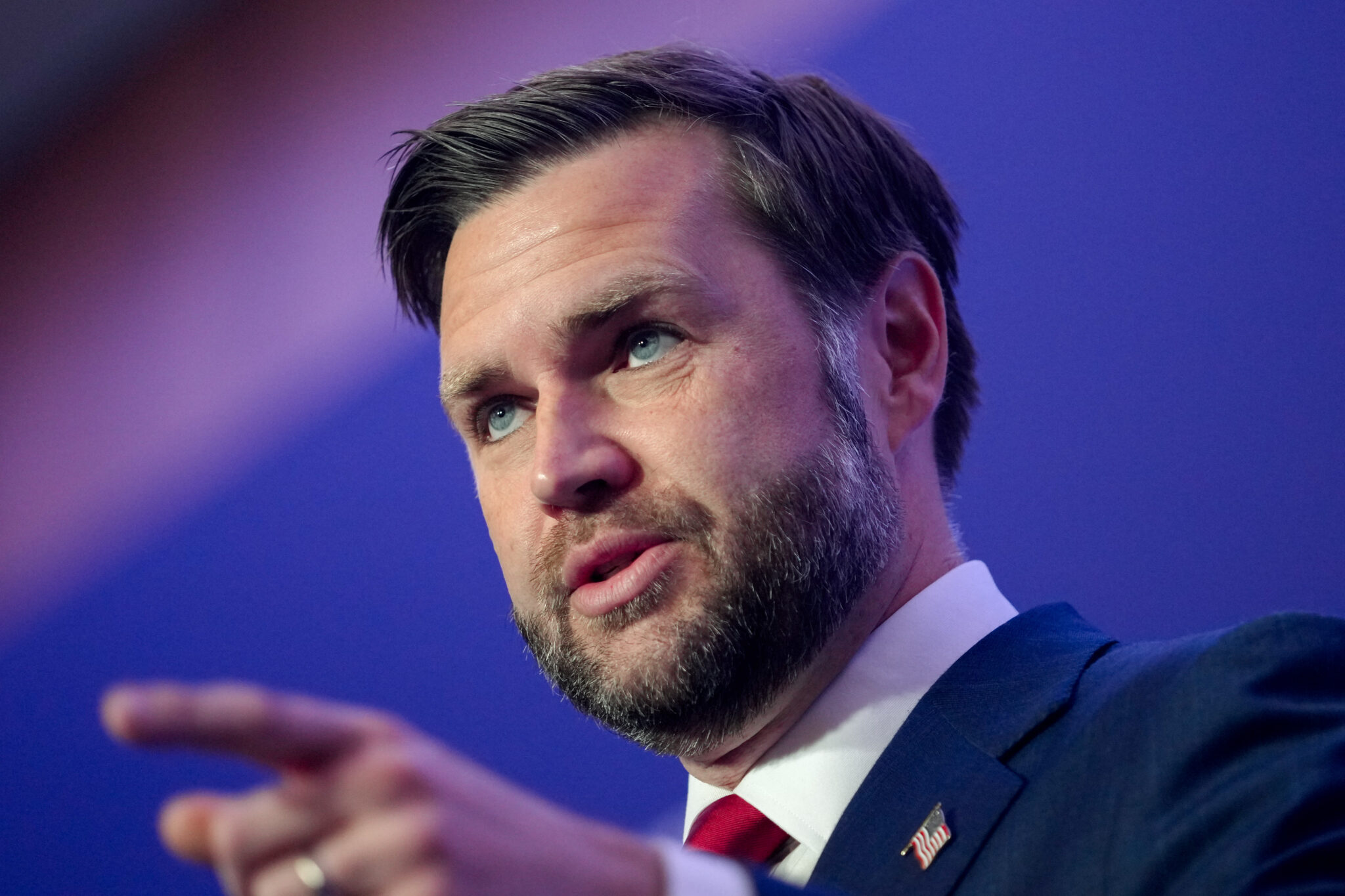
Vance Considers Skipping 2028 Presidential Race After GOP Midterm Defeat/ NEWSLOOKS/ WASHINGTON/ J. Mansour/ Vice President JD Vance is seriously considering whether to forgo a 2028 presidential campaign, according to allies and advisers interviewed by CNN. His deliberations involve Republicans’ sweeping midterm losses, the Iran war, divisions within Trump’s coalition and family responsibilities. A campaign remains possible, but Trump has not promised an endorsement and potential Republican rivals are positioning themselves.
Quick Look
- No final decision: Vance has considered not running but remains open to a presidential bid.
- No timetable: He has not established a deadline for deciding.
- War concerns: Allies see the Iran conflict as a major obstacle to Republican prospects in 2028.
- Family considerations: The arrival of his fourth child this summer has also influenced discussions about his future.
- Trump tensions: Sources described private frustration over Vance’s criticism of the war; the White House disputed that account.
- Changed assignment: Trump redirected Vance from Iran negotiations toward domestic corruption issues Thursday.
- Endorsement uncertain: Trump has not committed to supporting his vice president.
- Potential support network: Vance retains relationships with major donors and organizations preparing for the next election.
Deep Look
Vance Considers Whether 2028 Is the Right Moment
Vice President JD Vance has seriously considered not running for president in 2028 following Republicans’ sweeping midterm defeats, according to people close to him interviewed by CNN.
Vance has not made a decision, and a White House campaign remains firmly under consideration. Some allies believe he is still more likely to run than to sit out.
But interviews with roughly a dozen advisers and allies describe a vice president weighing political ambition against a fractured Republican coalition, an unpopular war and the demands of raising a family.
“I wouldn’t be surprised by any decision he makes,” one person close to Vance said. “He’s only 42. He’s young enough that he can have a comeback should this environment make success impossible. It just may not be his time.”
Iran War Complicates Presidential Calculations
Vance’s allies regard the Iran conflict as one of the largest obstacles facing any Republican presidential candidate.
They argue that rebuilding support will depend heavily on whether Trump can end the war without further damaging confidence in the administration.
“The question isn’t if JD can do it. It’s: If the Iran war is still happening, can any Republican do it?” one ally said. “If they don’t end the war in Iran, no Republican has a shot at 2028.”
That assessment reflects an ally’s political judgment, not a settled forecast. Other supporters emphasize that two years leaves considerable time for conditions to change.
Post-Election Message Reveals Vance’s Possible Direction
The morning after the midterms, Vance publicly identified the war as the central explanation for Republican losses.
“The reason we lost is the war. The president himself said so last night,” he wrote.
“If you’d like to argue it was worth it, that losing the Senate for the next 6 years was worth it, then do so. Argue it was a worthwhile cost to pay. Agree or disagree, that’s at least honest. But everyone knows why we lost. And any honest conversation about where we go from here must start there.”
His reference to six years represented his assessment of the political damage, rather than a predetermined outcome in future elections.
Elsewhere in the message, Vance urged Washington to end the conflict, address affordabilityconcentrate on domestic problems and reconsider the US relationship with Israel.
Some supporters interpreted the post as an outline for a presidential campaign. Others saw it as an acknowledgment of frustrations the administration had resisted confronting.
Trump’s Reaction Exposes Competing Accounts
Vance had privately expressed reservations about attacking Iran before the war began, according to CNN.
His public criticism nevertheless surprised some administration officials, who viewed it as an effort to distance himself from an unpopular decision.
Two people familiar with discussions told CNN that Trump was privately angry that Vance criticized the political consequences without defending the decision to enter the war.
Trump publicly offered a similar qualification Sunday.
“He was right, other than one thing,” the president told reporters. “He should have made one other statement: ‘If you had it to do again, would you do it again?’ The answer is yes.”
A White House official disputed the suggestion of presidential objections to the post.
“The White House was aware before the post went out. POTUS was briefed beforehand as well and did not have any issues with it,” the official told CNN.
Reassignment Moves Vance Away From Iran Diplomacy
On Thursday, Trump redirected Vance from leading Iran negotiations and instructed him to “focus his complete and total attention” on corruption.
The change followed renewed diplomatic efforts to resolve the conflict.
“Those days have long since passed,” Trump wrote on Truth Social, rejecting the need for an Iran agreement.
The episode highlights the difficulty Vance faces in distinguishing his priorities while remaining the president’s second-in-command.
Rebuilding Trump’s Coalition Comes First
For now, Vance’s immediate focus is rebuilding support among voters who helped elect Trump in 2024 but moved away from Republicans this year.
Polling described in the CNN report showed losses across key groups, including younger voters, men, Latinos and white voters without college degrees.
Vance’s advisers envision a possible campaign built around the anti-establishment message that helped propel his earlier rise.
That approach presents a challenge for a sitting vice president whose party has controlled the White House and Congress.
Some allies believe the incoming Democratic congressional majorities could provide a new political opponent. But others argue that Republicans must first repair their credibility with disillusioned supporters.
Allies Disagree Over How Much MAGA Can Recover
Pollster Rich Baris, who has close ties to the MAGA movement, said the damage goes beyond a normal electoral setback.
“MAGA is dead,” Baris said. “The problem the vice president is going to have is that he has to motivate (MAGA voters) and make them believe again, because the Republican brand has completely lost credibility with them.”
He nevertheless argued that Vance is best positioned to bridge the divisions.
“This is why I think Vance is the only path forward,” Baris said. “They absolutely cannot win if they don’t repair these rifts.”
Terry Schilling, president of the American Principles Project, also urged Vance to run.
“He’s basically teed up to be the general and we’re going into one of the biggest battles,” Schilling said. “I would be surprised if he doesn’t run.”
Family Responsibilities Also Shape the Decision
People close to Vance said he entered the year without a firm commitment to pursue the presidency.
The birth of his fourth child this summer added another consideration, fueling speculation among White House officials that he might postpone a campaign.
His deliberations therefore extend beyond electoral prospects to whether he wants to take on the responsibilities of a presidential race at this point in his family’s life.
Donor Relationships Offer Resources but Not Certainty
The midterm defeats also raised questions about the political organizations that could support a Vance campaign.
Major spending operations—including the Trump-aligned MAGA Inc. and Elon Musk’s America PAC—finished the elections with limited success. Their potential involvement on Vance’s behalf in 2028 remains unclear.
Turning Point USA, which has endorsed him, also experienced setbacks in states where it had hoped to build strength.
Vance’s allies counter that the national environmentrather than organizational tactics alone, drove the losses. They point to his relationships with Musk, Peter Thiel and other wealthy supporters.
His work as Republican National Committee finance chair also brought regular contact with major donors.
The Vance-aligned Rockbridge Network met in Houston this week to regroup while awaiting his decision, according to a person familiar with the gathering.
Trump Endorsement Remains an Open Question
Although Vance has said he expects Trump’s support if he runs, the president has not committed to endorsing him.
People familiar with Trump’s thinking told CNN that he wants to observe the emerging field before deciding whether to intervene.
Asked by “60 Minutes” whether he would eventually endorse a candidate, Trump replied: “Probably — not necessarily.”
Other Republicans, including Florida Gov. Ron DeSantis, Texas Sen. Ted Cruz and Georgia Gov. Brian Kemp, have moved to raise their profiles. Tucker Carlson has also floated a possible third-party bidadding another source of uncertainty.
Schilling said the midterms had fundamentally changed expectations about the next Republican nomination.
“I do think the field has been blown open,” he said, “and there isn’t an heir apparent.”
More on US News