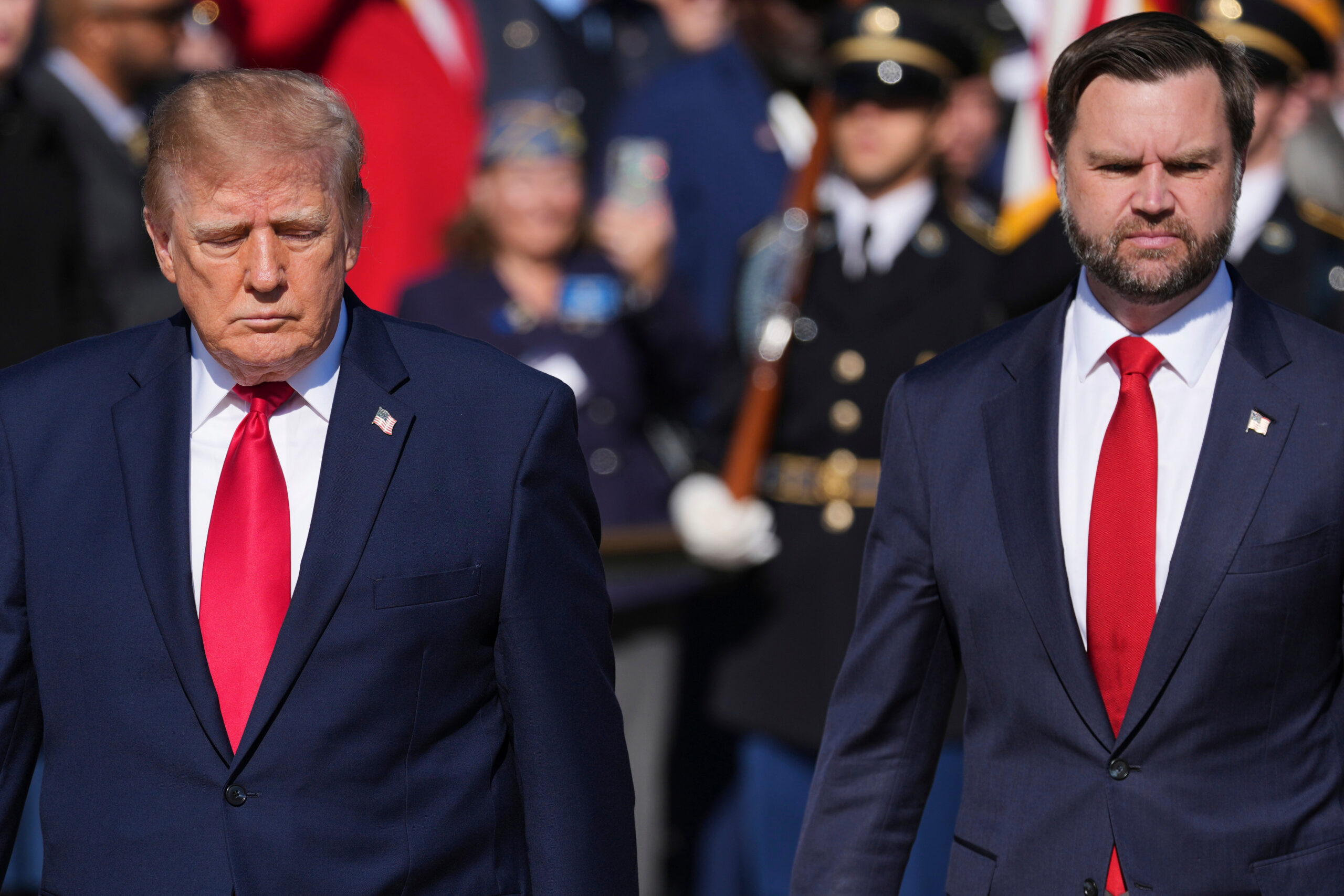
Trump’s Shifting Iran War Rhetoric Leaves Middle East Peace Efforts in Limbo/ NEWSLOOKS/ WASHINGTON/ Jehan Mansour/ President Donald Trump has downplayed the need for additional strikes on Iran while also questioning whether Washington needs a negotiated agreement. His shifting statements following Republican midterm losses have unsettled mediators seeking an interim deal on the Strait of Hormuz. Secretary of State Marco Rubio says economic pressure is weakening Tehran, while regional diplomats await clarity on Washington’s next steps.
Trump’s Iran Strategy: Quick Look
- Conflicting signals: Trump says the war is largely over militarily but maintains that U.S. forces remain ready to act.
- Talks uncertain: The president redirected Vice President JD Vance from Iran diplomacy to a domestic anti-fraud campaign.
- Qatar mediation continues: Negotiators are pursuing an interim arrangement to restore maritime traffic through the Strait of Hormuz.
- Economic pressure remains central: Rubio argues that Iran’s weakening economy reduces the need for further military action.
- Nuclear dispute unresolved: Tehran’s nuclear activities remain a major obstacle to an agreement.
- Asia diplomacy ahead: Trump is expected to discuss Iran with Chinese President Xi Jinping and Russian President Vladimir Putin.
- Shipping risks persist: The United Nations reported an increase in incidents involving commercial vessels in October.

Trump’s Iran Strategy: Deep Look
Trump Sends Mixed Signals on Ending Iran War
WASHINGTON — President Donald Trump’s shifting statements about the Iran war have left Middle Eastern mediators uncertain whether Washington intends to pursue negotiations, maintain economic pressure or leave regional governments to resolve critical maritime disputes.
Since Republicans suffered losses in last week’s midterm elections, Trump has moved away from both the prospect of major new strikes and the urgency of reaching an agreement with Tehran.
The result is uncertainty over how the administration plans to bring the eight-month conflict to a close.
Trump acknowledged after the election that the war and its global economic consequences contributed to Republican defeats, while defending his decision to launch it.
Following a White House meeting with Qatar’s prime minister earlier this week, he said additional major strikes were highly unlikely and declared that the war “militarily is effectively over.”
By Thursday, however, Trump said the United States no longer needed a deal with Iran and instructed Vice President JD Vance, his chief negotiator in earlier talks, to concentrate on the administration’s domestic anti-fraud campaign.
Military Threat Remains Despite Reduced Appetite for Strikes
Even while downplaying further military operations, Trump has warned that American forces remain “locked and loaded.”
He said Washington was monitoring Pickaxe Mountain, a facility linked to Iran’s nuclear program, for signs of activity.
“If something does not work out, I would not hesitate” to act, Trump told conservative broadcaster Hugh Hewitt on Thursday.
Those statements have complicated efforts to understand whether the administration considers the conflict effectively finished or remains prepared to escalate it.
Democratic Sen. Cory Booker of New Jersey criticized Trump’s approach during an interview Friday at a postelection gathering in Denver.
“President Trump is now acting like an arsonist who has set ablaze our foreign policy,” Booker said. “And now he just wants to walk away.”
Iran War Will Follow Trump to Asia
Questions about the conflict are expected to shadow Trump’s upcoming trip to the Philippines and the Asia-Pacific Economic Cooperation meetings in Shenzhen, China.
While in Shenzhen, Trump plans an unprecedented joint meeting with Xi and Putin. Iran and the three countries’ nuclear stockpiles are expected to be discussed.
The White House declined to respond directly to questions about Trump’s postelection statements on Iran.
Rubio, however, defended the administration’s reliance on economic pressure.
“The economic pain that we are inflicting on that regime is so great that there’s no need for military action because we’ve weakened them so much,” he said Friday evening in a speech to the Federalist Society.
Qatar’s Mediation Effort Faces New Uncertainty
Qatar is seeking an interim agreement that would restore traffic through the Strait of Hormuz while preserving the possibility of further U.S.-Iran negotiations.
The waterway is a crucial route for oil and natural gas shipments from the Persian Gulf to international markets.
Two Middle Eastern diplomats familiar with the discussions said Trump’s changing statements had clouded the process. Both spoke anonymously because of the sensitivity of the negotiations.
The diplomats said efforts appeared to be progressing after Qatar’s prime minister met with Trump earlier in the week.
That optimism faded after Trump’s Thursday social media post declaring that Washington did not need an agreement and directing Vance “to focus his complete and total attention” on the anti-fraud initiative.
One diplomat said the message raised questions about why Trump appeared to be sidelining the vice president, who had been skeptical of launching the war before ultimately supporting the president.
Vance Had Considered Renewing Contact With Iran
Vance had been weighing renewed engagement with senior Iranian negotiators before Trump publicly redirected him, according to a person familiar with the matter.
The person, who spoke anonymously because they were not authorized to discuss the deliberations, said Trump knew of Vance’s consideration of further talks but believed Iran was not negotiating in good faith.
Trump posted his instructions the morning after The Wall Street Journal reported that Vance was considering resuming discussions.
The president has also become more confident that he can declare his military objectives achieved, the person said.
With oil shipments through the Strait of Hormuz approaching prewar levels, Trump believes Gulf countries could potentially negotiate their own arrangement with Iran over management of the waterway.
Strait of Hormuz Remains Dangerous
Despite the recovery in shipments, passage through the strait remains hazardous.
The United Nations reported that October recorded the highest number of incidents involving commercial vessels in the contested waters since February.
One regional diplomat described peace efforts as being in a holding pattern while participants await clarification from Washington.
Mediators and Iranian officials remain uncertain whether Trump is abandoning a negotiated settlement or adopting a tougher public position after an election that cost Republicans control of Congress, the diplomat said.
Iran Nuclear Dispute Continues to Block Progress
Iran remains unwilling to negotiate over its nuclear program until Washington accepts several conditions Tehran wants included in a ceasefire agreement.
Trump, meanwhile, insists that any deal ending the war must address Iran’s nuclear activities.
Iran’s deputy UN ambassador, Gholamhossein Darzi, told the Security Council on Friday that Tehran “has never closed the door to diplomacy.”
He also warned that renewed American or Israeli bombing would trigger “an immediate and decisive response.”
Rubio said earlier in the week that Washington had not rejected continued mediation.
“If there’s a deal to be done, the president will be the first one to be in favor of it,” he said. “But it’s not going to be a stupid deal. It’s not going to be a bad deal.”
Analyst Expects Economic Pressure and Stalemate to Continue
Michael Singh, managing director at the Washington Institute for Near East Policysaid the current situation could persist.
He expects Washington and Tehran to remain at odds over the Strait of Hormuz while the United States maintains its naval blockade, restricting Iranian crude exports.
For Trump, Singh said, economic pressure is more attractive than either expanding military operations or offering concessions.
Singh also said the president could return Vance to the negotiating process if Iran appeared ready for substantive talks.
“It’s probably the most sensible path as well to sort of be patient, keep the pressure on, allow the mediators to keep doing their work,” said Singh, who worked on Middle East issues in President George W. Bush’s White House.
“And when the time is right, but not before then, is when you want to engage senior officials like the vice president and so forth.”
More on US News